Last Updated on August 22, 2025 by Hemanth
Table of Contents
From hospitals to high-tech labs, gadolinium plays a unique double life. Best known as the contrast agent in MRI scans, it helps doctors see inside the human body with unmatched clarity. Yet its value doesn’t stop there.
In this guide, you’ll uncover how gadolinium shields nuclear reactors, enhances magnetic refrigeration, and supports next-generation materials—making it one of the most versatile and strategic rare earths of our time.
Overview
You’ve probably never heard of it — yet this rare earth metal works behind the scenes in medicine, energy, defence, and electronics. Meet gadolinium, the element with neutron-catching powers 259,000 times stronger than any other stable element.
From MRI scans that save lives to shutdown systems that protect nuclear reactors, gadolinium uses are quietly woven into the technologies we depend on every day.
Its rarity makes the story even more remarkable: just 5.2 parts per million of Earth’s crust, yet essential in MRI machines, aerospace alloys, smartphone components, and even magnetic refrigeration.
What makes it so versatile? Unique properties that no other element combines — the ability to enhance alloys with just 1% addition, ferromagnetism at a Curie point of exactly 20°C, and compatibility with high-tech chemical engineering.
And while its best-known role is in medical imaging, gadolinium also powers microwave communications, improves colour displays, shields nuclear reactors, and lights up precision X-ray screens.
Let’s explore why this overlooked element commands such strategic importance — and the science that makes it irreplaceable in applications where performance can’t be compromised.
Key Properties That Enable Gadolinium’s Applications
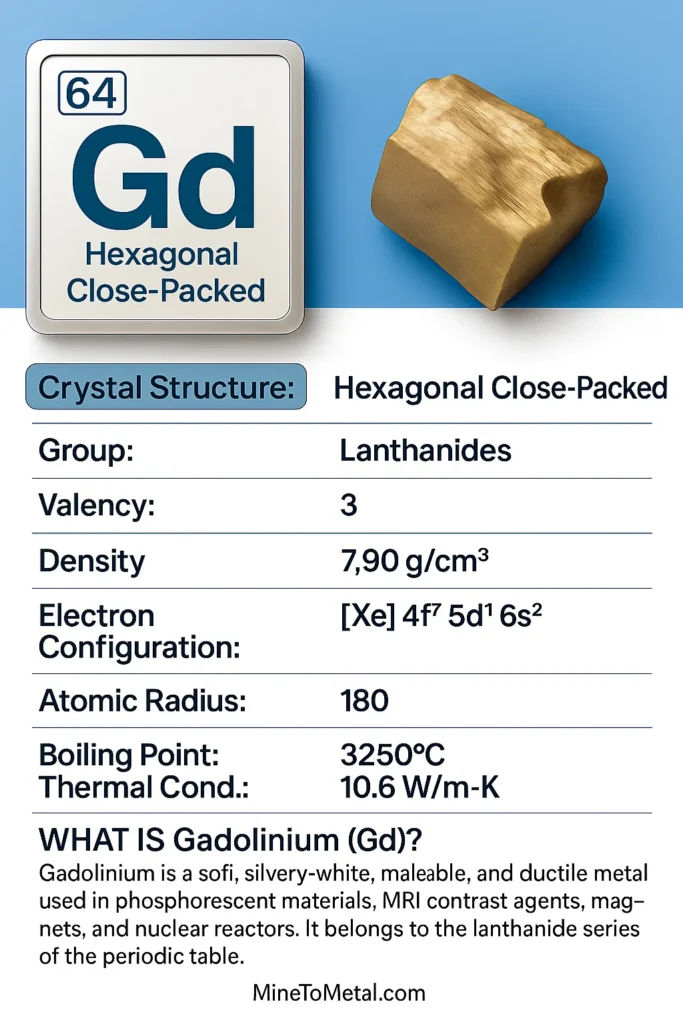
Gadolinium (atomic number 64, chemical symbol Gd) sits at a unique position in the periodic table that gives it properties no other element can match. Its electron configuration [Xe]4f⁷5d¹6s² creates a perfect storm of magnetic, thermal, and nuclear characteristics that make it indispensable across high-performance applications.
Magnetocaloric Effect in Gadolinium Alloys
Pure gadolinium demonstrates the strongest magnetocaloric effect of any known element near room temperature — a phenomenon where the material’s temperature changes dramatically when exposed to varying magnetic fields. This occurs through a precise mechanism: applying a magnetic field aligns gadolinium’s magnetic moments, reducing magnetic entropy and generating heat. Remove the field, and the moments randomise, increasing entropy and creating cooling.
The process operates without toxic refrigerants, making it environmentally superior to conventional cooling systems. Research shows gadolinium-based magnetic refrigeration can achieve up to 60% higher energy efficiency than traditional gas compression systems.
This magnetocaloric behaviour stems from gadolinium’s Curie temperature of exactly 20°C — precisely where its ferromagnetic properties transition, creating maximum temperature sensitivity to magnetic field changes. The effect enables next-generation cooling technologies for everything from household appliances to industrial processes.
Atomic Structure and Magnetic Behaviour
Gadolinium’s half-filled 4f electron shell creates exceptional magnetic properties through seven unpaired electrons — the maximum possible configuration. This arrangement produces:
- Large magnetic moment: 7.94 Bohr magnetons per atom
- Highly localised 4f electrons: Creating strong internal magnetic fields
- Pure spin magnetism: Orbital angular momentum equals zero, simplifying magnetic behaviour
- Room-temperature ferromagnetism: Unique among lanthanides for sustained magnetic ordering near 20°C
These characteristics make gadolinium compounds essential for magnetic devices operating at ambient temperatures, from medical imaging systems to precision sensors.
Neutron Absorption Capabilities
Gadolinium’s nuclear properties prove equally remarkable. Isotopes ¹⁵⁵Gd and ¹⁵⁷Gd possess the highest thermal neutron absorption cross-sections among all stable elements — the foundation of gadolinium’s critical role in nuclear technology. When these isotopes capture neutrons, they convert to stable products without generating long-lived radioactive waste, making them ideal for reactor control systems and neutron shielding applications.
Chemical Reactivity and Compound Formation
Gadolinium exhibits controlled reactivity that enables sophisticated chemical applications. While stable in dry air, it forms a protective oxide layer in moist conditions — behaviour that can be exploited for corrosion-resistant coatings. The element readily dissolves in dilute acids to form trivalent Gd³⁺ ions with coordination numbers typically between 6 and 9, allowing complex molecular architectures.
Most importantly for medical applications, gadolinium forms extraordinarily stable chelates with organic ligands. These complexes neutralise the toxicity of free Gd³⁺ ions while preserving their paramagnetic properties — the chemical foundation that makes MRI contrast agents both safe and effective.
Gadolinium oxide (Gd₂O₃) serves as the precursor for numerous industrial compounds, from phosphors that convert X-rays to visible light to optical materials that manipulate laser beams with precision.
Key Takeaway: Gadolinium’s unique combination of room-temperature magnetism, exceptional neutron absorption, and versatile chemical behaviour creates a materials science toolkit that no other element can replicate — explaining its strategic importance across medicine, nuclear technology, and advanced manufacturing.
Medical Imaging – The MRI Backbone
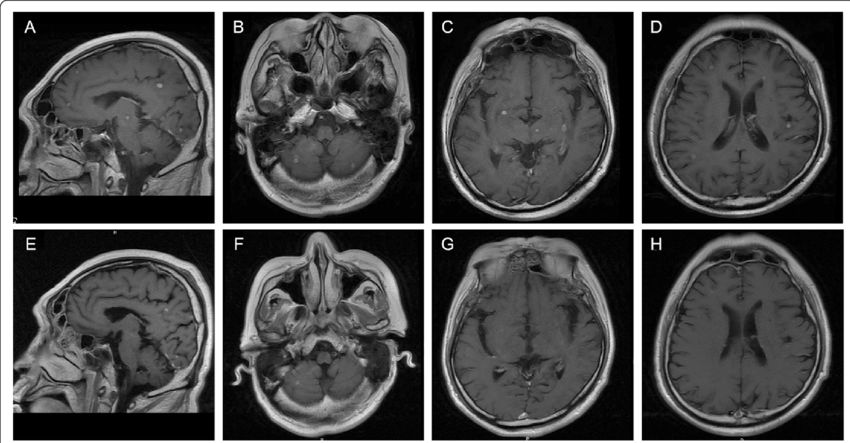
Image Source: ResearchGate
Every year, over 200 million diagnostic procedures rely on gadolinium — most of them without patients ever knowing this metal was involved. Its paramagnetic nature makes it the gold standard for enhancing MRI scans, revealing clear images of tissues and blood vessels that were once hidden in static.
The secret is in its chemistry: toxic in free form, but transformed into a safe, powerful imaging tool through advanced chelation. Similar to europium’s role in red phosphors for medical imaging screens, gadolinium extends the frontier inside the body itself
Chelated Gd(III) Complexes in MRI Imaging
Free gadolinium (Gd³⁺) ions pose serious toxicity risks, but become remarkably safe when bound to chelating agents. This chemical engineering feat prevents direct tissue damage whilst preserving the metal’s essential paramagnetic behaviour. Several gadolinium-based contrast agents (GBCAs) now dominate clinical practice, including gadopentetate dimeglumine (Magnevist), gadodiamide (Omniscan), and gadoteridol (ProHance).
The chelation process wraps gadolinium ions in protective molecular cages, creating stable complexes that maintain magnetic activity while preventing toxic interactions with biological systems.
Relaxivity and T1 Signal Enhancement
Gadolinium’s effectiveness stems from its unique electronic structure. With seven unpaired electrons — the maximum possible for any atom — gadolinium ions generate powerful local magnetic fields that dramatically shorten T1 relaxation times of nearby water protons. This effect translates directly into brighter, more detailed images on T1-weighted MRI scans.
Although gadolinium affects both T1 and T2 relaxation times, the T1 effect predominates at clinical concentrations, producing the enhanced contrast that enables physicians to distinguish between healthy and diseased tissues with unprecedented precision.
Macrocyclic vs Linear Chelates – Gd-DTPA vs Gd-DOTA
The structural design of chelating agents directly impacts patient safety. Two primary approaches have emerged:
| Property | Linear Chelates (Gd-DTPA) | Macrocyclic Chelates (Gd-DOTA) |
|---|---|---|
| Structure | Gadolinium wrapped by elongated ligands | Gadolinium caged within preformed ligands |
| Stability | Lower kinetic stability | Higher kinetic stability |
| NSF Risk | Higher, especially with non-ionic forms | Very low, if any |
| Examples | Magnevist, Omniscan | Dotarem, ProHance |
Macrocyclic agents offer superior stability by fully enclosing gadolinium within cage-like molecular structures. This architectural difference becomes critical for patient safety, particularly in individuals with compromised kidney function who cannot rapidly eliminate the contrast agent.
Gadolinium Retention and Nephrogenic Systemic Fibrosis
Nephrogenic Systemic Fibrosis (NSF) represents one of the most serious complications associated with gadolinium exposure. This potentially fatal condition, characterised by progressive tissue fibrosis, primarily affects patients with impaired renal function. The condition sparked significant regulatory action in 2007, leading to NSF cases decreasing dramatically from hundreds annually to just 32 cases in each of 2019 and 2020.
Recent research has identified another concern: gadolinium deposition in brain tissue, particularly in the dentate nucleus and globus pallidus, following multiple GBCA administrations. While the long-term significance remains under investigation, this finding emphasises the importance of judicious contrast agent use.
Angiography and Interventional Radiology
Beyond routine MRI, GBCAs excel in specialised imaging applications. They provide valuable alternatives for angiographic and interventional procedures, especially for patients with renal insufficiency or severe reactions to iodinated contrast agents. Digital subtraction angiography using gadolinium chelates delivers diagnostic-quality vascular images with significantly reduced nephrotoxicity compared to traditional iodinated agents.
These applications extend gadolinium’s utility beyond basic imaging into interventional medicine, where real-time visualisation guides complex procedures.
Positron Emission Tomography (PET) Imaging Applications
In positron emission tomography (PET), gadolinium-based scintillators are integrated into the detector array to convert high-energy gamma photons into visible light, enabling precise image reconstruction. These detectors, when paired with gadolinium-enhanced tracers, significantly improve sensitivity in neurological, oncological, and cardiovascular imaging.
Emerging applications highlight gadolinium’s expanding role in multimodal imaging. Simultaneous PET-MR protocols allow gadolinium agents to be administered alongside PET tracers for parallel myocardial perfusion studies. Research suggests that [¹⁸F]FLT uptake patterns in brain tissue may correlate with blood–brain barrier disruption, mirroring gadolinium contrast enhancement patterns.
These developments highlight how gadolinium continues to enable new diagnostic approaches that combine multiple imaging modalities.
Key Takeaway: Gadolinium’s seven unpaired electrons create unmatched paramagnetic properties that have enabled over 200 million diagnostic procedures, yet ongoing research into safer chelation chemistry continues to improve the risk-benefit balance for this cornerstone of modern medical imaging.
Ongoing research into safer chelation chemistry aims to further enhance MRI contrast agent safety, ensuring patient protection without compromising diagnostic clarity
Phosphors and Scintillators – Medical & Security Imaging
Image Source: Geebee International
When invisible X-rays need to be turned into visible light, gadolinium steps in. From reducing patient radiation doses to improving security scanning, its phosphors and scintillators capture high-energy photons and emit light at precisely tuned wavelengths.
That’s why medical X-ray screens, airport CT scanners, and other imaging systems often depend on gadolinium-based compounds as their active layer
Gd₂O₂S:Tb – The Standard for Medical X-ray Intensification
Terbium-activated gadolinium oxysulfide (Gd₂O₂S:Tb) dominates modern X-ray imaging through its exceptional energy conversion efficiency. When X-rays strike this compound, it emits a brilliant green glow at 545 nm wavelength, converting approximately 15% of absorbed X-ray energy into visible light—five times more efficient than traditional calcium tungstate screens that manage only 3% conversion.
The physics behind this superiority comes down to absorption timing. Gd₂O₂S:Tb exhibits its K-edge at 50 keV, perfectly positioned to capture the 50-70 keV X-rays commonly used in medical imaging. Calcium tungstate, with its K-edge at 70 keV, misses much of this critical energy range.
Clinical impact: Sensitivities 2-8 times greater than traditional screens translate directly into reduced patient radiation exposure. Three-tier rare earth screen systems achieve radiation dose reductions of approximately 80% whilst maintaining diagnostic image quality.
| Imaging Parameter | Gd₂O₂S:Tb Advantage | Clinical Benefit |
|---|---|---|
| X-ray absorption | Superior 50-70 keV capture | Better image contrast |
| Light conversion | 15% vs 3% efficiency | Lower radiation doses |
| Emission wavelength | Green (545 nm) | Optimal detector matching |
Advanced formulations co-doped with praseodymium, cerium, and fluorine deliver improved decay times and reduced afterglow, making them ideal for real-time imaging applications where temporal resolution matters.
Airport Security – Gadolinium’s Role in Modern CT Scanners
Airport security systems worldwide depend on gadolinium-based scintillators to power the latest generation of computed tomography baggage scanners. Unlike traditional single-angle fluoroscopy, these CT systems rotate X-ray tubes and detectors around luggage, generating detailed cross-sectional images from multiple angles.
The colour-coded threat detection system relies on material density analysis: orange indicates organic substances, blue shows inorganic materials, and green represents mixed compositions. This automated classification helps security personnel identify potential threats within seconds rather than minutes.
Recent performance testing at Helsinki Airport revealed that these CT scanners deliver significantly higher radiation doses to scanned items compared to conventional fluoroscopic devices. Whilst harmless to passengers and staff, this increased intensity creates unexpected complications for radiation workers whose dosimeters accidentally pass through these systems.
Key Takeaway: Gadolinium’s exceptional X-ray absorption at clinically relevant energies enables both safer medical diagnostics and more sophisticated security screening, demonstrating how a single material property can create advantages across seemingly unrelated applications.
Nuclear Technology and Reactor Safety
In the high-stakes environment of nuclear reactors, gadolinium acts as the ultimate safety brake. Its isotopes — ¹⁵⁷Gd and ¹⁵⁵Gd — absorb neutrons more effectively than any other stable element, allowing engineers to slow or stop chain reactions in seconds.
Few applications showcase gadolinium’s strategic importance more clearly than nuclear technology, where its neutron-absorbing powers serve as the ultimate safeguard against runaway chain reactions. This capability places gadolinium at the forefront of neutron absorption applications, ensuring precise reactivity control in both civilian and defence nuclear facilities.
The physics behind gadolinium’s nuclear prowess centres on two isotopes: ¹⁵⁷Gd and ¹⁵⁵Gd. These isotopes possess the highest thermal neutron absorption cross-sections among all stable elements. The numbers are staggering — ¹⁵⁷Gd captures neutrons approximately three times more effectively than ¹⁵⁵Gd, giving gadolinium unmatched stopping power in the nuclear realm.
| Isotope | Thermal Neutron Cross-Section | Contribution to Total Cross-Section | Key Nuclear Applications |
|---|---|---|---|
| ¹⁵⁷Gd | Highest among stable isotopes | >99% in thermal energy range | Emergency shutdown, burnable absorbers |
| ¹⁵⁵Gd | Second highest | Significant contributor | Reactivity control, shielding |
The efficiency is remarkable: just 1 mg/kg of ¹⁵⁷Gd added to a nuclear reactor provides 3.8 mk of negative reactivity. That’s enough neutron-stopping power to significantly influence reactor behaviour with an almost homeopathic dose.
These nuclear-scale absorption rates make gadolinium ideal for components that must halt or finely regulate chain reactions under dynamic operating conditions. Cerium and erbium share parallel importance in nuclear and energy systems, highlighting how different rare earths complement each other in safety-critical applications.
Control Rods, Burnable Poisons, and Fuel Additives
Throughout a reactor’s operational cycle, gadolinium serves multiple critical functions. Fresh fuel contains excess reactivity that must be carefully managed, and gadolinium acts as a burnable absorber to compensate. Unlike boron, which behaves as a “grey” absorber, gadolinium functions as a “black” absorber for neutrons — meaning it captures them almost completely rather than just slowing them down.
This distinction matters for reactor design. Gadolinium’s superior absorption creates highly effective control, yet requires careful engineering to prevent excessive local flux depressions that could create hot spots or uneven fuel burnup.
When compared to boron-based systems, gadolinium offers several operational advantages:
- Superior solubility in heavy water
- More effective removal via ion exchange resin columns
- Reduced active waste volume
- Shorter reactor restart time after shutdown
These benefits explain why nuclear engineers increasingly favour gadolinium for critical safety applications, despite its higher material costs.
Case Study: CANDU Reactor Emergency Shutdown Reliability
The challenges of deploying gadolinium in real-world reactor systems became apparent in a 2008 incident at Ontario’s Pickering-B nuclear station, which offers valuable lessons for the industry.
The Challenge: CANDU reactors require guaranteed shutdown states (GSS) that maintain reactors in stable subcritical conditions regardless of any core perturbations. This represents the ultimate nuclear safety requirement — the reactor must stay shut down no matter what.
The Solution: Engineers inject gadolinium nitrate solution directly into the moderator, creating an over-poisoned guaranteed shutdown state (OPGSS). This system provides multiple layers of redundant safety.
The Reality Check: The April 2008 Pickering-B incident revealed an unexpected vulnerability. The unit experienced gradual gadolinium depletion during what should have been a stable shutdown period. Investigation uncovered that CO₂ ingress into the moderator system caused gadolinium to precipitate as oxalate, effectively removing it from solution.
The solution required developing strict chemistry control specifications that limit CO₂ concentrations in moderator systems. This incident highlighted that even the most reliable neutron absorber requires careful chemistry management to maintain effectiveness.
Key Takeaway: Gadolinium’s unmatched neutron absorption makes it irreplaceable for nuclear safety systems, but real-world deployment demands rigorous attention to water chemistry and system interactions to ensure reliable performance when it matters most.
Magnetic Refrigeration and Energy Applications
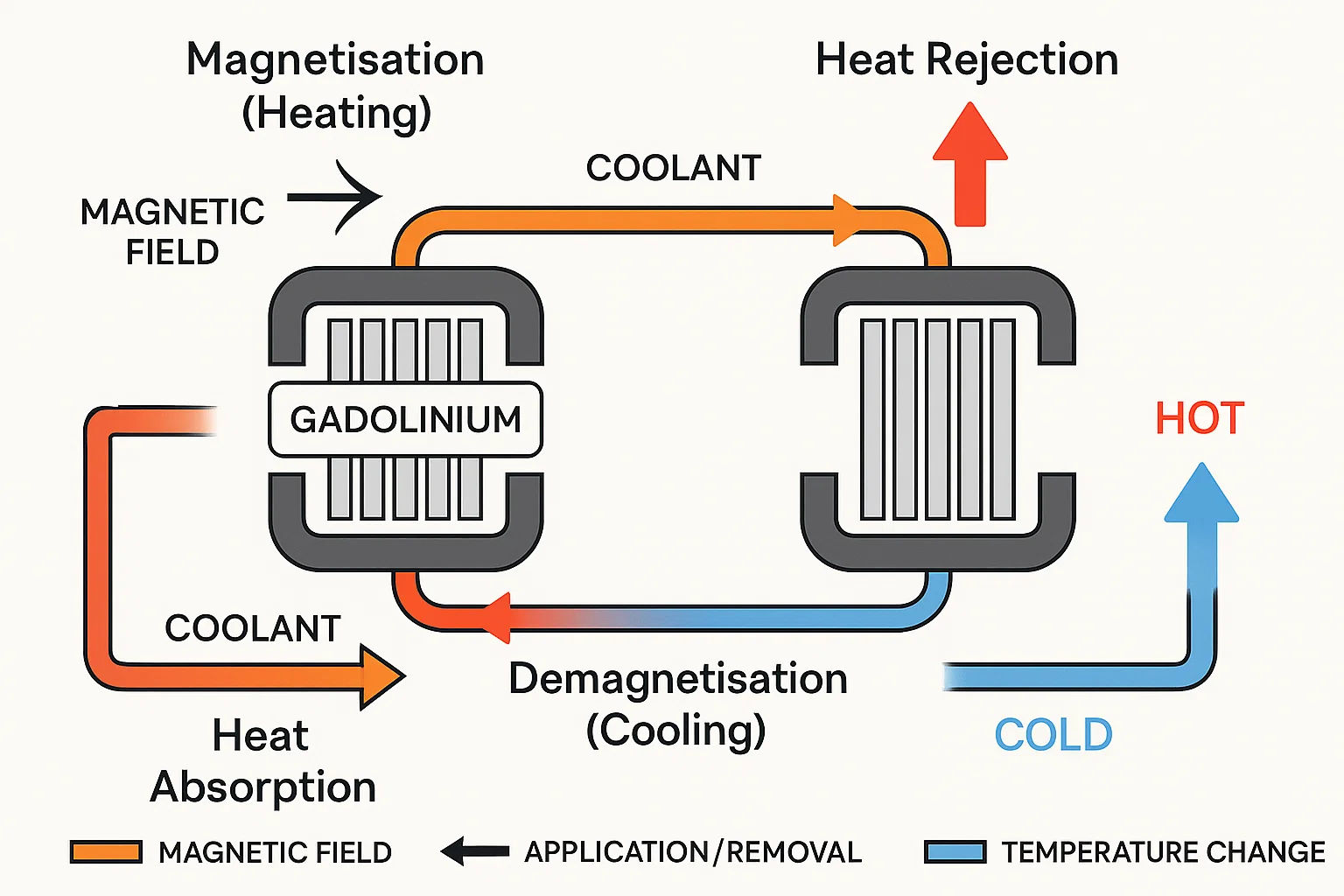
Image Source: en.wikipedia.org
Imagine cooling systems that run without harmful refrigerants — and are up to 60% more efficient than current models. That’s what gadolinium’s magnetocaloric effect makes possible.
At its Curie point of exactly 20°C, gadolinium undergoes a dramatic temperature shift in magnetic fields, unlocking potential for greener refrigeration and advanced solid oxide fuel cell technologies.
Magnetocaloric Effect Near Room Temperature
As one of the most effective magnetocaloric materials near room temperature, gadolinium enables high-efficiency cooling systems that avoid harmful refrigerants..Gadolinium serves as the benchmark for magnetic refrigeration research precisely because it exhibits its maximum magnetocaloric effect at 20°C—exactly where we need cooling most. When subjected to high magnetic fields, the material can achieve adiabatic temperature changes exceeding 20°C in pulsed magnetic fields.
This effect works through magnetic entropy manipulation. Apply a magnetic field, and gadolinium’s magnetic moments align, reducing entropy and generating heat. Remove the field, and the moments randomise, increasing entropy and producing cooling. The process is completely reversible and environmentally benign.
This predictable thermal swing makes gadolinium an ideal working material for solid-state refrigeration modules, where precise temperature control and compact design are essential. Magnetic refrigeration systems using gadolinium operate at up to 60% higher efficiency than conventional gas compression refrigeration whilst eliminating chlorofluorocarbons entirely. Researchers are also experimenting with dysprosium and praseodymium compounds to expand this cooling frontier, though gadolinium remains the most effective standard
Gd₅(Si,Ge)₄ Alloys for Tunable Curie Points
Pure gadolinium provides excellent magnetocaloric properties, but researchers have developed superior Gd₅(Si,Ge)₄ compounds that dramatically outperform the baseline:
| Material | MCE Magnitude | Working Temperature | Key Advantage |
|---|---|---|---|
| Pure Gd | Standard reference | ~20°C (68°F) | Consistent performance |
| Gd₅Si₂Ge₂ | 2× larger than Gd | ~276K | Giant magnetocaloric effect |
| Gd₅(Si,Ge)₄ | Tunable | 30-276K | Adjustable temperature range |
The strategic advantage lies in tunability. By adjusting silicon and germanium ratios, scientists can engineer materials with precisely controlled Curie temperatures, enabling refrigeration across diverse temperature ranges for specific applications.
Gadolinium-Doped Ceria in Solid Oxide Fuel Cells
Gadolinium’s electronic properties enable efficient energy generation through gadolinium-doped ceria (GDC), a superior ionic conductor that addresses key limitations in solid oxide fuel cell technology.
GDC electrolytes deliver exceptional performance metrics:
- Ionic conductivity of 0.1 S/cm at just 450°C
- Power density reaching 569 mW/cm² at 450°C
- Operational stability for 150 hours at high current density (110 mA/cm²)
These specifications enable dramatically lower operating temperatures for SOFCs, improving both durability and commercial viability. The material facilitates efficient electrode reactions at triple phase boundaries and double phase boundaries, expanding the active reaction zone.
Lower operating temperatures translate directly to reduced thermal stress, longer component life, and faster startup times—critical factors for widespread fuel cell adoption.
These gadolinium uses in cooling and energy generation position the element at the heart of sustainable engineering innovations.
Key Takeaway: Gadolinium’s magnetic and ionic properties position it as a cornerstone of sustainable energy infrastructure, enabling both efficient cooling without refrigerants and durable fuel cells that operate at practical temperatures.
India’s Gadolinium LandscapeIts dual role in enabling efficient cooling and advancing solid oxide fuel cell materials underscores gadolinium’s versatility in sustainable energy technology.
High-Performance Alloys and Structural Materials
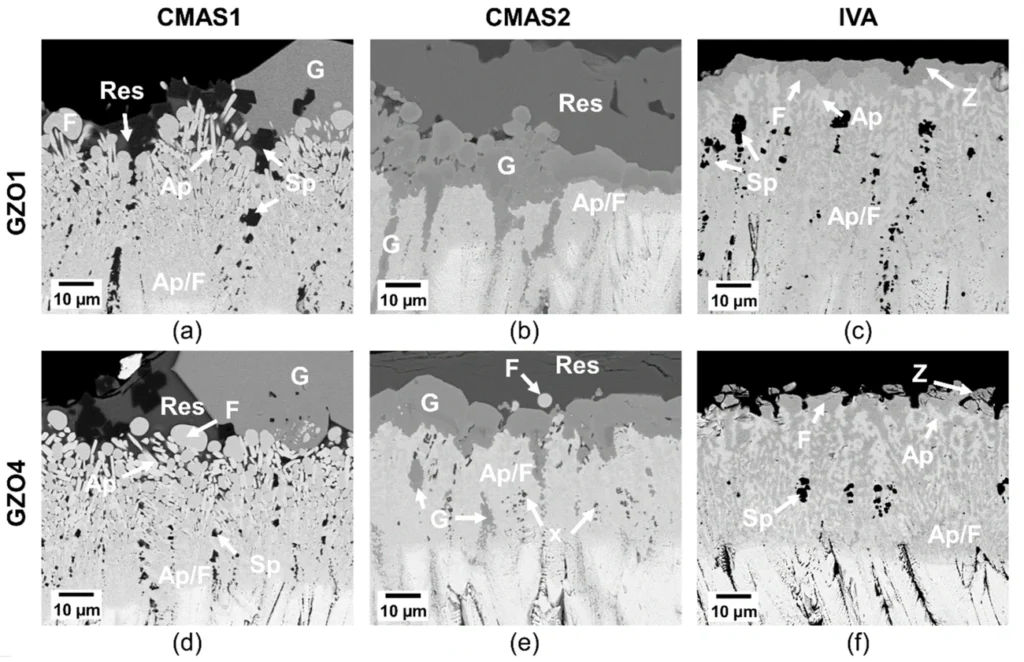
Image Source: MDPI
Small additions of gadolinium create outsized improvements in metal performance—a metallurgical phenomenon that makes this rare earth element essential for applications where conventional alloys simply cannot deliver.
These microstructural advantages make gadolinium indispensable in high-temperature aerospace alloys designed for jet engines, satellite components, and turbine blades.
Oxidation Resistance in Iron/Chromium Alloys
As little as 1% of gadolinium added to iron, chromium, and related alloys produces remarkable resistance to high-temperature oxidation whilst simultaneously improving workability. This dual benefit stems from gadolinium’s tendency to segregate at grain boundaries, where it forms stable oxides that effectively block oxygen diffusion pathways.
The protective mechanism works precisely where it matters most. Unlike surface treatments that can chip or wear away, gadolinium’s protection operates at the microstructural level, creating barriers within the metal itself. This becomes particularly valuable in applications exposed to thermal cycling, where conventional protective coatings often fail.
Such intrinsic protection at the microstructural level allows these alloys to meet the extreme thermal and mechanical demands of aerospace, power generation, and defence applications without relying solely on external coatings.
In dry air, pure gadolinium metal maintains relative stability. Yet in moist environments, it forms a loose oxide film that spalls off, leading to continual oxidation of fresh metal underneath—a reminder that even beneficial elements require careful engineering.
Gadolinium-Enhanced Corrosion Protection Coatings
Gadolinium zirconate (GZ) represents a step change in protective coating performance. Its combination of low thermal conductivity (1.6 W/(m·K)), high melting point (~2600°C), excellent damage tolerance, and phase stability from room temperature to 1600°C makes it exceptional for extreme environments.
| Coating Type | Gd/Zr Ratio | CMAS Penetration Rate | Key Advantage |
|---|---|---|---|
| Standard GZ | 1.0 | Higher | Baseline performance |
| Gd-rich GZ | 2.3/1.7 | 6.8 μm/h | Superior corrosion resistance |
The numbers tell the story. Gd₂.₃Zr₁.₇O₆.₈₅ demonstrates significantly slower penetration rates and lower infiltration depths compared to stoichiometric compositions, achieving superior calcium-magnesium-alumina-silicate (CMAS) corrosion resistance. This performance advantage directly translates to extended component life in gas turbines and aerospace applications.
Enhanced High-Temperature Workability for Aerospace
Aerospace demands create the ultimate test for metallurgical innovation. Gadolinium additions modify grain boundary properties and enable microstructural refinement, creating alloys that perform better during both manufacturing and service.
These gadolinium-enhanced aerospace alloys deliver measurable improvements:
- Improved hot formability during manufacturing processes
- Better retention of mechanical properties at elevated temperatures
- Enhanced resistance to thermal fatigue cycles
The aerospace industry’s exacting standards mean that even small performance gains justify the complexity of incorporating rare earth additions. Where component failure is not an option, gadolinium’s metallurgical benefits provide essential margins of safety.
Key Takeaway: Gadolinium’s ability to improve both workability and protective properties makes it indispensable for high-performance materials, yet developing commercial preparation methods for optimal non-stoichiometric coatings remains a technical challenge requiring continued innovation.
Electronics, Photonics, and Superconductors
The backbone of modern communication networks relies on gadolinium compounds that most people never see yet interact with daily. From the microwave signals carrying mobile phone conversations to the optical fibres transmitting internet data, gadolinium-based materials ensure these systems operate with precision and reliability.
Gadolinium Yttrium Garnet (YIG) in Microwave Devices
Because gadolinium subtly alters the magnetic permeability of yttrium iron garnet, it allows engineers to fine-tune signal flow and suppress interference in high-frequency environments.
YIG incorporating gadolinium functions as the critical material enabling circulators and isolators—components essential for mobile phones, satellite systems, and radar installations. These devices act as one-way valves for microwave signals, preventing destructive reflections that would otherwise degrade communication quality.
The performance gains from gadolinium iron garnet (GdIG) and YIG materials have been substantial. Modern mobile networks depend on these materials to maintain signal integrity across millions of simultaneous conversations and data transmissions.
Gadolinium Gallium Garnet (GGG) in Optical Devices
Gadolinium Gallium Garnet (GGG, Gd₃Ga₅O₁₂) offers remarkable optical transparency across 0.36 to 6.0 μm wavelengths, with refractive indices ranging from 2.0 in the UV spectrum to 1.8 in the infrared. This crystalline material primarily serves as a stable substrate for photonic components, providing the thermal stability and lattice matching required for precision optical device fabrication. (For its role in magneto-optical isolators, see the Optical Isolators section.)
Gadolinium Scandium Gallium Garnet (GSGG) in High-Power Lasers
GSGG (Gd₃Sc₂Ga₃O₁₂) outperforms conventional laser host materials through superior characteristics:
- Neodymium distribution coefficient of 0.65 compared to Nd:GGG’s 0.52
- Thermal conductivity of 6.042 W m⁻¹ K⁻¹ at 30°C
- Exceptional radiation resistance for harsh environments
These properties enable high-power laser systems used in industrial processing, medical procedures, and defence applications.
Optical Isolators and Magneto-Optical Films
Gadolinium iron garnet demonstrates powerful magneto-optical effects in infrared wavelengths, making it the material of choice for optical isolators. When subjected to magnetic fields, these materials create non-reciprocal light propagation through the Faraday effect, protecting sensitive laser components from damaging back-reflections.
GdIG ceramics achieve impressive infrared transmittance exceeding 68% across 1500-5000 nm wavelengths, enabling precise control over optical signals in telecommunications and scientific instruments.
Magneto-Optical Data Storage
Temperature-dependent magnetic properties in gadolinium iron garnet films enable precise control over data storage through magnetic domain manipulation. Engineers can tune bias fields to magnitudes six times higher than coercive fields, providing exceptional control over data writing and reading processes.
GdBCO in High-Field Superconducting Motors
Second-generation GdBCO-coated conductors represent a breakthrough in superconducting technology, offering:
- High critical current density for compact designs
- Minimal sensitivity to external magnetic fields
- Superior mechanical durability under stress
Recent advances include resistance-free “superconducting joints” for GdBCO conductors, enabling persistent current operation essential for high-field magnetic applications. These developments position gadolinium-based superconductors at the forefront of next-generation electric motors and magnetic levitation systems.
Key Takeaway: Gadolinium compounds serve as the invisible infrastructure enabling modern electronics, telecommunications, and advanced photonic systems—yet their strategic importance extends far beyond consumer applications into defence, scientific research, and emerging superconducting technologies.
Defence, Aerospace, and Navigation Systems
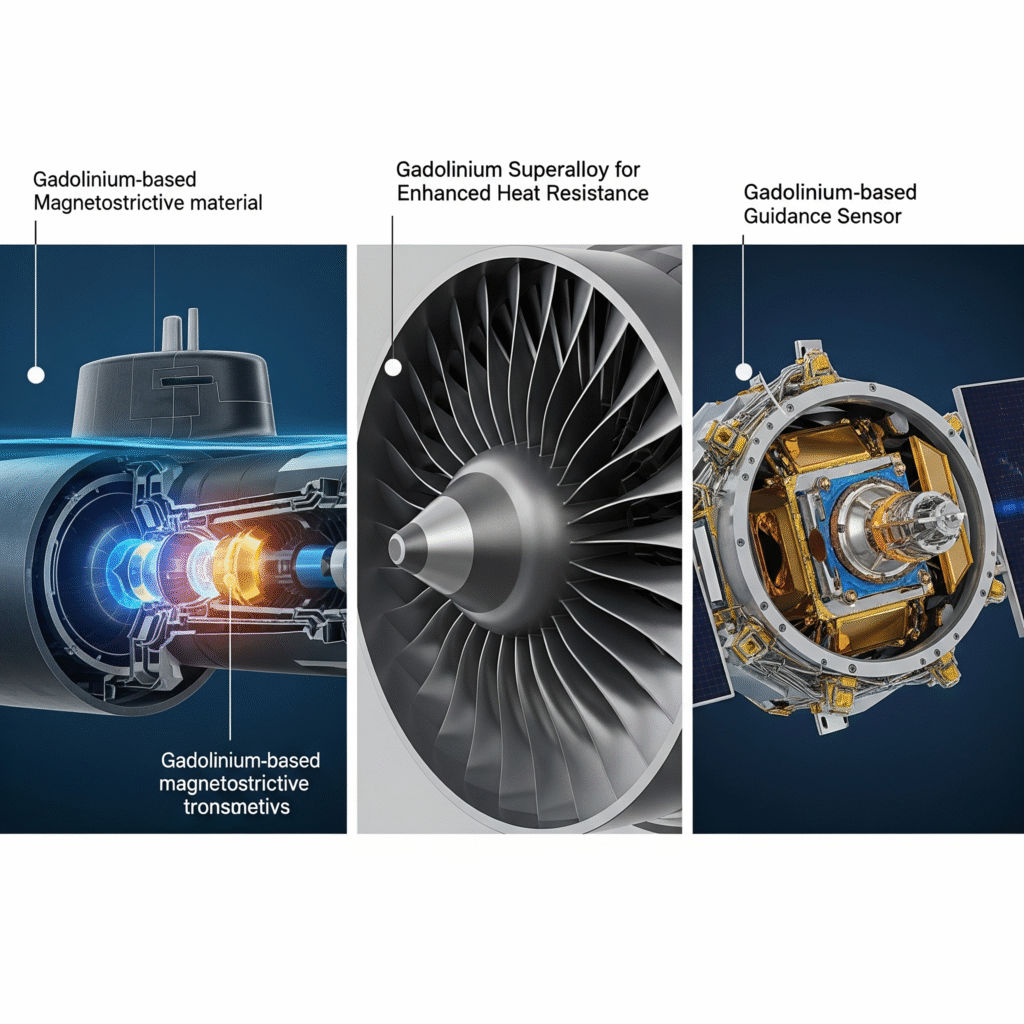
Image Source: Military Aerospace
Designated as a strategic material by defence ministries worldwide, gadolinium underpins critical military and aerospace systems where failure simply isn’t an option. Its unique combination of magnetic properties and neutron absorption capabilities makes it indispensable for national security applications that most civilians never see.
Underwater Detection and Maritime Defence
Sonar systems across naval fleets rely heavily on gadolinium’s magnetic properties for underwater threat detection and navigation. The element enhances signal generation and amplification in acoustic arrays, enabling submarines and surface vessels to identify targets at extended ranges with unprecedented precision.
Yttrium Iron Garnet (YIG) filters incorporating gadolinium provide precise frequency tuning in radar, sonar, and infrared detection systems. These components dramatically improve resolution and sensitivity, giving naval forces critical advantages in contested waters where early detection determines mission success.
The strategic value becomes clear when you consider operational environments. Samarium-cobalt magnets containing gadolinium maintain operational stability from -55°C to 300°C, ensuring reliable performance whether deployed in Arctic waters or desert operations.
These magnetic traits directly translate into enhanced performance for sensing systems, where even marginal improvements in signal clarity can extend detection ranges and sharpen target resolution.
Aerospace Alloys for Extreme Performance
Fighter aircraft, hypersonic vehicles, and satellite systems push materials to their absolute limits. Even small gadolinium additions create remarkable improvements in high-temperature performance, with the element segregating at grain boundaries to form stable oxides that block oxygen diffusion pathways.
These gadolinium-enhanced aerospace alloys deliver:
Jet Engine Components: Enhanced workability enables complex geometries while maintaining structural integrity at operating temperatures exceeding 1000°C
Hypersonic Vehicles: Extended component life through superior oxidation resistance during sustained high-speed flight
Satellite Systems: Maintained structural properties across the extreme temperature swings of space environments
The implications extend beyond performance metrics. Nations without secure gadolinium supply chains face potential vulnerabilities in their most advanced defence platforms, making this seemingly obscure element a matter of strategic national interest.
Key Takeaway: Gadolinium’s exceptional magnetic and metallurgical properties enable precise detection systems and resilient aerospace materials that form the backbone of modern defence capabilities, yet supply vulnerabilities create strategic dependencies few policymakers fully understand.
Nanotechnology and Experimental Medicine
Research laboratories worldwide are pushing gadolinium beyond its established roles, exploring applications that could reshape cancer treatment and medical diagnostics. These experimental frontiers demonstrate how fundamental materials science can unlock entirely new therapeutic possibilities.
Gadolinium Nanoparticles in Theranostics and Drug Delivery
AGuIX® represents a breakthrough in precision medicine—nanoparticles that combine diagnosis and therapy in a single platform. These polysiloxane particles measure less than 5 nm in diameter, small enough to accumulate selectively in tumours while being rapidly cleared through the kidneys. This combination of tumour selectivity and rapid bodily clearance creates a platform ideally suited for pairing diagnosis with targeted treatment in the same procedure.
The clinical potential is striking. Radiosensitisation enhancement ratios range from 1.1 to 2.5 across different cell lines, with significant therapeutic effects demonstrated in both heterotopic and orthotopic tumour models. Whether delivered intravenously or directly into tumours, these nanoparticles consistently enhance radiation therapy effectiveness.
What makes this approach remarkable is its dual function—the same particles that enable precise tumour imaging through MRI also amplify radiation therapy at the exact location where cancer cells cluster.
Neutron Capture Therapy for Cancer Treatment
Gadolinium neutron capture therapy (GdNCT) exploits 157Gd’s exceptional neutron absorption to create highly localised cancer treatment. When 157Gd captures neutrons, the resulting 157Gd(n,γ)158Gd reaction produces a cascade of therapeutic radiation:
- Gamma rays (1.4 MeV) with centimetre-range penetration for broader tumour coverage
- Internal conversion electrons (70.1 keV) with ~0.1 mm range for cellular-level precision
- Auger and Coster-Kronig electrons (0.8 keV) with ~20 nm range for molecular-scale damage
The optimal therapeutic window requires 50-200 μg of 157Gd per gramme of cancer tissue—a concentration that enables selective tumour destruction while sparing healthy cells.
Asthma Treatment Research in Murine Models
Experimental gadolinium compounds show promise in addressing respiratory diseases through innovative approaches. BALB/c mouse models incorporating gadolinium-based treatments effectively replicate key clinical asthma features:
- Elevated IgE levels and characteristic airway inflammation patterns
- Goblet cell hyperplasia and epithelial tissue changes
- Airway hyperresponsiveness to allergen exposure
These models provide crucial insights into how gadolinium’s unique properties might address inflammatory respiratory conditions beyond traditional approaches.
Key Takeaway: Gadolinium’s versatility extends into experimental medicine where its dual diagnostic-therapeutic potential could transform cancer treatment precision and provide new pathways for addressing respiratory diseases—yet these applications remain in early development stages requiring extensive clinical validation.
Specialty Chemicals and Catalysis
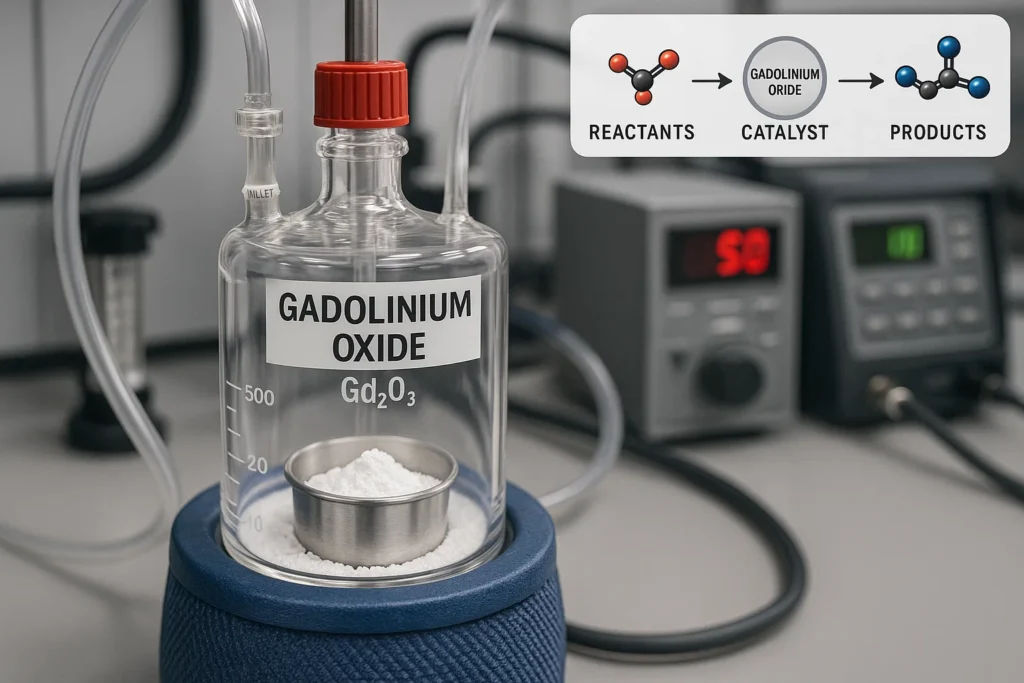
Image Source: link.springer.com
Beyond its high-profile roles in medicine and electronics, gadolinium quietly enables some of the most efficient chemical reactions in synthetic chemistry. This overlooked application demonstrates how a single compound can outperform conventional catalysts whilst addressing environmental concerns that plague industrial synthesis.
Gadolinium Triflate as a Lewis Acid Catalyst in Organic Synthesis
Gadolinium triflate (Gd(OTf)₃) operates as a remarkably efficient Lewis acid catalyst across diverse organic reactions. At concentrations as low as 0.01-0.5 mol%, this compound drives acetylation of alcohols and amines using acetic anhydride at room temperature—a performance that puts conventional catalysts to shame.
Just 0.01 mol% of gadolinium triflate can push acetylation reactions to completion, ranking among the most efficient catalysts known for this crucial transformation. This efficiency stems from gadolinium’s unique electronic structure, which provides optimal Lewis acidity without the drawbacks of traditional metal catalysts.
What distinguishes Gd(OTf)₃ from standard Lewis acids is its exceptional water stability. Unlike conventional catalysts that decompose upon contact with moisture, gadolinium triflate maintains its activity through aqueous workup procedures, enabling catalyst recovery and reuse. Laboratory tests confirm the catalyst performs effectively for over 10 cycles without significant activity loss.
| Catalyst Feature | Gd(OTf)₃ | Conventional Lewis Acids |
|---|---|---|
| Water Stability | Excellent | Poor |
| Reusability | Up to 10 cycles | Limited/None |
| Required Loading | 0.01-0.5 mol% | Often >1 mol% |
| Temperature | Ambient | Often elevated |
The catalyst’s versatility extends beyond acetylation. Gadolinium triflate effectively catalyses the Hantzsch reaction for polyhydroquinoline synthesis, achieving yields up to 89% under mild conditions. This approach offers operational simplicity whilst maintaining the environmental advantages of catalyst recycling—a combination rarely achieved in industrial synthesis.
Key Takeaway: Gadolinium triflate represents a sustainable approach to chemical synthesis, combining exceptional catalytic efficiency with environmental benefits that traditional catalysts cannot match—yet its potential applications across industrial processes remain largely unexplored.
Global Supply, Trade, and Strategic Control

Image Source: Stratfor
Such concentration of processing power creates vulnerabilities across the rare earth element supply chain, where a single nation can influence availability and pricing. Behind gadolinium’s remarkable applications lies a sobering reality: China controls approximately 90% of global rare earth processing, creating strategic vulnerabilities that ripple through every technology sector dependent on this critical element.
The numbers tell a stark story of concentrated supply chains. Global production estimates range from 400 tonnes to 7,500 metric tonnes annually, while reserves exceed one million tonnes. Yet this apparent abundance masks the bottleneck that occurs downstream, where processing capabilities remain heavily concentrated in just a few nations.
Production Landscape and Strategic Dependencies
Current producing nations reveal both opportunities and risks:
| Country | Production Status | Notable Features |
|---|---|---|
| China | Dominant producer | Controls mining and processing infrastructure |
| USA | Active production | Mountain Pass mine recently halted exports to China |
| Australia | Significant reserves | Growing processing capability |
| India | Active mining | Developing domestic capacity |
| Brazil | Active mining | Emerging producer |
The complexity of gadolinium extraction compounds these supply risks. The process involves seven distinct stages, beginning with acid treatment and culminating in ion exchange chromatography — a technical pathway that requires substantial infrastructure investment and expertise.
Market Dynamics and Price Pressures
Market projections underscore gadolinium’s growing strategic importance. Valued at USD 199.36 million in 2024, the market is projected to reach USD 509.57 million by 2035, representing a 7.9% CAGR. Recent volatility tells its own story: price fluctuations increased approximately 30% in Q2 2025, driven by:
- Chinese export restrictions implemented April 2025
- Port inventory depletion (Rotterdam stocks fell to 15 tonnes)
- Healthcare sector demand stability
These price swings reflect deeper structural issues. Unlike commodity metals with diverse supply sources, gadolinium’s specialized processing requirements create natural monopolies that can shift global availability overnight.
Key Takeaway: The strategic implications extend beyond price volatility — entire technology sectors from medical imaging to nuclear safety depend on supply chains controlled by a single nation, making diversification not just economically prudent but strategically essential.
India’s Gadolinium Landscape

India’s gadolinium story reveals the challenges facing any nation seeking technological sovereignty in critical materials. Despite possessing domestic reserves, the country remains largely dependent on imports for this strategic element, a vulnerability that becomes more concerning as gadolinium applications expand across defence, space, and advanced manufacturing sectors.
Geological Occurrence and Extraction
Gadolinium concentrations in India’s monazite sands along Kerala, Tamil Nadu, and Odisha coastlines range from 0.03-0.08% gadolinium oxide by weight. Extraction requires separating roughly one part gadolinium from 1,250 parts of other materials in raw monazite, a complex, multi-stage process involving physical separation and chemical processing through solvent extraction.
Current extraction infrastructure remains limited, with most processing focused on thorium and other rare earth elements rather than gadolinium-specific recovery.
While rare earth separation facilities at IREL and other Department of Atomic Energy units produce mixed REE concentrates from monazite, gadolinium recovery is typically incidental and not yet scaled for commercial-grade separation.
Strategic Dependencies and Domestic Capabilities
Nuclear Programme Requirements: India’s expanding nuclear infrastructure depends on gadolinium for neutron absorption in safety systems, yet domestic processing capacity falls short of demand. In India’s PHWR and CANDU reactor safety systems, gadolinium nitrate is deployed in moderator systems as a shutdown poison, mirroring practices in Canadian units. Its unmatched neutron absorption provides a critical safety margin, particularly during emergency shutdown procedures
Medical Sector Reliance: The country imports gadolinium compounds for MRI contrast agents, creating supply chain vulnerabilities in critical healthcare applications.
Defence Applications: Growing requirements for gadolinium-enhanced aerospace alloys and electronic systems increase strategic exposure to supply disruptions. Defence research bodies such as DRDO and NAL are evaluating gadolinium-enhanced alloys for satellite structures, hypersonic vehicle components, and naval sonar systems—applications where high-temperature oxidation resistance and stable magnetic behaviour are mission-critical.
The Department of Atomic Energy has identified rare earth element processing as a priority for reducing external dependencies, yet commercial-scale gadolinium separation remains underdeveloped.
Research and Future Potential
Indian institutions are developing capabilities across multiple gadolinium applications:
| Research Area | Leading Institutions | Current Status |
|---|---|---|
| Nanoparticles | BARC, IIT Madras | Early clinical trials for cancer therapy |
| Aerospace alloys | DRDO, NAL | Prototype testing for satellite components |
| Solar applications | CSIR labs | Laboratory research on photovoltaic enhancement |
Key Takeaway: Among gadolinium uses in India, applications in nuclear safety, MRI imaging, and aerospace alloys are driving the need for domestic processing capabilities.
India’s gadolinium landscape reflects broader challenges in critical mineral self-reliance—domestic reserves exist, but processing capabilities lag behind strategic requirements, creating dependencies that could impact national security and technological advancement.
Safety, Toxicology, and Environmental Impact
The remarkable properties that make gadolinium indispensable across critical technologies come with equally significant safety considerations. This element demonstrates a stark duality: life-saving when properly contained, potentially harmful when exposure occurs in the wrong form or concentration.
Toxicity of Free Gd³⁺ Ions vs Chelated Forms
Free gadolinium (Gd³⁺) exhibits considerable toxicity by competing directly with calcium in physiological processes. This interference disrupts vital functions in muscle tissue and neurons. Chelated gadolinium, however, demonstrates dramatically improved safety profiles by preventing direct tissue interaction.
| Property | Free Gd³⁺ | Chelated Forms |
|---|---|---|
| Calcium Channel Impact | Blocks channels | Minimal interference |
| Tissue Effects | Hepatocellular/splenic toxicity | Primarily safe with normal renal function |
| Stability in Body | Forms insoluble hydroxides at pH 7.4 | Stable with macrocyclic > linear stability |
The calcium-mimicking ability of gadolinium makes it valuable for scientific research yet potentially hazardous in its free ionic form. This chemical similarity to calcium enables its research applications whilst creating the very mechanism behind its toxicity.
Gadolinium Contamination in Aquatic Systems
Wastewater treatment plants now record gadolinium concentrations reaching 1100 μg/L, substantially exceeding natural background levels of just 1-4 ng/L. GBCAs entering water systems present environmental concerns since they resist conventional degradation processes.
This accumulation reflects the stability that makes these compounds effective medical contrast agents—the same chemical robustness that ensures clear MRI images also means persistent environmental presence. Water treatment facilities struggle to remove these compounds, leading to gradual accumulation in aquatic ecosystems.
Biological Use in Ion Channel Electrophysiology
Electrophysiologists utilise gadolinium’s calcium-blocking properties as a research tool for studying stretch-activated ion channels (SACs). The element acts as a selective blocking agent, inhibiting cation-selective SACs and various physiological processes.
This research application exploits gadolinium’s interference with calcium channels, the same mechanism behind its potential toxicity. The controlled laboratory use demonstrates how understanding toxic mechanisms can enable valuable scientific tools.
Key Takeaway: Gadolinium exemplifies how strategic materials often carry inherent trade-offs between beneficial applications and safety considerations. Proper management requires understanding both the mechanisms that enable its technological value and those that create potential risks.
Conclusion – Gadolinium’s Expanding Role
Strategic Value Across Sectors
Gadolinium’s neutron absorption ,259,000× stronger than any other stable element, makes it irreplaceable in nuclear safety systems. Its 20°C Curie point enables waste-free magnetic refrigeration, while over 200 million MRI procedures have used gadolinium-based contrast agents to revolutionise diagnostics. Phosphors cut X-ray radiation doses by up to 80%, and alloying improves aerospace components’ durability under extreme heat.
Vulnerabilities and Emerging Frontiers
China’s 90% control of rare earth processing leaves global supply chains exposed. India’s monazite sands hold only 0.03–0.08% Gd₂O₃, making domestic processing capacity critical for nuclear, medical, and defence needs. Gadolinium’s toxicity in free-ion form contrasts with the safety of chelated compounds, underscoring the role of materials engineering. New opportunities, from cancer-therapy nanoparticles to superconductors for advanced power systems, are driving a market projected to grow from USD 199.36M in 2024 to USD 509.57M by 2035.
Opportunity and Call to Action
For India, gadolinium is both an opportunity and an urgency. Research institutions like BARC and IIT Madras are exploring applications from therapeutics to aerospace alloys, but near-total import dependence remains a risk. Securing these gadolinium uses is vital for technological sovereignty and national security.
Key Takeaway: Gadolinium’s importance across medicine, energy, defence, and electronics will only increase as performance demands rise.
FAQs
What makes gadolinium so important for MRI scans?
Gadolinium-based contrast agents dramatically improve the accuracy of MRI scans by enhancing the visibility of specific organs, tissues, and blood vessels. These agents have been used to diagnose and plan treatment for over 100 million patients worldwide in the past 25 years.
Is gadolinium safe in medical use?
Gadolinium is considered safe in medical imaging when used in chelated form as part of MRI contrast agents. Chelation binds gadolinium ions to organic ligands, preventing toxicity. However, in patients with severe kidney impairment, there is a small risk of nephrogenic systemic fibrosis (NSF) and gadolinium retention.
How does gadolinium contribute to nuclear reactor safety?
Gadolinium is an exceptional neutron absorber, with isotopes ¹⁵⁷Gd and ¹⁵⁵Gd having the highest thermal neutron absorption cross-sections among all stable elements. This property makes it crucial for control rods, burnable poisons, and emergency shutdown systems in nuclear reactors, including PHWR and CANDU designs.
Why is gadolinium important for India’s nuclear reactors?
In India’s PHWR and CANDU-type reactors, gadolinium nitrate is used in moderator systems as a shutdown poison. Its exceptional neutron absorption provides a critical safety margin during emergency shutdowns, ensuring the reactor remains in a subcritical state.
What role does gadolinium play in magnetic refrigeration?
Gadolinium exhibits a strong magnetocaloric effect near room temperature, making it ideal for magnetic refrigeration systems. These systems can be up to 60% more energy-efficient than conventional gas compression refrigeration and eliminate the need for harmful refrigerants.
How is gadolinium used in high-performance alloys?
Even small amounts of gadolinium (as little as 1%) can significantly improve the workability and resistance to high-temperature oxidation in iron, chromium, and related alloys. This makes it valuable for aerospace and other advanced applications requiring materials that perform well under extreme conditions.
Which country produces the most gadolinium?
China is the world’s largest producer of gadolinium, controlling roughly 90% of global rare earth processing capacity, including gadolinium extraction and refining. This dominance creates significant supply chain dependencies for other nations.
Are there any environmental concerns associated with gadolinium use?
Yes, there are concerns about gadolinium contamination in aquatic systems. Wastewater treatment plants have recorded gadolinium concentrations up to 1100 μg/L, far exceeding natural levels of 1–4 ng/L. Gadolinium-based contrast agents entering water systems are resistant to degradation, potentially posing long-term environmental risks.
How does gadolinium compare to other rare earth metals?
Gadolinium is unique among rare earths for combining strong room-temperature magnetism, the highest thermal neutron absorption cross-section of any stable element, and a strong magnetocaloric effect. While other rare earths excel in optics or magnetism, gadolinium’s versatility spans medicine, nuclear safety, energy, defence, and electronics.