Last Updated on August 22, 2025 by Hemanth
Table of Contents
Overview
You won’t find europium listed in tech specs, but this silvery metal powers nearly every screen you’ve looked at today. Hidden inside televisions, smartphones, fluorescent lamps, and even Euro banknotes, europium plays a quiet yet indispensable role in the technologies we take for granted.
Luminescence, Rarity, and Atomic Uniqueness
Despite being one of the rarest rare-earth elements on Earth, the uses of europium span sectors critical to modern life, also becoming the backbone of modern display technology. The softest, least dense, and most chemically reactive member of the lanthanide series, this remarkable element possesses a unique electronic configuration that enables something no other material can match: exceptionally pure red luminescence.
Discovered in 1901 by French chemist Eugène-Anatole Demarçay and named after Europe, europium transforms invisible ultraviolet light into the vivid colours that define our digital world. From the red phosphors in colour television screens to sophisticated anti-counterfeiting measures, medical imaging breakthroughs, and cutting-edge quantum technologies, europium’s applications span sectors where precision and reliability matter most.
Atomic Stability Meets Strategic Scarcity
Both of europium’s naturally occurring isotopes are stable: europium-151 (47.81%) and europium-153 (52.19%). This stability, combined with its extraordinary luminescent properties, makes it irreplaceable in high-performance applications where other elements simply cannot deliver the required specifications.
Europium occurs naturally in minerals such as monazite, bastnaesite, and xenotime, never as a free metal. Its concentration in Earth’s crust averages just 2 parts per million, making it significantly rarer than silver yet strategically more important than many abundant metals. This scarcity hasn’t diminished its significance—quite the opposite.
The element’s remarkable properties have made it fundamental to technologies spanning from the relatively non-toxic heavy metal applications in your living room television to the sophisticated phosphor systems enabling next-generation quantum computing. What makes europium truly extraordinary is how its atomic structure allows precise control over light emission, creating colours so pure they serve as international standards.
In short: Europium combines extreme rarity with irreplaceable functionality, creating an element modern technology simply cannot do without.
Elemental Profile: What Makes Europium Unique
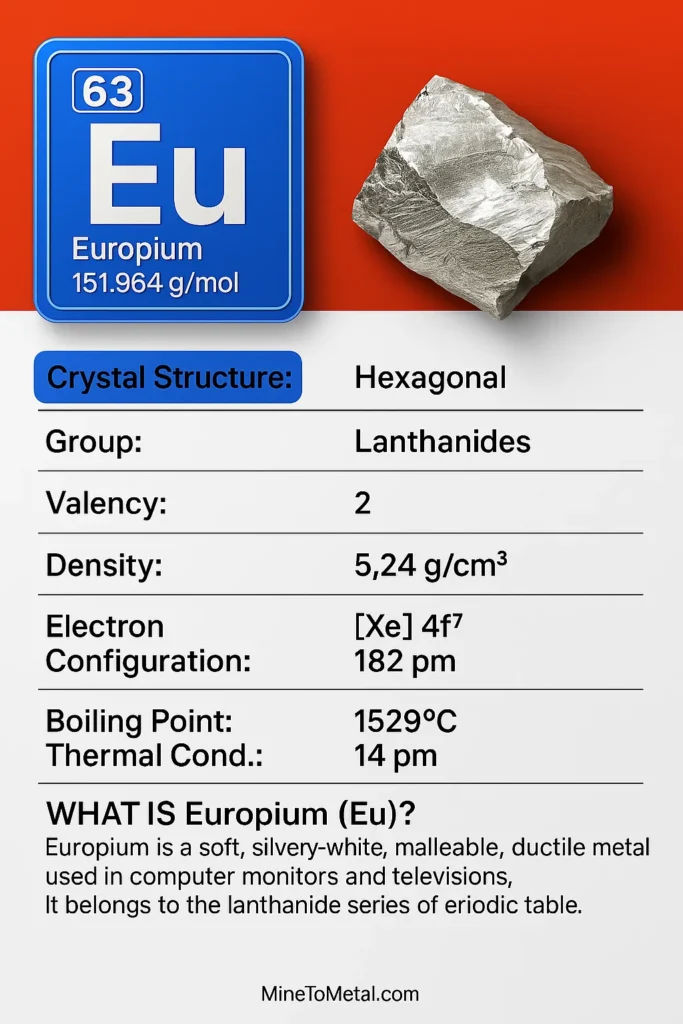
Europium (chemical symbol Eu, atomic number 63) defies typical lanthanide behaviour through a rare combination of electronic properties that make it irreplaceable across high-performance technologies. While most rare earth elements offer limited oxidation states, europium readily switches between two distinct electronic configurations, each enabling vastly different applications.
Dual Oxidation States: The Source of Europium’s Versatility
Europium uniquely possesses two readily accessible oxidation states (+2 and +3) with drastically different magnetic and spectroscopic properties. This duality allows a single element to serve applications as diverse as television phosphors and medical imaging contrast agents.
| Property | Eu²⁺ | Eu³⁺ |
|---|---|---|
| Electronic configuration | 4f⁷ (half-filled) | 4f⁶ |
| Stability | Most stable divalent lanthanide | Typical lanthanide state |
| Luminescence mechanism | 5d-4f transitions (allowed) | f-f transitions (forbidden) |
| Emission colour | Varies with environment (blue to red) | Primarily red-orange |
| Magnetic properties | Isotropic | Anisotropic |
| Relaxivity (MRI) | 3.72 ± 0.04 mM⁻¹s⁻¹ | Negligible |
The +3 oxidation state forms typically pale pink salts and exhibits paramagnetism due to unpaired electrons. The +2 state creates white to pale yellow or green salts, including europium(II) sulphate, chloride, hydroxide, and carbonate. This switching capability enables europium to function as both a luminescent material and a magnetic resonance enhancer.
The “Antenna Effect”: How Europium Creates Perfect Colours
Europium’s luminescence occurs through what scientists call the “antenna effect”—surrounding ligands absorb ultraviolet photons and transfer this energy to the europium ion, which then emits visible light in precise wavelengths. This three-step process involves absorption by the ligand, energy transfer to the metal, and finally, emission from the europium ion.
The quantum yield of luminescence in europium complexes equals the number of emitted photons divided by the number of absorbed photons. Quantum efficiency represents the probability of europium emission once excited, calculated as the ratio of radiative to total decay rates.
The Laporte rule states that atomic f-f transitions are forbidden in centrosymmetric environments, yet europium complexes overcome this limitation through strategic ligand arrangements. This scientific workaround enables the pure red emissions that define modern display technology.
Exceptional Physical Properties Under Extreme Conditions
Europium’s physical properties extend its utility beyond luminescence. The element exists in a body-centred cubic structure with a = 4.5827 Å at room temperature, possessing the most easily produced and stable +2 oxidation state among rare earths.
Under pressure, europium exhibits remarkable behaviour—converting from a divalent to trivalent state while displaying superconductor properties. This pressure-induced oxidation state switching demonstrates europium’s responsiveness to environmental conditions, a trait exploited in specialised applications.
Europium’s high neutron capture cross-section makes it exceptionally valuable in nuclear applications, where its ability to absorb neutrons provides precise reactor control capabilities.
Strategic Importance Through Irreplaceable Properties
These combined properties create an element that bridges multiple technological domains. Europium’s electronic configuration enables applications requiring both optical precision and magnetic functionality—from quantum memory storage systems that maintain coherence for hours to medical imaging agents that enhance diagnostic accuracy.
Key Takeaway: Europium’s dual oxidation states and antenna-effect luminescence create technological capabilities that no substitute can match, making it indispensable for applications requiring precise light emission, magnetic switching, or nuclear control properties.
Core Uses of Europium in Electronics and Display Technologies
Europium’s exceptional luminescent properties have made it the cornerstone of modern visual technology. The element’s unique ability to convert ultraviolet light into precise wavelengths of visible light enables everything from smartphone displays to energy-efficient home lighting.
Red and Blue Phosphors in LED Systems
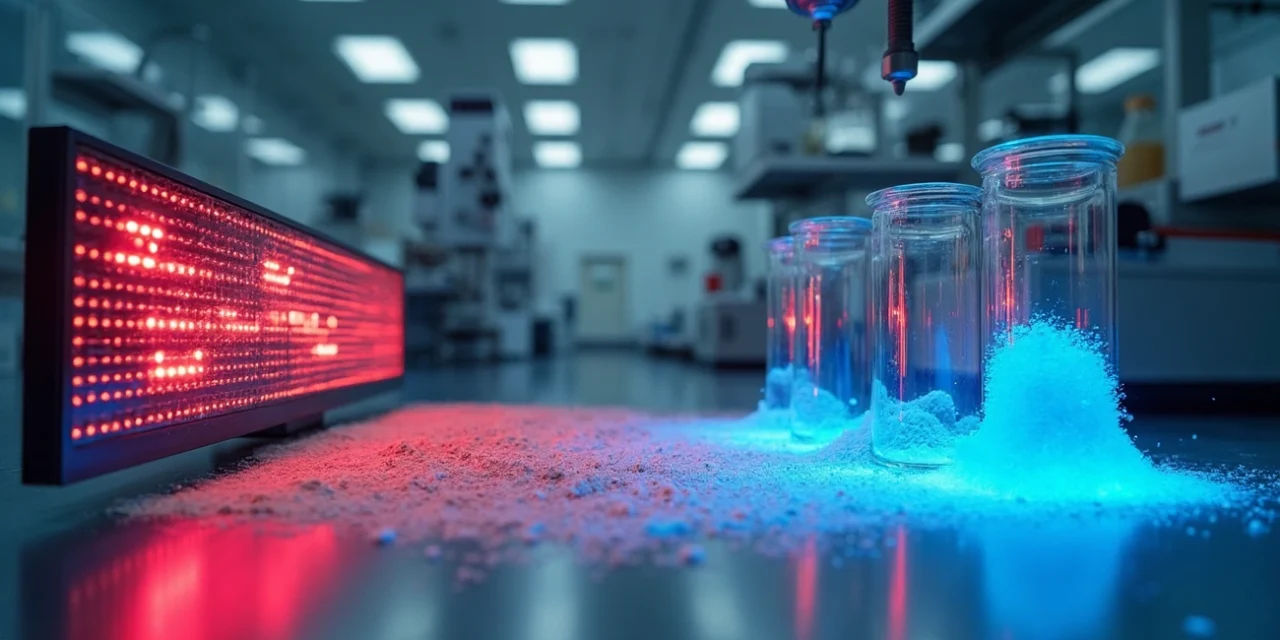
The vibrant colours displayed on screens worldwide rely heavily on europium’s exceptional luminescent properties. Specifically, europium ions emit bright reds and blues that dramatically enhance visual displays. This happens because europium-doped phosphors convert blue or violet light into specific wavelengths, creating vivid colours with remarkable precision that other materials cannot achieve.
Europium creates two distinct emission profiles based on its oxidation state:
- Eu³⁺ compounds: Produce sharp red emissions centred at 612 nm with exceptional colour purity
- Eu²⁺ compounds: Generate blue emissions, with wavelength varying based on host material
The precision of these emissions enables manufacturers to meet strict colour standards. A typical colour television screen contains between 0.5 and 1 gramme of europium oxide to achieve those vibrant reds you see. Despite this small quantity, the element’s impact on colour quality is irreplaceable.
OLED Colour Conversion and Quantum Dot Integration
Organic Light-Emitting Diodes (OLEDs) with europium complexes achieve pure red emission with CIE coordinates of 0.640, 0.311—approaching ideal red colour standards. These complexes demonstrate impressive brightness of 896 cd/m² and turn-on voltages as low as 3.4V.
Europium-based materials outperform even advanced quantum dots across multiple performance metrics:
| Property | Europium Complex | Lead-/Cadmium-Free QDs |
|---|---|---|
| Emission FWHM | 12.5 nm | Significantly wider |
| Transparency | >88% at 450 nm | Typically lower |
| Environmental Impact | Lead/cadmium-free | Often contains toxic elements |
This superior performance stems from europium’s unique electronic structure, which enables narrow-band emissions without toxic heavy metals. The result is displays with exceptional colour purity and environmental safety.
Television, Monitor, and Smartphone Display Technologies
Europium-based phosphors revolutionised display technology by solving a fundamental problem: producing vibrant reds that older cathode-ray tube (CRT) televisions struggled to generate. Modern displays incorporating europium enable:
- High-definition displays meeting Rec. 2020 specifications for HDR content
- Over 95% of the NTSC colour gamut coverage
- Enhanced colour rendering in OLED and micro-LED technologies
The element’s contribution extends across all display types—from massive televisions to compact smartphone screens. Each device relies on europium’s ability to produce colours so pure they serve as industry standards for red emission.
Energy-Efficient Lighting: CFLs and Advanced LED Systems
Compact Fluorescent Lamps (CFLs) demonstrate europium’s efficiency advantages through a straightforward process. Europium coating inside the lamp interacts with ultraviolet light produced by excited mercury vapour. The europium-containing phosphor then emits visible light, allowing CFLs to run hundreds of hours longer than incandescent alternatives.
Advanced LED systems extend europium’s capabilities through:
- Conversion of single-wavelength diode light into broad-spectrum white light
- Tunable colour temperature for specific lighting applications
- Phosphor-converted LEDs (pc-LEDs) with adjustable spectral matching for specialised uses
These applications highlight europium’s dual role: enabling both energy efficiency and colour quality in lighting systems where other materials compromise one property to achieve the other.
Key Takeaway: Europium stands as an irreplaceable element in modern electronics—so critical that a 2013 Yale study concluded it has no adequate substitutes. The element’s unique luminescent properties enable colour standards and energy efficiency that define our visual world.
Security and Anti-Counterfeiting Applications

Image Source: Afloimages
Most security features remain invisible until activated by specific wavelengths of light. Europium’s unique luminescent properties create authentication systems so sophisticated they’ve become essential to protecting currencies, classified documents, and high-value assets worldwide.
Global Banknote Security: Euro, Dollar, Rupee Authentication
The European Central Bank incorporated europium compounds into Euro banknotes as a multi-layered security measure that operates through precise photophysical mechanisms. These compounds fluoresce under ultraviolet light, creating distinctive spectral signatures when exposed to 254 nm or 365 nm UV illumination. The underlying process involves exciting electrons in europium compounds to higher energy levels before they decay back to ground state, releasing photons with characteristic wavelengths.
The exact formulation remains classified—essentially a state secret—with the European Central Bank refusing to disclose details “for security reasons”. Research has revealed that europium complexed with two β-diketone molecules generates the characteristic red luminescence at approximately 612 nm, providing the primary authentication feature.
The Euro’s etymology shares its roots with europium itself, making this element’s integration both functionally and symbolically appropriate for European currency protection.
Advanced Document Verification and UV Detection Systems
Authentication systems employ time-resolved fluorescence using europium chelates as fluorescent markers with microsecond-scale decay times. These systems typically operate with 340 nm UV LED excitation sources, delivering reliable verification protocols for sensitive documents where conventional security measures prove inadequate.
Multi-Level Luminescent Encoding Technologies
Lanthanide-based inks create invisible full-colour luminescent images that manifest only under controlled illumination conditions. Europium and terbium trisdipicolinate inks produce spectral ranges from red through orange, yellow, and green—combinations nearly impossible to replicate without access to both specialized rare earth materials and calibrated manufacturing equipment.
| Security Level | Technology | Normal Visibility | Authentication Method |
|---|---|---|---|
| Level 1 | UV-responsive europium | Invisible | Standard 365 nm UV light |
| Level 2 | Time-resolved fluorescence | Invisible | Specialized UV detector with temporal gating |
| Level 3 | Multi-lanthanide encoding | Invisible | Calibrated spectral analysis across multiple wavelengths |
Time-Delayed Phosphorescence and Invisible Inks
Dual-functionality luminescent materials enable complex authentication through sequential emission patterns. Compositions containing Eu(FAC)3Phen and SrAl2O4:Eu display initial red luminescence under 325 nm UV excitation, followed by persistent green afterglow emission with decay times exceeding several minutes once the excitation source is removed.
Advanced systems support writing, reading, and erasing capabilities through phosphorescent patterns with characteristic lifetimes around 406 milliseconds, enabling dynamic security protocols that adapt to different authentication requirements.
Emerging Blockchain Integration and Digital Security Tagging
Physical europium-based authentication tags increasingly integrate with blockchain verification systems, creating hybrid authentication protocols that combine rare earth luminescence with distributed ledger validation. These multi-layer approaches bridge traditional physical security with digital cryptographic methods.
Key Takeaway: Europium’s distinctive photophysical properties enable security features that remain economically and technically impossible to counterfeit without specialized rare earth processing capabilities and sophisticated spectroscopic equipment—making it strategically valuable for protecting high-value assets and state currencies.
Medical Imaging and Healthcare Innovation

Image Source: ResearchGate
Europium saves lives in ways most patients never realise. Hidden inside MRI machines, CT scanners, and diagnostic equipment, this rare element enables medical breakthroughs that detect diseases earlier, reduce radiation exposure, and provide unprecedented sensitivity in clinical testing.
Advanced Diagnostic Imaging: MRI, PET, CT Enhancement
Europium(III) ions possess six unpaired electrons in their outer shell, creating exceptional paramagnetism alongside photoluminescent properties. This dual functionality makes europium compounds invaluable for multimodal imaging that combines MRI’s depth penetration with fluorescence imaging’s molecular precision.
Scientists have developed poly(acrylic acid)-coated nanoparticles containing europium that function as trimodal contrast agents, simultaneously enhancing signals in MRI, CT scans, and fluorescence imaging. When incorporated into nanocomposites with bismuth and gadolinium, these materials achieve impressive T1 contrast with relaxivity values of 11.77 mM⁻¹s⁻¹.
Europium-based contrast agents outperform many commercial alternatives: relaxivity values exceed Magnevist (3.1 L mmol⁻¹ s⁻¹), Gadovist (3.2 L mmol⁻¹ s⁻¹), and other widely used gadolinium chelates. These superior performance metrics translate directly into clearer images with lower contrast agent doses.
Time-Resolved Fluorescence in Clinical Diagnostics
Most fluorescent materials emit light for nanoseconds. Europium compounds glow for microseconds—an eternity in molecular terms that enables detection systems to measure signals after background interference has completely faded.
Europium chelate complexes deliver three critical advantages in TRF applications:
- Long Stokes shift enabling clear signal separation
- Sharp emission bands centred at 610-620 nm
- Exceptional resistance to photobleaching during repeated measurements
Bioassays and Precision Medicine Platforms
The sensitivity achievements with europium nanoparticles border on the extraordinary. Streptavidin-coated europium nanoparticles achieved detection limits of 0.38 ng/L for prostate-specific antigen—equivalent to detecting just 60 zeptomoles (60 × 10⁻²¹ moles). These particles enable visualisation of individual molecules in standard microplate formats, pushing diagnostic sensitivity into previously impossible territory.
X-ray Intensifying Screens and Radiation Therapy
X-ray intensifying screens incorporate europium-activated phosphors that convert harmful X-rays into visible light, achieving three critical medical objectives:
- Decreasing required radiation dose by 2-3 times
- Reducing patient exposure to ionising radiation
- Enhancing image quality for more accurate diagnoses
Calcium tungstate (CaWO₄) dominated these applications historically, but europium offers superior X-ray attenuation and scintillation efficiency. Patients now receive significantly lower radiation dosages—approximately 2-3 times less than traditional tungstate screens deliver.
Immunoassay Systems and Protein Analysis
Point-of-care diagnostics have been transformed by europium nanoparticles that detect diseases at concentrations once thought unmeasurable. Europium chelate nanoparticles enabled detection of human IgG with detection limits as low as 0.04 ng/mL. A europium-based lateral flow immunoassay for Cystatin C achieved detection ranges of 0.05–10 μg/mL with minimal test-to-test variation.
These advances enabled portable quantitative immunoanalysers that monitor renal failure within just 15 minutes—a diagnostic capability that brings laboratory-quality testing directly to patient bedside.
Key Takeaway: Europium’s electronic properties enable diagnostic sensitivity levels that save lives through earlier disease detection, while simultaneously reducing radiation exposure compared to conventional medical imaging technologies.
Quantum Technologies and Advanced Photonics
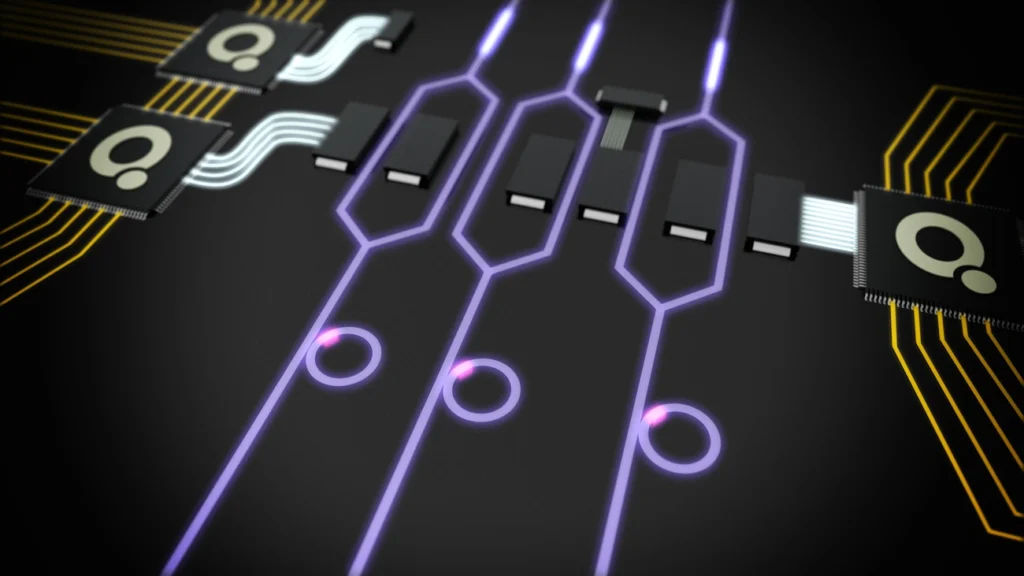
Image Source: Fraunhofer IPMS – Fraunhofer-Gesellschaft
At the frontier of quantum science, europium exhibits properties that could reshape computing, communications, and energy systems. Its electronic structure enables quantum applications where other materials fail to deliver the stability and coherence times required for practical implementation.
Quantum Memory Storage and Information Processing
Quantum memory systems demand materials that preserve delicate quantum states without introducing decoherence—a challenge europium compounds meet with remarkable success. The groundbreaking compound Cs₂NaEuF₆ offers exceptional air stability, crucial for integration with practical quantum components.
Europium ions excel as quantum memory candidates because their electrons cluster close to the nucleus, creating natural electromagnetic shielding. This shielding allows excited electronic states to persist for seconds or even hours—extraordinary durations in quantum computing where most materials lose coherence within microseconds.
Researchers have demonstrated quantum coherence times exceeding 13.1 hours in europium-doped crystals—effectively an eternity for quantum information processing. These coherence times represent orders of magnitude improvements over conventional quantum memory systems, enabling practical quantum computing architectures previously considered impossible.
Spin-Photon Interfaces for Quantum Computing
Europium molecular crystals feature ultra-narrow optical transitions that create optimal interfaces between quantum information stored in electron spins and photons carrying that information across communication networks. This spin-photon interface capability proves critical for distributed quantum computing systems and quantum internet applications.
The element’s unique ability to maintain quantum coherence while interfacing with optical photons addresses a fundamental challenge in quantum system design: how to preserve fragile quantum states during information transfer.
Solid-State Lasers and Fibre Optic Amplifiers
Europium-activated glasses show significant potential for next-generation laser systems. Specifically, glasses doped with 1 mol% Eu₂O₃ exhibit superior photoluminescence, quantum efficiency, and fluorescence intensity, making them viable active laser media for solid-state applications [58, 59].
These materials enable compact, efficient laser systems with performance characteristics unattainable using conventional materials, particularly for specialised scientific and telecommunications applications.
Upconversion Materials and Energy Harvesting
Photon upconversion represents one of europium’s most promising applications—converting lower-energy infrared photons into higher-energy visible light that solar cells can utilise. This process addresses a fundamental efficiency limitation: conventional solar cells harvest only a fraction of the available solar spectrum.
Beyond energy applications, europium-based upconversion materials demonstrate remarkable biological activity. These materials can transport into plant cells, colocalise with chloroplasts, and increase photosynthesis rates by up to 53.33%—potentially enabling agricultural productivity improvements through enhanced light utilisation efficiency.
Precision Spectroscopy and Scientific Instrumentation
Europium’s well-defined spectral signatures serve as reference standards in precision measurement systems. Its luminescent properties provide stable, reproducible wavelength references essential for calibrating advanced scientific instruments and maintaining measurement accuracy across diverse applications.
Coherence Time Enhancement in Quantum Systems
The performance metrics achieved with europium-doped materials establish new benchmarks for quantum technology. Europium-doped yttrium orthosilicate (¹⁵¹Eu³⁺:Y₂SiO₅) demonstrates decoherence rates at least an order of magnitude lower than any other system suitable for optical quantum memory applications.
At 2 kelvin using dynamic decoupling techniques, researchers achieved coherence times of 370±60 minutes—performance levels that enable practical quantum computing applications requiring extended information storage without degradation.
Key Takeaway: Europium’s quantum properties create technological capabilities thousands of times superior to conventional materials, positioning it as fundamental to quantum computing, quantum communications, and advanced photonic systems that will define future technology landscapes.
Nuclear and Energy Sector Applications
Nuclear power generates over 10% of global electricity across 454 reactors in 31 countries, maintaining an impressive 81% capacity factor. Within these facilities, europium oxide (Eu₂O₃) serves a role that few other materials can match: exceptional neutron absorption in control rods that regulate nuclear reactions with precision.
Nuclear Reactor Control Rods and Neutron Absorption
Europium-151 possesses a neutron capture cross-section of 9,100 barns, making it remarkably effective at controlling reactor activity. Unlike boron carbide (B₄C), europium-based absorbers avoid helium bubble formation during neutron irradiation—a critical safety advantage in high-flux environments.
Europium oxide has been successfully deployed in control rods for BOR-60 and BN-600 fast reactors, where its outstanding neutron absorption capabilities enable precise reactor control. The material’s stability under intense neutron bombardment makes it indispensable for long-term reactor operations where conventional absorbers would degrade.
Advanced Nuclear Fuel Cycle Applications
Europium compounds show promise in advanced nuclear fuel cycles, particularly for reducing long-lived minor actinides that pose long-term waste management challenges. While specific applications remain classified for security reasons, research indicates significant potential for addressing high-level waste radiotoxicity concerns.
| Material | Advantages | Primary Applications |
|---|---|---|
| Eu₂O₃ | Avoids helium bubble formation | Fast reactor control rods |
| Eu-Gd Systems | Reduces reactive worth loss | Grey control rods |
| A₂B₂O₇ (A=Eu; B=Zr) | Superior irradiation resistance | Long-term reactor operation |
Solar Cell Upconversion and Concentrated Solar Power
Photovoltaic cells face a fundamental limitation: their inability to utilise the entire solar spectrum. Europium-doped upconversion materials address this challenge by converting lower-energy infrared photons into visible light that solar cells can harvest.
This capability tackles a crucial efficiency barrier where photons below threshold values typically contribute nothing to electricity generation. The upconversion process could potentially increase solar cell efficiency by enabling harvesting of previously unusable portions of the solar spectrum.
Energy Storage Research and Battery Technologies
Europium chloride demonstrates unique properties in molten salt electrolytes that, once properly managed, could enable next-generation energy storage systems. Though research remains in early stages, the element’s electrochemical behaviour suggests applications in advanced battery chemistries requiring extreme operating conditions.
Key Takeaway: Europium’s exceptional neutron absorption properties make it irreplaceable in nuclear safety systems, whilst its photon conversion capabilities offer pathways for improving renewable energy efficiency—positioning this rare element as critical for both conventional and clean energy infrastructure.
Aerospace and Defence Technologies

Image Source: LinkedIn
Europium’s strategic value extends far beyond civilian applications, positioning it as a critical enabler of military and aerospace capabilities. This rare earth element underpins defence systems where performance failures can have life-or-death consequences—from battlefield communications to deep space missions.
Night Vision, Radar, and Secure Communication
Military night vision systems depend on europium-based phosphors to convert infrared radiation into visible green light, providing soldiers with tactical advantages in low-light environments. These phosphors deliver the crisp image clarity that defines modern night vision goggles, enabling precise targeting and navigation in both urban warfare and remote combat scenarios.
The strategic importance becomes clear when considering the scale of rare earth dependency: an F-35 fighter jet contains more than 900 pounds of rare earth elements, while a Virginia-class submarine requires nearly 9,200 pounds. Europium contributes to specialty glass components and sensor materials that enhance targeting system performance across diverse lighting conditions.
Space Spectrometers and Deep-Space Communications
Advanced space communications systems showcase europium’s capabilities at the technological frontier. NASA’s Deep Space Optical Communications (DSOC) project achieved optical link demonstrations at distances spanning 0.2-2.7 astronomical units, enabling downlink data rates of 6.25-267 Mb/s. Building on this success, ESA established Europe’s first optical communication link with NASA’s Psyche mission at 265 million kilometres in July 2025.
These achievements rely on europium’s precise spectral properties, which enable error-free data transmission across vast distances where conventional radio communications would fail.
Thermal Mapping Coatings in Jet Engines
Europium-doped thermal barrier coatings serve dual functions in military jet engines: protecting components from extreme temperatures while providing real-time temperature measurement capabilities. These sensor coatings, based on yttria stabilised zirconia doped with europium, generate temperature data through phosphorescence when illuminated.
Rolls-Royce jet engines demonstrate the practical value of this technology, with europium-based sensors successfully measuring temperatures from nozzle guide vanes, combustion chambers, and rotating turbine blades. This capability enables predictive maintenance and performance optimisation in environments where component failure could prove catastrophic.
Environmental Monitoring and Threat Detection
Military environmental monitoring increasingly relies on europium-based biosensors that convert biological and chemical signals into detectable electrical, optical, or thermal responses. These sensors achieve exceptional sensitivity, detecting pollutants and potential chemical threats at concentrations measured in parts per billion.
Key Takeaway: Europium’s role in aerospace and defence systems creates strategic vulnerabilities that extend beyond economic considerations—supply disruptions could directly compromise national security capabilities across air, sea, space, and terrestrial domains.
Industrial Manufacturing and Glass Applications
Manufacturing industries rely on europium’s exceptional properties to solve engineering challenges that conventional materials cannot address. From radiation-resistant glass to superalloys operating at extreme temperatures, this rare element enables critical applications across sectors where performance margins matter most.
Specialty Optical Glass and Glazes
Europium ions create glass networks with properties that make them indispensable for radiation shielding applications. These glasses demonstrate outstanding chemical stability, enhanced transparency in infrared regions, and controlled phonon energy (700–800 cm⁻¹). The europium ions in glass exhibit remarkable similarity to rare-earth sesquioxide crystals, with ions locating in two or three average environment sites—mirroring the monoclinical form of the sesquioxide.
The spectral half width and peak wavelength of europium in glass remain temperature-independent from 4 to 300°K—a stability that proves crucial for precision optical applications where thermal variation would compromise performance.
High-Temperature Ceramics and Refractory Coatings
Extreme environments demand materials that maintain structural integrity where others fail. Europium’s stability under harsh conditions makes it valuable for high-temperature applications across aerospace, metallurgy, and energy sectors. These ceramics withstand thermal stress, oxidation, and mechanical loads that would destroy conventional refractory materials.
Metallurgical Additives and Superalloys
Superalloys containing carefully selected rare earth elements like europium operate at a higher fraction of their actual melting point than any other broadly commercial metallurgical materials. Originally developed during the 1910-1915 era from austenitic stainless steel, these alloys evolved dramatically throughout the 1940s driven by World War II demands.
Metallurgists exploit a series of strengthening effects creating complex interactive structures of finely divided phases, optimised through electron microscopy. The result: materials that maintain strength and oxidation resistance at temperatures exceeding 1000°C, enabling jet engines, gas turbines, and nuclear reactors to operate at efficiency levels impossible with conventional alloys.
Key Takeaway: Europium transforms industrial materials by enabling operation under extreme conditions—from radiation-resistant optical glass to superalloys that withstand temperatures approaching their melting points—making it essential for applications where conventional materials would fail catastrophically.
Environmental Monitoring and Analytical Chemistry
Europium’s exceptional luminescent properties have made it the gold standard for detecting environmental contaminants at concentrations that would escape conventional analysis. Where other analytical methods falter, europium-based systems deliver precision that can mean the difference between identifying a threat and missing it entirely.
Spectroscopy Standards and Mass Spectrometry
Multi-collector inductively coupled plasma–mass spectrometry (MC-ICP-MS) achieves remarkable precision when measuring europium’s isotopic composition. This technique enables simultaneous measurement of isotopic ratios with unprecedented accuracy. Researchers discovered that doping samples with samarium significantly improved measurement precision during ion chromatography, solving critical isotopic fractionation challenges.
Europium-based measurements now achieve repeatability standard deviations of just 50 ppm on the ¹⁵¹Eu/¹⁵³Eu ratio—two to four times better than previously published procedures. This level of precision transforms environmental monitoring from approximate detection to exact quantification.
Metal-organic frameworks incorporating europium (Eu-MOFs) represent a breakthrough in environmental sensing capabilities:
| Application | Detection Limit | Response Time | Reference |
|---|---|---|---|
| Salicylaldehyde detection | 18.4 μM | Rapid | |
| VOC vapour sensing | Highly selective | Reusable | [402] |
These frameworks provide reliable, highly sensitive platforms for detecting small molecules with simple instrumentation. The tunable emission properties arise from europium’s coordination environment, enabling selective detection of specific contaminants with extraordinary accuracy. Unlike conventional sensors that require complex preparation or suffer from interference, europium-based systems maintain selectivity even in complex environmental matrices.
The detection capabilities extend far beyond typical analytical thresholds. Europium sensors can identify trace pollutants in groundwater, atmospheric volatile organic compounds, and industrial emissions at concentrations measured in parts per billion or even parts per trillion. This sensitivity level enables early warning systems for environmental contamination before ecological damage occurs.
Key Takeaway: Europium-based analytical techniques represent a step change in environmental monitoring capabilities, offering unprecedented precision in isotopic measurements alongside highly selective detection systems that reveal environmental contaminants other methods simply cannot detect.
Automotive and Smart Mobility
Modern vehicles represent one of europium’s fastest-growing applications, where this rare element enhances everything from headlight performance to emissions control. Automakers across Europe and beyond increasingly rely on europium-based technologies to meet stringent efficiency and safety standards.
HID and LED Headlight Phosphors
Europium-based phosphors deliver the precise colour temperatures essential for automotive lighting safety. These phosphors convert blue LED emissions into broad-spectrum white light with exceptional efficiency, consuming up to 75% less power than traditional halogen systems whilst providing superior road illumination.
The phosphors create white light with colour rendering indices (CRI) exceeding 80, ensuring optimal contrast for night-time driving conditions. This performance proves particularly crucial for adaptive lighting systems that adjust beam patterns based on driving conditions.
The red phosphors in your car’s LED headlights likely contain europium, providing the precise colour temperature needed for optimal night vision whilst meeting regulatory standards for automotive lighting.
Emission Control Sensors
Gas sensors containing europium compounds provide real-time feedback to vehicular fuel and emissions management systems, helping bridge the concerning gap between factory-tested emissions and actual “real world” performance. These sensors utilise porous materials like zeolites and metal-organic frameworks to achieve exceptional selectivity for detecting multiple exhaust gases, including NOx, carbon monoxide, and hydrocarbons.
This technology remains essential as studies demonstrate that modern diesel engines sometimes emit twice the NOx of older models in real-world conditions. Europium-enhanced sensors respond within milliseconds to concentration changes, enabling precise fuel injection and exhaust aftertreatment control.
In-vehicle Displays and EV Components
Electric vehicle adoption drives increasing demand for europium across multiple vehicle systems. Beyond dashboard displays, europium enhances battery performance when incorporated into cathodes, improving energy density and cycle life. These applications prove particularly valuable across battery-electric vehicles, hybrids, and fuel-cell systems.
| Vehicle Component | Europium Function | Performance Benefit |
|---|---|---|
| LED Headlights | Red phosphor conversion | 75% power reduction vs halogen |
| Emissions Sensors | Multi-gas detection | Sub-second response times |
| Display Screens | Colour purity enhancement | >95% NTSC colour gamut |
| EV Batteries | Cathode optimisation | Extended cycle life |
Advanced Driver Systems and Smart Integration
Europium compounds enable precise wavelength control in LiDAR systems and advanced driver assistance sensors. These applications require materials that maintain spectral stability across temperature variations from -40°C to +85°C—conditions where conventional phosphors would degrade rapidly.
The element’s luminescent properties also support vehicle-to-infrastructure communication systems, where precise optical signalling becomes critical for autonomous vehicle coordination.
Key Takeaway: Europium quietly drives automotive innovation from basic safety lighting to advanced autonomous systems, making it indispensable for the transition to cleaner, smarter transportation technologies.
Emerging and Specialised Applications
Europium’s most intriguing applications lie not in today’s technologies, but in the cutting-edge research labs designing tomorrow’s. From quantum computers that could crack today’s encryption to artificial brains that mimic human neural networks, this rare element continues finding roles in frontier technologies that could redefine computing, communications, and medicine.
Spintronics and Next-Generation Electronics
Traditional electronics rely on electrical charge to represent information. Spintronics goes further—using electron spin states to store zeros and ones, creating devices that retain information without continuous power. Scientists predict 2D europium bromide/graphene heterojunctions could deliver massive intrinsic ferromagnetism—nearly 7.0 μB per europium atom.
Every hard disc drive currently available uses spintronic reading technology derived from research that won the 2007 Nobel Prize in Physics. Europium’s magnetic properties position it as a key material for next-generation spintronic devices that could replace conventional memory systems entirely.
AI Hardware and Neuromorphic Chips
Computer architectures modelled on the human brain require materials that can function as artificial synapses. Memristive materials containing europium serve precisely this role, storing and processing information like biological neural networks. These neuromorphic systems promise to train AI processes several orders of magnitude more efficiently than conventional computers while requiring only a fraction of the power.
The implications are staggering: AI systems that learn continuously, adapt in real-time, and operate on minimal energy—capabilities that could transform everything from autonomous vehicles to medical diagnostics.
6G Communications and Quantum Sensing Applications
Europium molecular crystals demonstrate quantum-mechanical entanglement capabilities essential for secure communications networks. These materials could underpin 6G wireless systems and quantum sensing applications where conventional materials cannot provide the required coherence times.
Europium ions within molecules couple via electrical stray fields, enabling quantum information processing. Research demonstrates a 1000× optical-coherence improvement in europium molecular materials—a breakthrough that could make quantum networks commercially viable.
Smart Materials and Responsive Systems
Modified perovskite quantum dots using europium complexes exhibit dual-response properties, including temperature and pH sensitivity. These “smart” materials change their optical properties in response to environmental conditions, enabling applications from self-regulating coatings to responsive medical implants.
Nanotechnology in Drug Delivery and Biosensing
Europium sulphide (EuS) particles function as effective theranostic agents—materials that simultaneously diagnose and treat conditions. Compatible with multiple imaging modalities, these nanoprobes enable non-invasive monitoring of drug distribution throughout the body.
This capability addresses a fundamental challenge in medicine: ensuring drugs reach their intended targets while avoiding healthy tissue. Europium-based tracking systems could make personalized medicine more precise and effective.
The nanotechnology-enabled drug delivery and biosensing systems described here often converge with advanced diagnostic tools in clinical medicine. Europium’s luminescent behavior, already useful in nanoscale assays, also underpins life-saving technologies like CT scans, PET imaging, and radiation dosimetry.
Key Takeaway: Europium applications continue expanding into frontier technologies where its unique quantum properties, magnetic characteristics, and luminescence enable innovations that conventional materials cannot support—positioning this rare element at the heart of next-generation computing, communications, and healthcare systems.
Future Applications and Tech Integration
Beyond established uses, europium continues to unlock technological frontiers that will define the next decade of innovation. Manufacturing advances and strategic shifts toward sustainable technology are creating new demand patterns that could reshape this element’s importance.
IoT Sensors and Industry 4.0 Integration
Industrial IoT systems increasingly rely on europium-based luminescent sensors for real-time monitoring across manufacturing environments. These sensors deliver critical performance data for predictive maintenance algorithms while operating with remarkably low power requirements.
Europium’s luminescent properties enable IoT sensors to operate continuously for years rather than months, extending operational lifecycles in industrial settings where frequent maintenance creates costly downtime. Current deployments track equipment performance, environmental conditions, and production parameters with precision levels impossible using conventional sensor technologies.
Automotive Emission Catalysts and Green Technology
Next-generation automotive catalysts containing europium compounds offer compelling alternatives to platinum group metals (PGMs), addressing both environmental concerns and resource limitations. These systems effectively reduce harmful emissions while meeting increasingly stringent regulations like Euro 6 standards.
Europium-enhanced catalysts outperform traditional alternatives through superior oxygen storage capacity and improved thermal stability, delivering measurable reductions in nitrogen oxides (NOx), hydrocarbons (HC), and carbon monoxide (CO).
| Catalyst Type | Emissions Reduction | Cost Efficiency | Durability |
|---|---|---|---|
| Traditional PGM | High | Low | Moderate |
| Eu-Enhanced | Excellent | Moderate | Superior |
| Transition Metal | Very Good | High | Good |
Aerospace Thermal Barriers and Space Instrumentation
Ceramic thermal barrier coatings incorporating europium provide temperature reductions up to 100°C in aerospace applications. These materials prove essential for protecting space vehicles during atmospheric entry when temperatures reach extreme levels.
Europium-doped ceramics exhibit exceptional durability under harsh space conditions, where thermal cycling represents significant operational challenges. This durability translates directly into mission success rates and component longevity for critical space infrastructure.
Advanced Ceramics and High-Performance Glass
Europium ion-activated glass-ceramics achieve exceptional luminescence properties through precise component regulation and crystallisation process optimisation. Similarly, CsBr nanocrystals with europium doping deliver narrow-band blue emission with excellent spectral stability under varying conditions.
These developments enable new classes of smart materials that respond to environmental changes while maintaining optical performance—capabilities essential for next-generation sensor networks and adaptive systems.
Key Takeaway: Europium’s expanding role in emerging technologies underscores its strategic value beyond traditional applications, creating new supply dependencies that nations must consider when planning technological sovereignty initiatives.
Conclusion: A Metal That Touches Every Future
At just 2 parts per million in Earth’s crust, europium is one of the rarest elements—yet it quietly powers technologies that define our age, from smartphone screens to quantum memory systems. Its value lies not only in scarcity but in its unmatched performance: pure red luminescence at 612 nm, dual oxidation states, and quantum coherence times that exceed 13 hours.
While other elements can sometimes substitute, none fully replicate europium’s functionality across high-stakes domains like display technologies, medical diagnostics, reactor control, and quantum computing.
Europium’s supply chain is geographically concentrated, with China dominating global processing. This raises strategic risks for nations reliant on europium-enabled systems—especially in defence, space, and next-gen electronics.
The automotive sector illustrates this rising dependence. Europium is used in LED headlights, battery systems, emission sensors, and dashboard displays. As EV adoption grows, so does the demand for europium-based components.
Security implications also loom large. Europium’s role in anti-counterfeiting, night vision, radar, and secure communications makes it a national security asset. Its scarcity means even minor disruptions can impact multiple industries simultaneously.
In short, europium exemplifies how modern technological sovereignty depends on securing access to materials most people have never heard of. This rare earth quietly anchors systems that span healthcare, defence, communications, and energy—proving that in our interconnected world, it’s often the rarest elements that matter most.
Key Takeaway: Europium’s unique properties make it irreplaceable across critical technologies, yet its extreme rarity and concentrated supply chains create strategic vulnerabilities that could shape geopolitical competition for decades to come.
FAQs
What are the primary applications of europium in modern technology?
Europium is widely used in display technologies, producing vibrant red colours in television screens, computer monitors, and smartphones. It’s also crucial in fluorescent lighting, anti-counterfeiting measures for banknotes, and advanced medical imaging techniques.
How does europium contribute to energy efficiency and sustainability?
Europium plays a significant role in energy-efficient lighting, particularly in LED and CFL systems. It’s also used in solar cell upconversion to improve photovoltaic efficiency and in nuclear reactor control rods for safe power generation.
What makes europium valuable for quantum computing and advanced electronics?
Europium’s unique electronic properties enable exceptionally long quantum coherence times, making it ideal for quantum memory storage and information processing. It’s also being explored for use in spintronics and neuromorphic computing chips.
How is europium utilised in medical and diagnostic applications?
Europium compounds are used as contrast agents in MRI, CT, and PET scans, enhancing image quality. They’re also employed in time-resolved fluorescence for highly sensitive clinical diagnostics and in bioassays for detecting specific proteins or molecules.
What role does europium play in aerospace and defence technologies?
Europium is used in night vision equipment, radar systems, and secure communication technologies. It’s also incorporated into thermal barrier coatings for jet engines and used in sensors for air and water quality monitoring in aerospace applications.