Last Updated on August 21, 2025 by Hemanth
Table of Contents
Germanium isn’t a metal you hear about every day, but it quietly shapes much of our modern world. It makes night-vision goggles work, speeds up 5G internet, and is even being tested in batteries that could outlast today’s lithium ones.
In this article, you’ll see how germanium shows up in defence tech, electronics, energy storage, and even space exploration. You’ll also learn why the US and EU call it a “critical mineral”, and why the world keeps such a close eye on its supply.
Overview
Element 32 on the periodic table sits in the shadows of silicon and carbon, yet germanium uses span technologies that define modern civilisation. Predicted by Mendeleev as ‘ekasilicon’ and discovered by Clemens Winkler in 1886, germanium is one of the few elements first found on paper, then in nature.
Present at just 1.5 parts per million in Earth’s crust—ranking 50th in abundance, this silvery metalloid is so strategically important that the US, EU and Indian governments designated it a critical material.
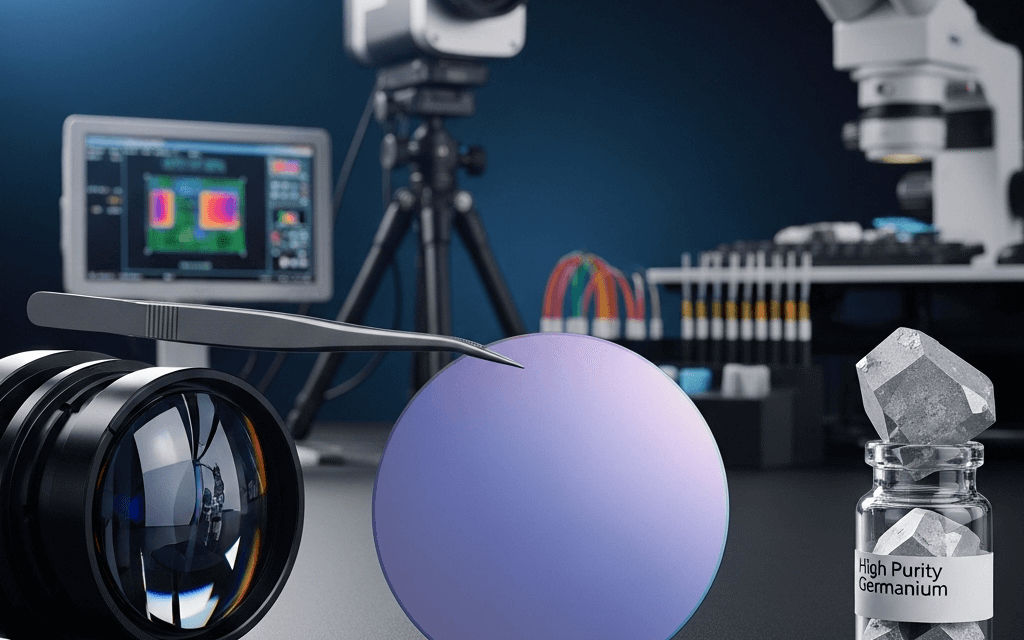
You won’t see germanium on product labels, but its semiconductor properties bridge metals and non-metals in ways other materials cannot. When doped with arsenic and other elements, germanium shows semiconductor behaviour essential for advanced electronics. Its high index of refraction and dispersion make it vital for wide-angle lenses and microscopes, while its rare ability to absorb and emit infrared light makes it the standard for thermal imaging and specialised optics.
From fibre-optic cables carrying 95% of global internet traffic to multi-junction solar cells powering spacecraft, germanium underpins technologies that shape our connected world. Its role stretches beyond consumer electronics—infrared military optics, quantum substrates, and even rewritable DVDs rely on this element’s unique properties. Germanium wafers—ultra-pure, thin circular slices—form the base of electronic devices where silicon alone falls short.
Despite its scarcity, germanium has become essential to sectors demanding the highest performance: defence systems that see through darkness, telecommunications connecting continents, and space-grade solar technology operating in extreme environments. Understanding germanium shows how a relatively unknown element drives some of the most advanced technologies of our time.
Understanding Germanium — Element Profile & Properties
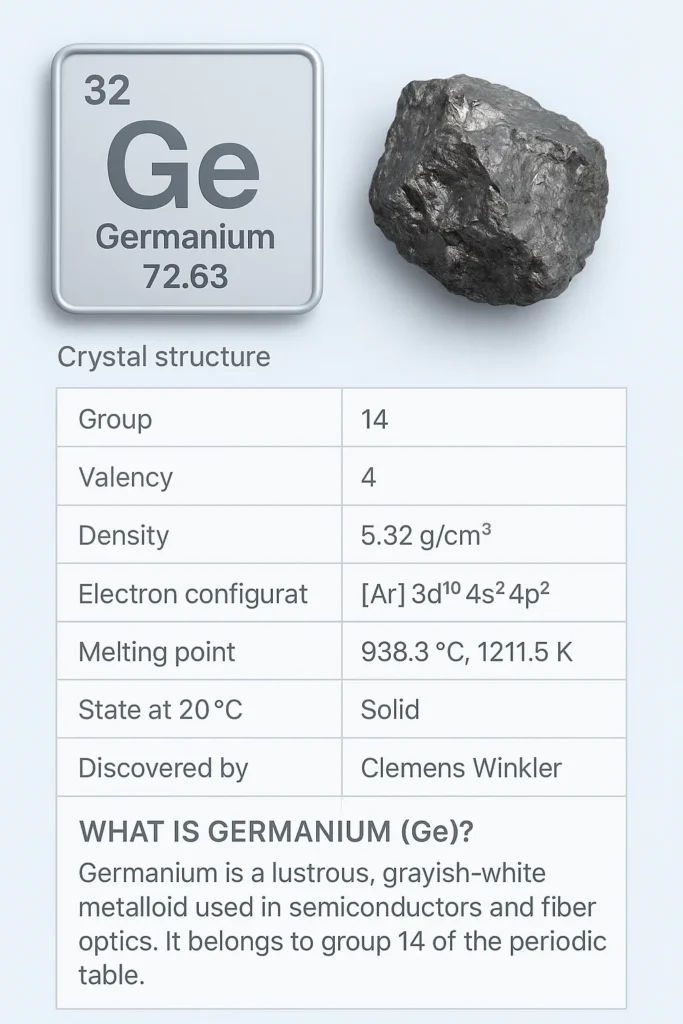
Germanium (symbol Ge, atomic number 32) sits in Group 14 of the periodic table, between silicon and tin. This silvery-grey metalloid behaves neither as a pure metal nor a typical non-metal, but as a uniquely valuable element in between.
Atomic, physical, and chemical properties
Germanium’s utility comes from its structural blueprint. With a density of 5.3234 g/cm³, it forms a diamond-like crystalline structure that is hard yet brittle—well suited for precision optical components. Its melting point of 938.25°C and boiling point of 2833°C provide thermal stability across wide temperature ranges while remaining practical for processing.
Chemically, germanium demonstrates remarkable resilience—stable in air and water, resistant to alkalis and most acids except nitric acid. This chemical inertness translates directly into long-lasting optical and electronic components that maintain performance under harsh conditions.
Metalloid behaviour vs. silicon and tin
Germanium’s behaviour is more metallic than silicon but less than tin, giving it properties that neither can match. While silicon dominates electronics due to cost and abundance, germanium’s intermediate traits make it indispensable in specialised applications.
Unlike silicon, it dissolves in hot oxidising acids such as HNO₃ and H₂SO₄ but resists aqueous bases. This selective reactivity supports processing techniques unavailable to purely metallic or non-metallic materials.
Why it matters for infrared optics and semiconductors
Germanium’s standout property is transparency to infrared radiation across the 8–14 micron range. This “infrared window” lets optics transmit thermal energy with minimal loss, enabling imaging systems that work in total darkness, through smoke, and in severe weather.
As a semiconductor, germanium also offers higher electron mobility than silicon, supporting faster electronic devices. Its direct bandgap allows efficient light absorption and emission, making it ideal for optoelectronics where photons and electrons must be tightly controlled.
Key Takeaway: Germanium’s unique mix of infrared transparency and semiconductor behaviour gives it a niche that silicon cannot fill, cementing its importance in specialised high-performance technologies.
Discovery and Early Use of Germanium
Scientific prediction rarely achieves such precision. Germanium’s story is rare in science, an element predicted on paper by Mendeleev in 1871 and confirmed in a German 15 years later.
Mendeleev’s Prediction of Ekasilicon
In 1871, Dmitri Mendeleev studied the gaps in his periodic table and proposed an unknown element, “ekasilicon” (beyond silicon). He predicted an atomic weight of 72—within 0.6 units of germanium’s actual 72.6—showing how the periodic table could forecast nature’s hidden patterns through mathematics alone.
Clemens Winkler’s Isolation in 1886
On February 6, 1886, Clemens Winkler analysed argyrodite from the Himmelsfürst mine near Freiberg. The mineral’s composition was short by 6–7%, suggesting an unknown element. Months of purification led him to isolate the missing element, which he named “germanium” after his homeland.
Predicted vs. Actual Properties
| Property | Mendeleev’s Prediction | Actual Germanium |
|---|---|---|
| Atomic weight | 72 | 72.59 |
| Density | 5.5 g/cm³ | 5.47 g/cm³ |
| Appearance | Dark grey metal | Grey metal |
First Applications in Radar and Transistors
For sixty years, germanium remained a laboratory curiosity with little practical value. World War II changed that—its semiconductor behaviour proved ideal for Schottky diodes in radar detection.
In 1948, the first germanium transistors launched a new era of solid-state electronics, showing how an element balanced between conductor and insulator could control electrical current in revolutionary ways.
Key Takeaway: Germanium’s journey—from Mendeleev’s prediction to Winkler’s discovery to its role in the first transistors—demonstrates how theory, discovery, and application can align to transform technology.
Germanium in Telecommunications Networks

Image Source: Cloud Data Centre Events
The backbone of global digital communications depends on an element most people never notice—germanium—whose compounds are essential to the glass fibres linking villages to continents. Silicon tetrachloride (SiCl₄) and germanium tetrachloride (GeCl₄) form the base materials for optical fibre production.
When oxidised to germanium dioxide (GeO₂), it makes up about 4% of the glass, adjusting the refractive index so light signals reflect internally and travel thousands of kilometres with minimal loss. Germanium doping further reduces attenuation by fine-tuning the fibre’s profile and suppressing scattering that would otherwise degrade quality.
The performance targets of 5G networks—10 Gbps speeds with 1 ms latency—rely on this backbone. Submarine cable systems now carry over 99% of international data traffic, with cutting-edge lines transmitting up to 400 terabits per second.
In India, BharatNet is among the world’s largest rural broadband projects, extending fibre to 2.18 lakh Gram Panchayats across 42 lakh route km. With an allocation of ₹1.39 lakh crore, the initiative underscores how germanium-doped fibres have become central to India’s digital infrastructure.
Key Takeaway: Germanium in fibre optics shows how a scarce element underpins digital civilisation—from rural internet access to the undersea cables that carry the world’s information.
Infrared Optics & Thermal Systems
Most materials block infrared radiation completely, but germanium is different. Its exceptional transparency across the 1 µm–14 µm infrared spectrum creates capabilities that conventional glass simply cannot match. While ordinary glass becomes opaque to thermal radiation, germanium transmits infrared light with nearly 100% efficiency, enabling technologies that see heat signatures with unprecedented clarity.
Military & Defence Systems
Around 90% of thermal imaging devices rely on germanium optics—ranging from night-vision scopes to precision targeting and long-range surveillance. Gallium-based emitters and detectors often complement germanium in these high-performance imaging systems, extending their range and sensitivity. Both the EU and US list germanium as a critical material, reflecting its strategic role. China’s 2023 export curbs underscored this, disrupting supply chains for defence contractors worldwide.
Industrial & Safety Applications
Forward-looking infrared (FLIR) cameras equipped with germanium lenses detect heat signatures that save lives and optimise industrial processes.
- Firefighting: locating trapped individuals through smoke.
- Environmental monitoring: detecting thermal anomalies and temperature shifts.
- Industrial facilities: identifying overheating equipment before failure, preventing costly downtime.
Scientific Research
Research laboratories depend on germanium windows for infrared spectroscopy, enabling precise molecular composition analysis in chemistry, pharmaceuticals, and environmental studies. Germanium’s stability and optical clarity make it indispensable for sensitive analytical work.
Security & Surveillance Technologies
Germanium’s infrared transparency also underpins security applications. Millimetre-wave scanners with germanium components are redefining airport screening, with AI-powered walkthrough systems now deployed in Frankfurt. High-purity germanium (HPGe) detectors provide unmatched sensitivity for identifying nuclear materials at ports and border crossings.
Indian security forces deploy multi-spectral surveillance systems featuring broadband detectors with germanium optics for detecting camouflaged targets. These systems transmit real-time video to remote control stations through secure fibre optic connections—yet another critical technology dependent on germanium.
Germanium Oxide in Specialty Glass
Germanium dioxide (GeO₂) is added to silica to raise refractive index and maintain low attenuation in optical fibres. It’s also used in infrared‑grade glass and windows for aerospace and defence, where clarity and thermal stability matter. These Germanium uses sit behind faster networks and rugged IR viewing ports.
Strategic Material Designation
The US National Defense Stockpile added germanium in the early 1980s, recognising its role in infrared sensors for ships, aircraft, missiles, and anti-tank systems. The EU also lists it as critical mineral.
India, meanwhile, has no domestic refining capacity and depends entirely on imports, despite DRDO and ISRO relying on germanium optics for surveillance satellites, missile guidance, and space payloads. This combination of high military demand and foreign dependence makes germanium a strategic vulnerability in India’s critical materials landscape.
Key Takeaway: Germanium’s infrared transparency makes it indispensable for defence, security, and scientific optics—so much so that nations classify it as a critical material and stockpile it for strategic resilience.
Solar Energy & Space Photovoltaics

Image Source: NASA Technology Transfer Programme
Space presents the ultimate test for materials—cosmic radiation, violent temperature swings from –157°C to 121°C, and zero tolerance for failure. Germanium not only survives these extremes but enables solar technologies that conventional materials cannot match.
Germanium Substrates in Multi-Junction PV
Multi-junction solar cells built on germanium substrates reach efficiencies above 30% in orbit—nearly double the output of standard silicon panels. By stacking InGaP, InGaAs, and germanium layers, these devices use germanium both as a structural base and as the active bottom junction. The latest four-junction designs have achieved a record 42.6% efficiency.
“Only 10–20 μm of a 140 μm germanium wafer is actively used in solar cells—the rest provides structure. This efficiency gap highlights both cost pressure and innovation potential.”
ESA, NASA, and ISRO Spacecraft
Germanium’s importance is visible in the solar panels that power flagship missions. The International Space Station has operated for more than 20 years on germanium-substrate arrays. ESA’s Galileo navigation satellites and NASA’s Mars rovers rely on similar technology to maintain power in radiation-heavy orbits. India’s Chandrayaan missions also use germanium-based arrays to generate power during long lunar nights.
| Feature | Germanium-Based Cells | Silicon-Based Alternatives |
|---|---|---|
| Efficiency | Nearly 2× higher | Lower output |
| Radiation Resistance | Superior | More vulnerable |
| Operational Lifespan | ~20 years | ~15 years |
This efficiency translates into smaller, lighter panels—every kilogram saved reduces launch costs and frees capacity for instruments. Radiation hardness ensures resilience against cosmic rays and solar storms, giving germanium cells lifespans a third longer than silicon equivalents.
That’s why space agencies treat germanium photovoltaics as the default choice for orbital and interplanetary missions, despite higher material costs.tage for spacecraft where every kilogram matters. Radiation hardness ensures reliability across decades of exposure in space.
Thermoelectric SiGe Alloys in Deep-Space Probes
Germanium also powers spacecraft where sunlight fails. Since the 1970s, silicon-germanium thermoelectric generators have converted heat from plutonium decay into electricity for missions like Voyager, Cassini, and New Horizons. With no moving parts and no sunlight required, these radioisotope systems deliver steady power at the outer edges of the solar system. Cutting-edge graphene applications are now being explored alongside SiGe for ultra-high-frequency transistors.
Key Takeaway: Germanium’s rare mix of photovoltaic efficiency and thermoelectric reliability makes it indispensable for space exploration—from orbiting satellites to probes journeying beyond Pluto.
Semiconductor & Advanced Electronics
SiGe High-Speed ICs & RF Amplifiers
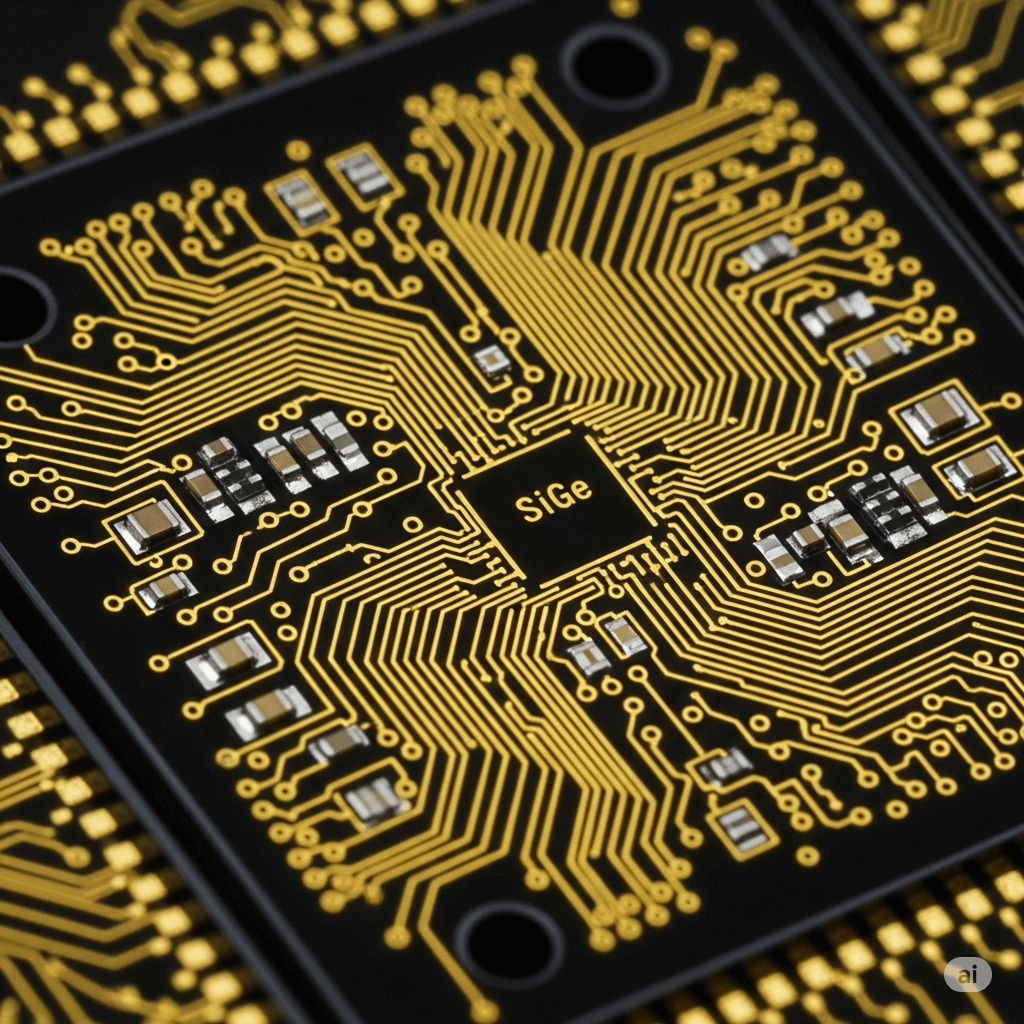
Silicon-germanium (SiGe) has become the backbone of next-generation wireless systems. Its transistors hit transition frequencies of 65 GHz with amplifier gains of 19 dB at 1 GHz, delivering radar precision and 5G-class connectivity.
“Adding germanium to the p-silicon base reduces the bandgap by ~100 mV, creating a strong field that accelerates electrons from base to collector.”
This engineered velocity is what makes SiGe indispensable for RF and mixed-signal chips.
LED & Telecom Optoelectronics
Germanium substrates align almost perfectly with III–V compounds, forming the base for high-brightness LEDs, telecom lasers, and photonic circuits. This lattice match minimises defects and wafer bow, yielding devices with stability and long lifespans.
The payoff is visible in fibre-optic networks, hyperscale data centres, and quantum-ready photonics. Compared to gallium arsenide, germanium wafers offer zero defect density, 10× lower wafer bow, and up to 5× cost savings with 8″ wafers—without the toxicity risks of arsenic.
Photodiodes, IR Sensors & Transistors
Next-generation germanium photodiodes achieve >90% quantum efficiency at telecom wavelengths, up from ~70% in earlier designs. Responsivity peaks at 1.19 A/W at 1.65 µm, with lower dark currents and broader spectral range.
| Property | Traditional Ge | New Ge Devices |
|---|---|---|
| EQE (1.55 µm) | ~70% | >90% |
| Dark Current | Higher | 76 µA/cm² at 5V |
| Spectral Range | Narrow | 0.2–1.9 µm |
These leaps enable sharper optical communications, ultra-sensitive IR sensing, and high-precision scientific measurements.
Consumer Optics – Smartphones, AR/VR & LiDAR
What powers telecom backbones also sits in your pocket. Germanium-based VCSELs moved from lab devices to mainstream when Apple’s iPhone (2017) introduced 3D facial recognition.
Today, the same technology drives automotive LiDAR and AR/VR headsets, where pixel-level accuracy is vital for immersion. Germanium’s infrared transparency and high refractive index (~4.0) make it the go-to for depth-mapping lenses and secure imaging. Whilst traditionally manufactured on GaAs substrates, germanium wafers offer substantial advantages:
| Property | GaAs Wafers | Germanium Wafers |
|---|---|---|
| Defects | Higher dislocation density | Zero defects (EPD) |
| Wafer bow | Higher (impacts yields) | 10x lower |
| Cost reduction potential | Limited | 5x reduction with 8″ wafers |
| Sustainability | Contains toxic arsenic | Primarily from recycling |
As Sabbir Rangwala notes: “The question is when, not if.” VCSEL adoption shows how germanium optics leap from personal electronics to autonomous mobility.
Autonomous Vehicle Technologies

Image Source: Waymo
Autonomous Vehicle Technologies
The quest for fully autonomous driving has exposed a critical truth: machines need superhuman sensing capabilities to navigate safely. Germanium stands as the material that grants cars the ability to see what human eyes cannot—through darkness, fog, rain, and adverse conditions where conventional sensors fail.
LiDAR, ADAS, collision-avoidance systems
Advanced Driver Assistance Systems depend on germanium-based components for environmental sensing that operates beyond the visible spectrum. LiDAR systems integrate germanium windows to enhance infrared detection capabilities, enabling precise distance mapping even when visibility drops to zero.
Single-photon avalanche diodes (SPADs) using germanium demonstrate detecting light at the 1550 nm wavelength—a wavelength that offers a crucial safety advantage. Most light at this frequency is absorbed by the eye before reaching the retina, allowing higher power operation without creating ocular hazards.
The performance specifications are remarkable: germanium-based thermal sensors detect temperature differences as small as 0.1°C, enabling identification of pedestrians and animals that would remain invisible to visible-light cameras.
Tesla, Waymo, Tata EV optics integration
Autonomous vehicle developers have pursued different technological philosophies, yet germanium applications appear across multiple approaches. Tesla, despite advocating visible cameras as primary sensors, still recommended evaluating infrared cameras for pedestrian detection during nighttime conditions.
Companies like Waymo Via and Plus.ai actively deploy thermal cameras for trucking autonomy on highways. Waymo, Cruise, and Zoox incorporate germanium-based thermal imaging in their purpose-built vehicles for last-mile delivery and ride-hailing services across densely populated cities.
Fleet-scale adoption in China, US, and Europe
By 2024–25, the field moved beyond pilot projects into fleet-scale deployment. In China, Huawei and partners deployed the world’s first fleet of 100 5G-A connected, self-driving electric trucks at the Yimin coal mine — a demonstration of germanium-enabled optics operating reliably in dust, darkness, and extreme weather.
In the US, Walmart-backed startup Gatik now runs more than 100 autonomous trucks across Texas, Arkansas, and Canada, addressing the trucking industry’s labour shortages and expanding to hundreds more vehicles.
In Europe, the EU-funded MODI project is testing long-haul convoys along the Rotterdam–Oslo corridor, while Sweden’s Einride has already fielded driverless trucks for retail logistics.
These real-world deployments underline why germanium’s role in infrared and LiDAR systems is not theoretical but mission-critical for scaling autonomous freight worldwide.
| Sensing Technology | Advantage | Challenge Addressed |
|---|---|---|
| Ge-based Thermal | Works in fog, rain, darkness | Pedestrian detection in poor visibility |
| Ge SWIR Vision | Detects through difficult weather | Navigation in fog and rain |
| Ge-Si SPADs | 38% detection efficiency in SWIR | Safe LiDAR operation |
Key Takeaway: Germanium transforms autonomous vehicles from machines that struggle in poor conditions into systems capable of operating safely when human drivers cannot see—a capability that separates truly autonomous systems from advanced driver assistance.
Quantum Computing & Advanced Research
The next revolution in computing will not be driven by classical transistors but by quantum materials — and germanium is emerging as one of the most promising.
Germanium in qubits, spintronics, and photonics
Researchers recently demonstrated a four-qubit processor using eight germanium quantum dots, achieving single-qubit fidelities above 99.49%. Germanium’s absence of disruptive spin-orbit effects allows longer coherence times, giving it an edge over traditional III-V semiconductors. In practical terms, germanium wafers cut noise in quantum systems — much like how noise-cancelling headphones sharpen sound clarity.
Compared to silicon qubits, germanium devices are lighter, faster, and can be controlled entirely with electrical signals, eliminating the need for complex microwave setups.
| Property | Germanium Qubits | Silicon Qubits |
|---|---|---|
| Effective mass | Light (faster) | Heavier |
| Spin-orbit coupling | Strong (easy control) | Weak |
| Control | Fully electrical | Microwave needed |
Even industry leaders are leveraging germanium in quantum research. In 2024, Microsoft unveiled its Majorana-1 chip, which integrates semiconductor nanowires on germanium-supported substrates to stabilize topological qubits—highlighting how this element underpins not only quantum dots but also emerging qubit architectures
India’s National Quantum Mission (NQM)
Launched in 2023, India’s National Quantum Mission aims to build intermediate-scale quantum computers with 50–1000 physical qubits by 2031. Backed by ₹6,003 crore, the programme spans four Thematic Hubs focusing on computing, communication, sensing, and materials — placing germanium firmly within India’s roadmap for strategic tech sovereignty.
Key Takeaway: Germanium is emerging as a cornerstone of quantum technology—not only powering high-fidelity qubits in academic labs but also anchoring industry breakthroughs like Microsoft’s Majorana-1 chip.
Its unique spin and optical properties reduce system noise, accelerate qubit manipulation, and enable architectures beyond silicon’s limits—positioning germanium at the heart of the coming quantum revolution.
Medical & Healthcare Applications
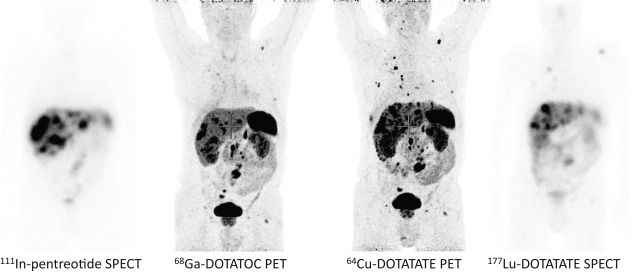
Image Source: ScienceDirect.com
Nuclear medicine depends on isotopes with precise decay characteristics, and germanium-68 delivers exactly that—a 67.8-minute half-life with 89% positron emission that creates the foundation for life-saving diagnostic imaging technologies.
Germanium-68/Gallium-68 in PET scans
Ge-68/Ga-68 generator systems function through solid-liquid extraction, producing gallium-68 for positron emission tomography (PET) imaging. When these generators create the short-lived gallium-68, the resulting positron-electron annihilation produces photons that PET scanners detect with remarkable precision, enabling detailed diagnostic imaging of metabolic processes.
The choice between production methods reveals important trade-offs in medical infrastructure:
| Production Method | Advantages | Limitations |
|---|---|---|
| Ge-68/Ga-68 Generator | Mobile, on-site availability | Potential Ge-68 contamination |
| Cyclotron (Direct) | Higher production capacity | Requires nearby cyclotron facility |
Mobile generators using germanium-68 allow hospitals to produce radiopharmaceuticals on-demand, eliminating the logistical challenges of transporting short-lived isotopes from distant cyclotron facilities.
Radiotherapy research
Ge-doped optical fibres demonstrate superior performance in radiotherapy dosimetry applications. Research indicates that 6 mol% Ge-doped fibres provide enhanced thermoluminescence response and better reproducibility (CV <10%) compared to higher germanium concentrations. These fibres function as microscopic radiation detectors, documenting precise dose measurements during cancer treatment.
Fact vs fiction: “germanium therapy beds” and “skin benefits”
Consumer products claiming health benefits from germanium contact—including therapeutic beds, bracelets, and skincare products—lack scientific evidence. Unlike germanium’s legitimate role in medical imaging, these applications represent unsubstantiated marketing claims that exploit germanium’s association with advanced medical technology.
India: diagnostic device manufacturing potential
The Indian medical devices market projects growth to USD 50 billion by 2030. The Technology Development Board provides financial assistance for developing diagnostic devices through its “Call for proposal” initiative for Indian industrial concerns. Given India’s complete import dependence on germanium, establishing domestic PET radiopharmaceutical production capabilities would require securing reliable germanium-68 supplies for generator systems.
Key Takeaway: Germanium-68’s precise radioactive properties enable PET imaging that saves lives through early disease detection, while consumer health claims about germanium contact remain scientifically unproven—illustrating how a single element can be both medically vital and commercially misrepresented.
Advanced Materials & Metallurgy
Most people associate germanium with semiconductors and optics, but this versatile element performs metallurgical magic that transforms ordinary precious metals into exceptional alloys. Hidden in luxury jewellery and high-end industrial components, germanium demonstrates how trace amounts of the right element can completely reshape material properties.
Argentium Silver & Speciality Alloys
Argentium silver, patented in 1998, contains either 93.5%, 94% or 96% silver, replacing some traditional copper content with approximately 1% germanium. This seemingly minor addition—less than what you’d find in a smartphone—yields extraordinary benefits that solve centuries-old problems with traditional sterling silver:
| Property | Traditional Sterling Silver | Argentium Silver |
|---|---|---|
| Tarnish resistance | Poor | 7x more resistant |
| Firescale | Frequent occurrence | Completely eliminated |
| Hardness (as-cast) | 65HV | Can be heat-hardened to 140-170HV |
| Soldering | Standard techniques | Requires gentler approach |
The science behind this transformation reveals germanium’s unique metallurgical behaviour. Germanium forms an intermetallic phase, Cu₅Ge, enabling a protective transparent germanium oxide layer that inhibits internal oxidation. This microscopic shield prevents the dark surface stains that plague traditional silver, allowing pieces to maintain their lustre for decades rather than months.
Jewellery & Industrial Strengthening Alloys
Germanium’s strengthening power extends beyond silver. Trace amounts (under 1%) in gold alloys remarkably improve hardness from 31 to 56 HV—nearly doubling the material’s durability without compromising its precious metal characteristics. Germanium-aluminium alloys create aerospace and engineering components with enhanced corrosion resistance and strength, proving this element’s value across both luxury and industrial applications.
Gold-germanium microalloys demonstrate exceptional tarnish resistance, making them highly sought after for high-end jewellery applications. However, these alloys require careful handling as they can exhibit brittle characteristics along grain boundaries—a reminder that even the most remarkable materials have their limitations.
The applications span both decorative and industrial contexts, improving hardness, corrosion resistance, and fabrication properties in ways that would be impossible with conventional alloying elements. Whether protecting a family heirloom from tarnishing or ensuring aerospace components maintain their integrity under extreme conditions, germanium proves that sometimes the smallest additions create the most significant improvements.
Key Takeaway: Germanium acts like a metallurgical catalyst—tiny amounts create transformative changes in precious metals, eliminating centuries-old problems like silver tarnishing while strengthening gold alloys for both luxury and industrial applications.
Scientific Instrumentation & Detection
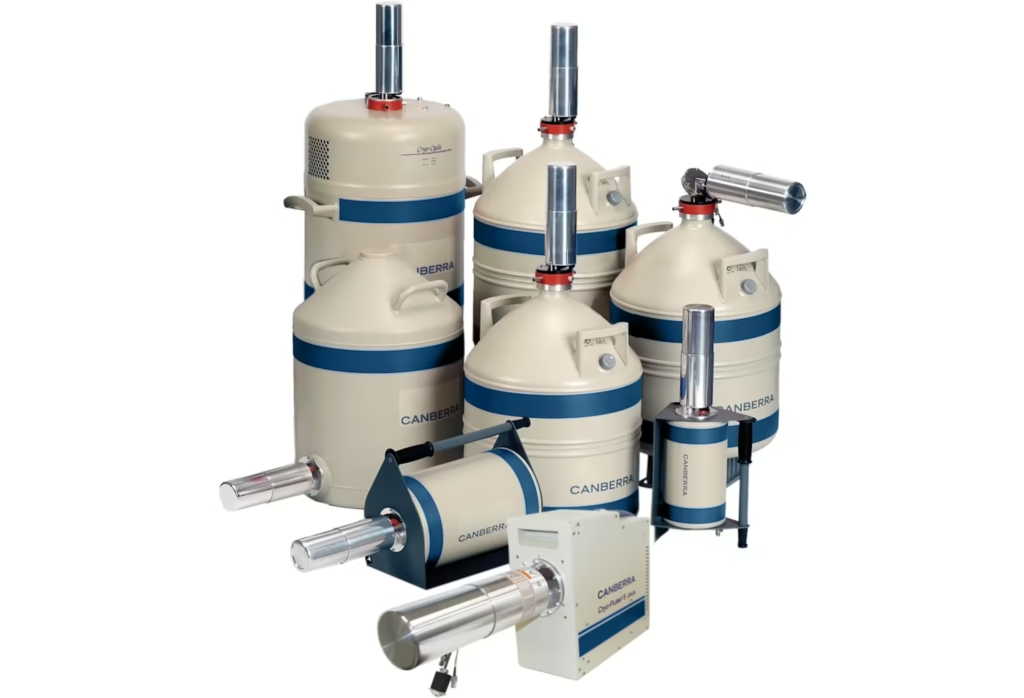
Image Source: Mirion Technologies
High Purity Germanium (HPGe) detectors represent the pinnacle of radiation detection technology, where germanium’s semiconductor properties achieve measurement precision that no other material can match.
High-purity germanium detectors in nuclear physics, astrophysics
HPGe detectors deliver excellent energy resolution unmatched by any competing technology, enabling scientists to distinguish between radiation signatures with extraordinary precision. Operating at cryogenic temperatures around 100 Kelvin (-173°C), these detectors require sophisticated cooling systems that maintain their sensitivity to the faintest radioactive emissions.
The applications span the most challenging frontiers of physics:
| Application | Function | Advantage Over Alternatives |
|---|---|---|
| Neutrinoless double-beta decay | Simultaneous source and detector | 100% separation from background events |
| Dark matter research | Detection of rare particles | Higher detection efficiency |
| Gamma-ray spectroscopy | Precise energy measurements | Low electrical capacitance |
> “We’re really trying to understand the structure of atomic nuclei, which are quantum systems” – James Allmond, ORNL
Germanium’s low electrical noise and exceptional charge collection efficiency create detection capabilities that unlock fundamental physics—from measuring the mass of neutrinos to searching for dark matter particles that could reshape our understanding of the universe.
BARC & IIT use cases
India’s Department of Atomic Energy has relied on HPGe technology for five decades, but recent developments mark a significant stride toward technological independence. BARC researchers have successfully developed indigenous HPGe detectors, starting with commercially available germanium and refining it through zone refinement to achieve 13N purity levels.
These domestically produced detectors match the resolution performance of international alternatives, representing a crucial capability for India’s nuclear research infrastructure. The achievement demonstrates how mastery of germanium processing translates directly into strategic scientific independence.
Key Takeaway: Germanium creates detection capabilities that probe the fundamental structure of matter itself—from atomic nuclei to cosmic mysteries—making it indispensable for nations seeking to lead in advanced physics research.
Industrial Catalysis & Processing
Most people never consider what makes their plastic water bottles crystal clear or how scientists detect trace compounds at the molecular level. Germanium compounds quietly enable both processes through catalytic and analytical applications that span from mass-produced consumer goods to sophisticated laboratory instruments.
PET polymerisation catalysts
Germanium dioxide serves as a crucial catalyst in creating polyethylene terephthalate (PET)—the polymer that forms virtually every clear plastic bottle on store shelves. Japanese manufacturers particularly favour this catalyst for the exceptional brilliance it imparts to PET products. Where conventional catalysts often introduce unwanted side reactions that cloud the final polymer, germanium-based systems produce remarkably pure, transparent materials with minimal defects.
The economic significance extends far beyond aesthetics. Germanium catalysts enable manufacturers to achieve consistent quality with fewer processing steps, reducing both energy consumption and waste generation. This efficiency becomes critical when producing billions of bottles annually—a seemingly minor improvement in catalyst performance can translate to substantial cost savings and environmental benefits.
Beyond PET, germanium catalysts also enable high‑performance polyesters and specialty polymers used in advanced packaging and industrial components—another set of Germanium uses that quietly improve clarity and mechanical strength.
“The PET bottle in your hand might owe its crystal clarity to germanium—an element most people never see.”
Gas chromatography and chemical processing
Analytical laboratories depend on germanium dioxide as a stationary phase in gas chromatography columns, where its chemical similarity to silica provides superior separation capabilities for complex organic compounds. The detection performance achieves extraordinary sensitivity—gas chromatography systems equipped with germanium-based detectors can identify organogermanium compounds at detection limits as low as 50-150 pg.
These detection capabilities enable pharmaceutical quality control, environmental monitoring, and forensic analysis at unprecedented precision levels. TMGe compounds register at just 50 pg detection limits with linear response across three orders of magnitude, while DMGe, MMGe, and TCGe compounds maintain detection thresholds between 70-150 pg with comparable dynamic ranges.
Such analytical precision becomes essential for regulatory compliance in industries where trace contaminants can affect product safety or performance. Germanium-based detection systems provide the sensitivity required to meet increasingly stringent quality standards across pharmaceuticals, food safety, and environmental monitoring.
Key Takeaway: Germanium’s catalytic properties create both the everyday products we consume and the analytical tools that ensure their safety—demonstrating how this rare element enables quality control from production to final testing.
Battery Technology & Energy Storage
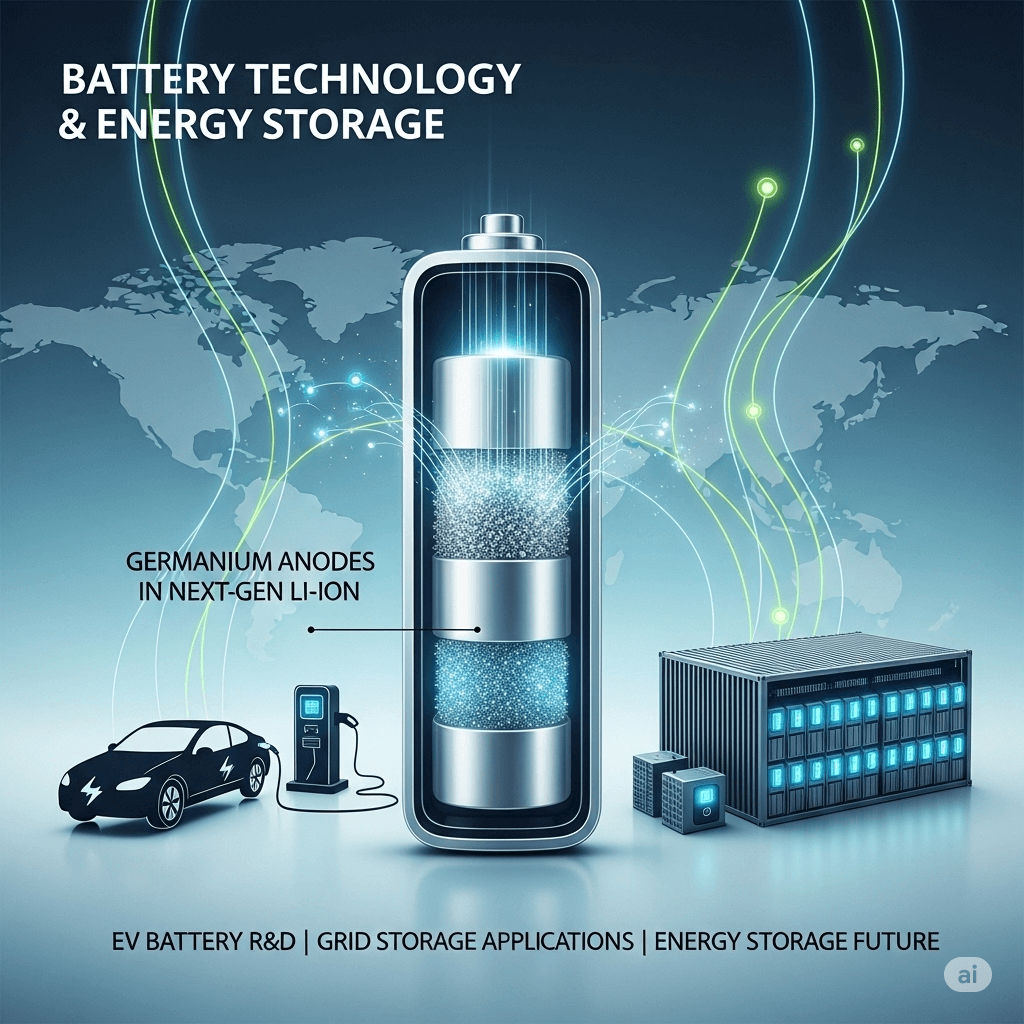
Energy storage demands materials that can hold massive amounts of charge while maintaining rapid electron flow—requirements that push conventional battery materials to their limits. Germanium’s unique combination of high capacity and exceptional conductivity positions it as a breakthrough material for next-generation energy storage.
Germanium Anodes in Next-Gen Li-ion
The theoretical specific capacity of germanium reaches 1650 mAh/g, storing nearly four times more energy than conventional graphite anodes. Yet capacity tells only part of the story. Germanium offers lithium-ion diffusivity that’s 400 times faster than silicon and electrical conductivity 10,000 times greater. This combination enables batteries that charge rapidly without sacrificing energy density—a breakthrough that traditional materials cannot match.
| Property | Germanium | Silicon | Graphite |
|---|---|---|---|
| Theoretical capacity | 1650 mAh/g [501] | 4200 mAh/g | 372 mAh/g |
| Li+ diffusivity | 6.51×10^-12 cm²/s | 1.41×10^-14 cm²/s | Lower |
| Electronic conductivity | 2.1 S/m | 1.6×10^-3 S/m | Variable |
| Lithiation behaviour | Isotropic | Anisotropic | Layered |
Germanium’s isotropic lithiation behaviour prevents the directional swelling that plagues silicon anodes, maintaining structural integrity through thousands of charge cycles. Recent breakthroughs include germanium-zinc nanofibres that demonstrate excellent capacity retention under rigorous cycling, while germanium-iron alloy composites with carbon nanotubes show exceptional long-term stability.
EV Battery R&D, Grid Storage Applications
Advanced germanium electrode architectures address volume expansion challenges through innovative nanostructures that accommodate lithium insertion without mechanical failure. These developments could enable electric vehicle batteries with dramatically reduced charging times—potentially cutting current 30-60 minute fast-charging to under 10 minutes while extending driving range.
Grid-scale applications particularly benefit from germanium’s rapid charge-discharge capabilities, essential for balancing renewable energy fluctuations and providing frequency regulation services that maintain stable electrical grids.
India’s Energy Storage Push
India’s ambitious energy transition requires substantial storage capacity—41.7GW/228.5GWh of battery storage by 2032—representing an investment of INR 4640.92 billion. The government has introduced multiple initiatives, including an Energy Storage Obligation increasing from 1% to 4% by 2029-30 plus Viability Gap Funding for 13.5GWh of standalone battery projects.
These targets demand batteries with both high energy density for space-constrained installations and rapid response times for grid stabilisation. Germanium’s properties align precisely with these requirements, potentially reducing the physical footprint of storage installations while improving grid responsiveness.
Key Takeaway: Germanium’s exceptional electrical properties enable batteries that charge faster and store more energy per unit volume, capabilities essential for India’s renewable energy transition and electric vehicle adoption.
Global Supply & Demand Snapshot
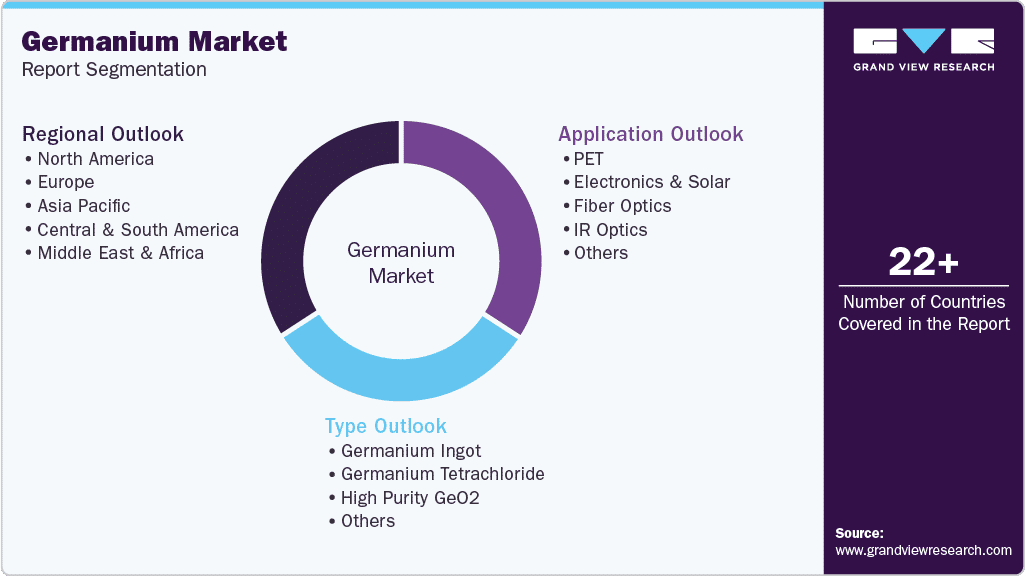
Image Source: Grand View Research
The germanium market reveals a troubling paradox: growing demand for critical technologies built on an increasingly fragile supply foundation controlled by a single nation.
Market valuation, growth projections
Market valuations paint a complex picture, with 2024 assessments spanning from $263.80 million to $3.48 billion—a variance reflecting different measurement methodologies rather than uncertainty about growth. What remains consistent across all forecasts is steady expansion between 3.5-4.2% annually, driven primarily by infrastructure demands in fibre optics, thermal imaging, and space-grade photovoltaics.
| Region | Market Share | Growth Outlook |
|---|---|---|
| North America | ~35% | Steady demand in defence and aerospace |
| Europe | ~30% | Strong telecommunications growth |
| Asia-Pacific | ~20% | Fastest regional growth rate at 3.7% |
Industry forecasts suggest a supply crisis ahead: “Demand will outstrip supply by six to nine times by 2030”. This projection assumes current production capacity remains static while technological adoption accelerates across multiple sectors simultaneously.
Top producers & consuming regions
China dominates global germanium production with a stranglehold that ranges from 60% to 93.5% of worldwide supply—a concentration that creates immediate vulnerability for technology-dependent economies. After implementing export restrictions in 2023, China’s germanium metal exports paradoxically increased 34% through September compared to 2022, suggesting either stockpile management or price optimisation strategies.
Beyond China, production remains scattered among smaller players: Teck Resources in Canada, Umicore in Belgium, and limited operations in Russia and Japan. These alternative sources provide some diversification but lack the scale to meaningfully offset Chinese supply disruptions.
The supply concentration becomes particularly concerning when examining consumption patterns. North America and Europe account for approximately 65% of global demand yet produce virtually none of their germanium domestically—a dependency that transforms this metalloid from a technical requirement into a geopolitical vulnerability.
Key Takeaway: Germanium markets exist in dangerous equilibrium—steady technological demand growth coupled with extreme supply concentration creates both economic opportunity and strategic risk for nations dependent on advanced semiconductor and optical technologies.
Indian Market Position
India faces a stark reality in the global germanium landscape: complete import dependency for an element that underpins its digital infrastructure and strategic ambitions. This vulnerability creates cascading risks across telecommunications, defence, and emerging technologies.
Import reliance
India produces zero germanium domestically, relying entirely on imports for this critical semiconductor. China’s 2023 export restrictions forced Indian importers to source germanium through intermediaries in the United Arab Emirates, substantially inflating costs. This dependency exposes dangerous vulnerabilities across India’s high-tech supply chains.
The irony is striking: while Indian consumers use PET bottles potentially containing germanium catalysts and depend on fibre optic networks enabled by germanium compounds, the country imports every gram of this strategically vital element.
Strategic sectors at risk
Germanium underpins India’s most ambitious technological programmes. BharatNet’s rural connectivity initiative requires germanium oxide in optical fibre preforms—the solid glass cylinders from which fibres are drawn. The National Mission on Quantum Technologies, allocated ₹6003.65 crore through 2030-31, depends on germanium’s semiconductor properties for qubit development.
| Strategic Sector | Germanium Application | Supply Disruption Impact |
|---|---|---|
| Telecommunications | Fibre optic manufacturing | BharatNet delays, 5G infrastructure setbacks |
| Defence | IR optics, surveillance systems | Critical security vulnerabilities |
| Quantum Computing | Qubit substrates, advanced research | Delayed technological sovereignty |
National Critical Minerals Mission response
Recognising these vulnerabilities, the government launched the National Critical Mineral Mission (NCMM) in 2025. The mission encompasses 1,200 exploration projects conducted by the Geological Survey of India from 2024-25 to 2030-31. Germanium ranks among 30 identified critical minerals, though securing alternative supplies remains challenging given the element’s scarcity and China’s market dominance.
Khanij Bidesh India Limited (KABIL) has been tasked with mapping and exploring critical mineral assets in resource-rich countries. However, germanium’s extremely low crustal abundance and complex extraction requirements limit viable options for supply diversification.
Key Takeaway: India’s total germanium import dependency threatens core technological programmes from rural connectivity to quantum computing—making the National Critical Minerals Mission success essential for digital sovereignty and national security.
Current Industry Challenges
Germanium’s strategic value has created a supply landscape fraught with geopolitical risk and market volatility that threatens global technology sectors.
Export restrictions & supply bottlenecks
China’s implementation of export controls on germanium in August 2023 created immediate global supply disruptions. During the first month of restrictions, China exported zero wrought germanium, compared to 7,965 kg in July 2023. Even by October 2023, exports reached only 590 kg, revealing the severity of supply chain constriction. These restrictions require Chinese exporters to obtain licences for ‘dual-use items’, often facing lengthy approval processes—sometimes exceeding 80 days.
| Period | Chinese Germanium Exports | Price Impact |
|---|---|---|
| July 2023 (Pre-restriction) | 7,965 kg | Baseline |
| August 2023 | 0 kg | Initial shock |
| October 2023 | 590 kg | 18% price increase |
The restrictions exposed how concentrated germanium supply had become. Companies dependent on steady germanium flows found themselves scrambling for alternative sources or facing production delays. Defence contractors, fibre optic manufacturers, and solar cell producers all felt the immediate impact of supply uncertainty.
Price volatility and strategic stockpiling
Price volatility became pronounced throughout 2024-2025—North American prices surged 13% in Q4 2024, European prices jumped 14%, while the APAC region witnessed a 15.5% increase. These aren’t minor market fluctuations; they represent fundamental shifts in how nations view germanium access.
Nations responded with accelerated strategic stockpiling initiatives. The US Department of Defence recovered approximately 3,000 kg of germanium for its National Defence Stockpile, representing about 10% of US demand. This stockpiling reflects a sobering reality: germanium supply can disappear overnight when geopolitical tensions escalate.
> “Not only will we likely experience supply bottlenecks over the next 5-10 years, but periods when strategic metals are not available at all”
The challenge extends beyond price. Long-term contracts become unreliable when export licences can be denied or delayed. Manufacturers must now factor supply risk into their product development cycles, often choosing less optimal materials simply for supply security.
Key Takeaway: Germanium supply constraints reveal how quickly strategic materials can become weapons in geopolitical competition forcing nations to choose between technological ambition and supply security.
Conclusion: Germanium’s Future and Strategic Importance
Germanium’s story—from Mendeleev’s “ekasilicon” prediction to its role in today’s quantum systems—shows how a once-obscure metalloid became technologically indispensable. Its future lies not in replacement but in deeper integration across frontier fields.
- Quantum computing: germanium qubits now reach 99.49% fidelity, a milestone that outpaces silicon.
- Energy storage: germanium anodes offer 400× faster lithium diffusion than silicon, enabling ultra-fast charging.
- Autonomous systems: infrared and LiDAR modules with germanium optics allow vehicles and drones to operate safely in darkness, fog, and adverse weather.
Yet this promise is shadowed by supply risk. China controls 60–93% of global production, while India relies entirely on imports to sustain telecom, defence, and quantum programmes. Stockpiling may buffer shocks, but lasting resilience demands diversified supply chains, recycling, and long-term investment.
Most germanium today is recovered as a by-product of zinc smelting and from coal fly ash; recycling from spent fibre-optic scrap is now emerging as a secondary source. China’s 2023 export restrictions triggered double-digit price spikes within months—a reminder that diversified supply and recycling are as strategic as the technology itself.
Ultimately, germanium’s significance rests in its unique blend of properties: semiconductor behaviour, infrared transparency, and solar compatibility. These traits underpin submarine cables that carry global internet traffic, space probes exploring beyond Pluto, and surveillance systems guarding national borders.
Like a master key, germanium unlocks technologies across computing, energy, defence, and medicine. Scarce yet irreplaceable, it will remain central to technological progress—and a strategic challenge—for decades to come.
FAQs
What are the main uses of germanium in modern technology?u003c/strongu003e
Germanium is used in fibre optics, infrared optics, solar cells, and semiconductors. Applications span telecom networks, thermal imaging, high-efficiency space solar panels, SiGe high-speed chips, PET catalysts, and medical imaging.
Why is germanium considered a critical material?
Germanium is critical because global supply is highly concentrated, especially in China. Its strategic role in defence, telecom, space, and quantum computing makes nations classify it as essential and vulnerable.
How does germanium contribute to solar energy technology?
Germanium is used as a substrate in multi-junction solar cells, enabling higher efficiency compared to traditional silicon cells. These high-performance cells are particularly valuable in space applications, where they power satellites and spacecraft.
What role does germanium play in fibre optic communications?
Germanium tetrachloride adjusts the refractive index in fibre cores, enabling efficient light transmission. Nearly all global internet traffic flows through germanium-doped optical fibres.
How is germanium used in medical imaging?
Germanium-68 is used as a parent isotope in PET scan imaging systems. It decays to produce gallium-68, which is used as a tracer in positron emission tomography, enabling detailed diagnostic imaging for various medical conditions.
Why is germanium important for quantum computing?
ermanium enables qubits with fidelities above 99% while remaining compatible with silicon fabs. This makes it a leading material for scalable quantum processors.
Is germanium recyclable?
Yes. It can be recovered from zinc smelting residues, coal fly-ash, and increasingly from spent fibre-optic scrap, though recycling volumes still lag behind demand.
How is germanium used in defence and public safety?
Germanium optics enable night-vision cameras, thermal imagers, and LiDAR systems for border surveillance, search-and-rescue, and navigation in fog, smoke, or total darkness.


![The Surprising Truth About Beryllium Applications in Modern Technology [2025 Guide]](https://ik.imagekit.io/lxsotwajc/wpmedia/wp-content/uploads/2025/06/featured-Image3-440x264.webp)