Last Updated on September 2, 2025 by Hemanth
Table of Contents

Antimony is a critical metalloid shaping modern safety, energy, and electronics. From flame-retardant plastics and brake pads to lead-acid batteries, semiconductors, pigments, and even everyday appliances like PET bottles and air fryers, its reach is wide but often overlooked.
This article explores the many compounds and applications of antimony, its role in defense and technology, and why supply chain dependence on China makes it a strategic vulnerability for countries like India. We also unpack health and environmental concerns and examine recycling and sustainability pathways.
What do fireproof textiles, backup batteries, and cutting-edge semiconductors have in common? An obscure element you’ve probably never heard of: antimony. In this guide, we explore the most important antimony uses across industry, medicine, and even consumer products.
The name comes from the Greek anti-monos (“not alone”), reflecting that it is rarely found in pure form. The historical name Stibium inspired its symbol Sb. Antimony (atomic number 51) is a brittle, silvery metalloid from Group 15 of the periodic table, known since ancient times when it was used in cosmetics like kohl.
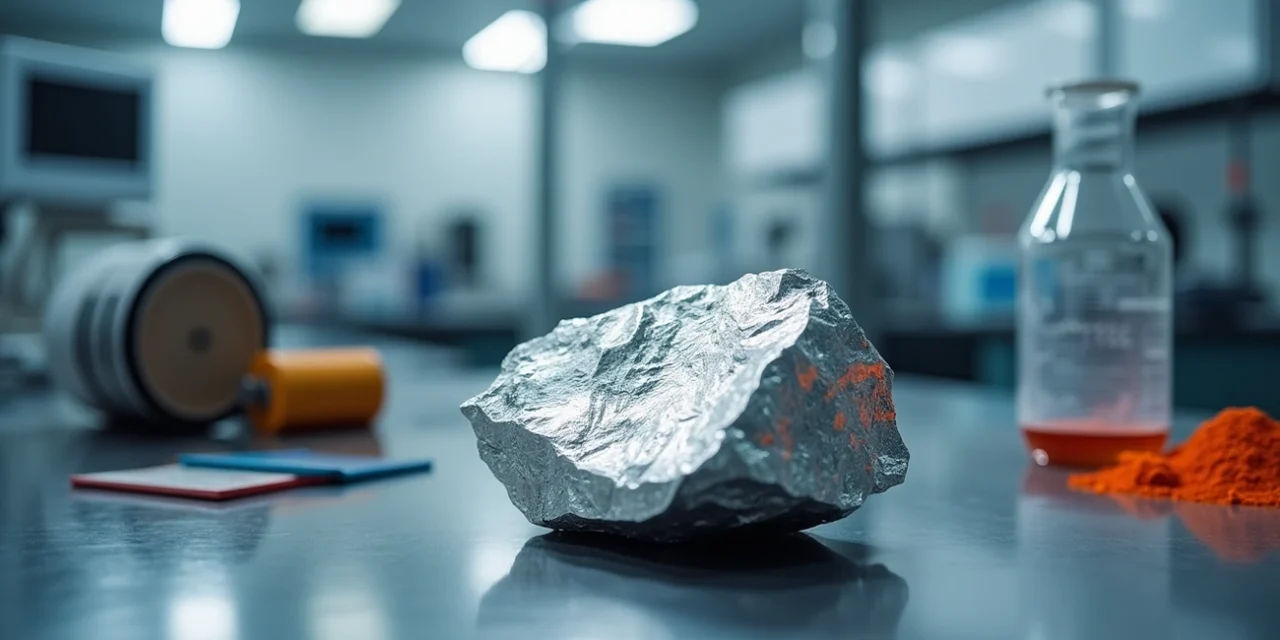
Its primary source is the ore stibnite (Sb₂S₃), a lustrous black sulphide mineral typically found in hydrothermal veins. Stibnite usually contains 2–5% Sb, with rich deposits exceeding 10%. Smaller amounts occur in minerals such as valentinite and senarmontite, though these are less frequently processed. Despite its low crustal abundance (0.2–0.5 ppm), antimony is present in more than 100 mineral species.
Key Properties That Drive Its Uses
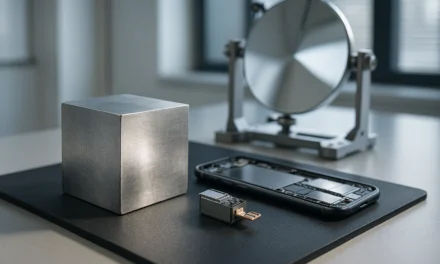
Antimony is lustrous with a bluish tint, brittle, and expands slightly on cooling. With a melting point of 630.6 °C and a Mohs hardness of 3, it is well suited for heat-resistant alloys and casting applications. Chemically, it most often occurs in the +3 and +5 oxidation states, which underpin its versatility: the +3 state drives its role in flame-retardant plastics and PET catalysts, while the +5 state is central to antimonial medicines. It also resembles arsenic and bismuth, sharing similar behaviors and toxicity concerns.
While many compounds are hazardous in dust or fume form, they are tightly regulated in plastics, pigments, and food-contact uses. When heated, antimony burns with a blue flame and forms antimony trioxide (Sb₂O₃) — the compound that drives its largest industrial application in flame-retardant systems.
👉 Its unique chemistry gives antimony a dual identity — part metal, part non-metal — making it remarkably versatile. That versatility allows it to quietly power everything from flame-retardant plastics to alloys and medical compounds.
Key Antimony Compounds and Their Uses
Antimony’s versatility comes from the wide range of compounds it forms. Each has distinct industrial, medical, or technological applications — and in many cases, strict safety considerations.

| Compound | Common Uses | Key Notes / Risks |
|---|---|---|
| Sb₂O₃ (Antimony Trioxide) | Flame-retardant synergist, glass fining agent, PET catalyst | Under EU review for toxicity; drives ~60% of global Sb demand |
| Sb₂S₃ (Antimony Sulfide) | Brake pads, safety matches, fireworks, ammunition primers | Converts to Sb₂O₃ dust; contributes to urban air pollution |
| InSb / GaSb (Indium/Gallium Antimonide) | Infrared sensors, thermoelectric devices, quantum electronics | Niche, high-cost semiconductors with defense/aerospace value |
| Na Stibogluconate / Meglumine Antimoniate | WHO-listed medicines for leishmaniasis | Safer pentavalent antimonials; still used in India, Brazil, Africa |
| Pb₂Sb₂O₇ (Lead Antimonate) | Naples Yellow pigment, ceramics, enamel coatings | Restricted due to lead content; still found in artisanal work |
| SbCl₃ (Antimony Chloride) | Dyes, mordant chemistry, inorganic synthesis | Corrosive, hydrolyses in moist air, requires sealed storage |
| SbF₅ (Antimony Pentafluoride) | Superacid chemistry, polymer synthesis | Highly toxic and corrosive; limited to controlled labs |
Industrial Applications
Flame Retardants- – The Largest Market for Antimony Uses
Antimony trioxide (Sb₂O₃) is not a flame retardant on its own, but acts as a synergist with halogenated systems. When exposed to fire, it reacts with chlorine or bromine radicals to form antimony halides. These halides interrupt the flame’s chain reaction in the gas phase while promoting char formation on the material’s surface — a dual mechanism that slows fire spread.
This efficiency explains why flame-retardant plastics, textiles, and foams account for over 60% of global Sb₂O₃ demand. Alternatives such as aluminium hydroxide and phosphorus-based systems are used, but they often require higher loadings or compromise thermal stability. Emerging options like expandable graphite show promise but are not yet widely adopted, and recycling from plastics remains technically limited.
In India, Sb₂O₃ remains widely used in flame-safe wiring and textiles, though oversight is fragmented. Meanwhile, the European Chemicals Agency is evaluating Sb₂O₃ for restricted use due to toxicity concerns.
For now, no substitute matches antimony’s balance of effectiveness and cost — keeping it the backbone of fire-safety systems worldwide. Among all antimony uses, flame-retardant systems dominate, accounting for over 60% of global demand
“Flame-retardant uses drive over 60% of global antimony demand.”
Metal Alloys
Antimony is an essential hardener for lead alloys, improving their hardness, corrosion resistance, and castability. Even small additions make a large difference — a 5% Sb addition to lead doubles its Brinell hardness while enhancing casting precision and stability under heat. These alloys remain crucial across sectors:
| Application | Sb Content | Purpose |
|---|---|---|
| Battery grids | 3–6% | Deep-cycle durability in rugged conditions |
| Cable sheathing | 1–4% | Machinability & moisture resistance |
| Ammunition | 1–5% | Hardness & mould stability |
| Type metal (historic) | ~12% | Dimensional stability under heat |
Although lead–calcium alloys are now used in lighter, maintenance-free batteries, lead–antimony alloys remain indispensable in deep-cycle and industrial applications where thermal stability and mechanical strength are critical. Workplace exposure to Sb in alloy plants is regulated by OSHA and the European Chemicals Agency.
Recycling is well established: lead–antimony alloys contribute to closed-loop battery recovery streams. Some manufacturers are experimenting with calcium- and selenium-based alternatives for lower toxicity and easier recyclability, but these fall short in high-temperature or high-load applications. In India, most battery-grade lead–antimony alloys are imported, reflecting the absence of local production capacity.
“Adding just 5% antimony to lead doubles its hardness and boosts corrosion resistance.”
Batteries
Antimony is a key additive in lead–acid battery grids, where alloys with 3–6% Sb enhance strength, corrosion resistance, and deep-cycle durability. This improvement is critical in applications requiring frequent charge–discharge cycles.
| Application | Role of Sb–Pb Grids |
|---|---|
| Backup power systems | Stability during repeated cycling |
| Telecom towers & mobile backups | Longer service life in high-heat conditions |
| UPS units & ATMs | Reliable recovery under full discharges |
| Defense batteries & rural microgrids | Rugged durability under extreme loads |
Sb-based grids typically endure 500–1,000 cycles, compared to 300–500 cycles for lead–calcium systems. They also offer better recharge recovery, making them the preferred choice for telecom, defense, and industrial backup where reliability outweighs weight savings.
Although lead–calcium alloys dominate in lighter, maintenance-free batteries, antimony systems remain vital in heavy-duty and high-temperature markets, particularly across Asia and Africa. Recycling is well established: 20–25% of global secondary antimony comes from the battery sector. In India, however, nearly all battery-grade alloys are imported.
Even as lithium-ion adoption grows, lead–antimony batteries remain crucial in rugged, cost-sensitive, and long-lifecycle applications that newer chemistries struggle to match.
“Sb–Pb grids can endure nearly twice as many deep cycles as lead–calcium systems.”
Electronics and Semiconductors- Advanced Antimony Uses in Tech
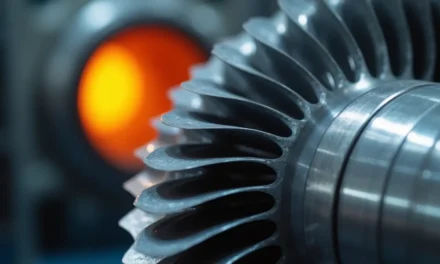
Antimony plays a critical role in compound semiconductors. The best-known is antimony telluride (Sb₂Te₃), a thermoelectric material used in cooling modules, satellite electronics, and remote sensing devices. Its ability to convert heat into electricity also makes it valuable in thermoelectric cooling for data centres and wearable devices.
Equally important are indium antimonide (InSb) and gallium antimonide (GaSb). These materials, with their narrow band gaps and high carrier mobility, underpin technologies from infrared sensors and night-vision optics to quantum devices and military-grade thermal cameras. Sb₂Te₃ itself is being researched for spintronics and quantum computing applications, highlighting antimony’s place at the frontier of advanced electronics.
| Compound | Bandgap (eV) | Use Case |
| Sb₂Te₃ | 0.3 – 0.4 | Thermoelectrics, IR sensors |
| GaSb | 0.72 | IR diodes, RF electronics |
| InSb | 0.17 | Night vision, quantum sensors |
| Si (reference) | 1.1 | Standard electronics |
Despite their promise, Sb-based semiconductors remain niche compared to silicon, due to limited substrate availability, high costs, and smaller-scale demand. India imports nearly all Sb-based semiconductors, with no domestic production capacity. Recovery from electronic waste is technically possible, but not yet economically viable.
“With bandgaps as low as 0.17 eV, antimony semiconductors enable night vision, quantum sensors, and infrared cameras.”
Materials & Consumer Applications
Glass and Ceramics
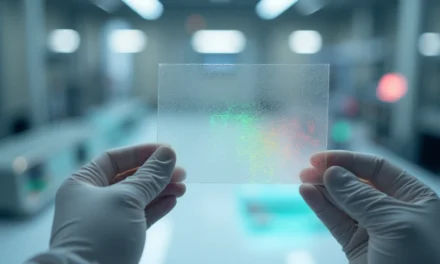
Antimony trioxide (Sb₂O₃) is widely used as a fining agent in glass manufacturing, where it removes bubbles and impurities to improve clarity and optical quality. In molten glass, Sb₂O₃ oxidises ferrous iron (Fe²⁺) to ferric iron (Fe³⁺), reducing the characteristic green tint and aiding in bubble removal. This makes it indispensable in optical lenses, display screens, and laboratory glassware.
In ceramics, lead antimonate (Pb₂Sb₂O₇) has long been prized for its bright yellow colour, thermal stability, and resistance to fading. It remains in use for tile glazes, enamel cookware, and furnace ceramics, though today its use is tightly regulated due to toxicity. Historically, Pb₂Sb₂O₇ pigments were used in ancient Egyptian glasswork, Renaissance pottery, and stained glass windows, showing antimony’s long cultural footprint.
India imports Sb compounds for use in optical glass, ceramic coatings, and enamelware, while PET packaging (covered in the next section) is increasingly scrutinised for antimony residues in recycling streams.
“Sb₂O₃ eliminates green tint and bubbles, giving glass the clarity demanded for optics and high-tech screens.”
Pigments
One of antimony’s oldest applications is in pigments, most notably lead antimonate (Pb₂Sb₂O₇), better known as Naples Yellow. This compound has been used since antiquity for its bright hue, opacity, and stability at high temperatures, making it one of the earliest synthetic pigments. Archaeological evidence shows its use in ancient Egyptian glasswork, Renaissance paintings, and ceramic glazes.
In modern industry, its thermal resilience and colourfastness make it valuable in ceramic tile glazes, automotive coatings, enamel work, and high-temperature markers. However, global restrictions on lead have sharply limited its large-scale use, and interest in non-lead substitutes is growing.
Recycling options for pigment-grade antimony compounds remain virtually nonexistent. In India, small-scale ceramic workshops and traditional pottery continue to use Naples Yellow in artisanal work, though its industrial role is diminishing under tighter safety regulations.
PET
Antimony trioxide (Sb₂O₃) is the most common catalyst in the production of polyethylene terephthalate (PET) — the world’s dominant plastic for bottles, food containers, and textiles. Its role ensures transparency and polymer quality, which is why Sb remains central to PET manufacturing worldwide.
However, trace amounts of antimony remain in the final PET product. Studies show that leaching increases with prolonged storage, repeated reuse, or when bottles are exposed to high temperatures above 60–70 °C. As a result, antimony concentrations in bottled water are often higher than those in tap water, though still usually below regulatory thresholds.
Global standards differ: the EU limit for antimony in drinking water is 5 ppb, while Codex Alimentarius benchmarks influence BIS and FSSAI regulations in India. Awareness of antimony risks in PET packaging remains limited in India, and monitoring Sb levels in recycled PET streams is becoming increasingly important as bottle-to-bottle recycling expands.
Brake Pads and Fireworks
Antimony sulfide (Sb₂S₃) plays a dual role in friction and ignition systems. In automobile brake pads, it stabilises friction under extreme heat and pressure. Pads can contain up to 46,000 mg/kg of Sb, with brake dust emissions reaching 21,000 mg/kg. During braking, Sb₂S₃ oxidises into antimony trioxide (Sb₂O₃), a suspected carcinogen that contributes to urban air pollution in traffic-heavy corridors.
Sb₂S₃ is also central to safety matches and fireworks, where it ensures controlled ignition and reliable flame propagation. In India, antimony compounds remain in use across match factories, aftermarket brake linings, and pyrotechnics workshops, creating exposure risks in informal sectors. With no recycling pathways, antimony from these products disperses into the environment — from brake dust on city roads to particulate residues at fireworks sites.
Cosmetics
For centuries, antimony compounds — especially antimony sulfide (Sb₂S₃) — were used in cosmetics such as kohl, sindoor, and ritual face powders, valued for their deep black lustre, adhesion, and cultural symbolism. Ancient Egyptian, Roman, and South Asian traditions relied on Sb pigments for both beauty and ritual purposes.
Modern science, however, revealed the health risks of chronic Sb exposure. Inhalation of Sb dust or prolonged skin contact is linked to respiratory irritation, dermatitis, and systemic toxicity. As a result, Sb-based cosmetics have been phased out of regulated markets under FDA, EU, and Indian standards.
Yet in informal or counterfeit markets, antimony-laced powders and eyeliners can still appear, particularly in rural South Asia and Africa. This creates an unmonitored risk, with consumers often unaware of potential toxicity. Public health campaigns and stricter enforcement are needed to fully eliminate Sb from cosmetic use.
Medical and Specialised Applications
Antimony Potassium Tartrate in Treatments
Antimony’s medical history is as complex as its chemistry. For centuries, antimony potassium tartrate (tartar emetic) was used against parasitic diseases such as schistosomiasis. These trivalent antimony (Sb³⁺) drugs were often effective but carried high toxicity risks.
In the 1920s, Indian physician Upendranath Brahmachari pioneered the use of safer pentavalent antimonials (Sb⁵⁺), which became the standard treatment for leishmaniasis. These compounds disrupt parasite metabolism and, despite side effects requiring clinical monitoring, they remain important in global health.
Although praziquantel replaced antimony for schistosomiasis in the 1970s, pentavalent formulations such as sodium stibogluconate and meglumine antimoniate are still used today in regions like India, Nepal, Brazil, and Ethiopia, where alternatives such as liposomal amphotericin B remain prohibitively expensive. The World Health Organisation continues to list antimonial drugs in its Model List of Essential Medicines.
Veterinary Uses of Antimony Compounds
Antimony has also found roles in veterinary medicine, particularly for conditions involving keratinised tissues in ruminants. Compounds such as anthiomaline and lithium antimony thiomalate were used to manage hoof and horn disorders. Earlier protocols for horses employed antimony potassium tartrate and antimony trisulfide in treating wounds and parasitic infections, though these have largely fallen out of practice.
Some caustic dehorning pastes still contain antimony salts, highlighting its persistence in niche animal care applications. Experimental studies in dogs show that injected antimony compounds exhibit active pharmacokinetics, with peak plasma levels occurring about 85 minutes after subcutaneous administration — evidence of their systemic bioavailability.
Use in Neutron Sources and Detectors
Beyond medicine, antimony contributes to nuclear engineering through its isotopes. Antimony-124, when mixed with beryllium, produces photo-neutron sources. Gamma rays emitted by Sb-124 trigger photodisintegration in beryllium, releasing neutrons with energies of about 24 keV.
These sources are used in Prototype Fast Breeder Reactors (PFBRs) to maintain background neutron flux during shutdowns, ensuring the accuracy of startup detectors. At India’s IGCAR Kalpakkam, Sb-124/Be sources are employed in PFBR projects as part of reactor safety infrastructure.
Together with antimony’s medical uses, these veterinary and nuclear applications highlight its enduring relevance in specialised, high-reliability systems — from lifesaving drugs and animal care to ensuring the safe operation of advanced reactors.
Key Takeaway: Antimony’s specialised uses extend beyond industry into medicine, veterinary care, and nuclear safety. From lifesaving antimonial drugs developed in India to niche veterinary treatments and neutron sources for reactor safety, these applications underscore its enduring value in critical, high-reliability systems.
Antimony in Air Fryers: Should You Be Concerned?
Air fryers have become a modern kitchen staple — but a growing number of consumers now ask: do air fryers contain antimony? The concern arises because antimony trioxide (Sb₂O₃) is commonly used as a flame retardant in heat-resistant plastics, coatings, and electrical insulation — all of which are present in small appliances such as air fryers, toasters, and coffee makers.
Not all air fryers use Sb-based flame retardants, but many conventional models do, particularly in the inner housing and insulation where heat resistance is critical. Some manufacturers now market “antimony-free” or “non-toxic” models, though disclosure of material composition remains inconsistent and regulatory standards vary by region.
Scientific studies suggest that antimony migration into food from plastics is generally very low and within established safety limits under normal use. Research on PET materials supports this finding, though risks may increase under prolonged high-heat exposure, internal wear-and-tear, or plastic degradation. While antimony trioxide is classified as a possible human carcinogen when inhaled, regulators such as the EU and EFSA consider migration from food-contact plastics to pose low toxicological concern at current levels.
💡 Consumer Tip: If you’re concerned, opt for air fryers with stainless steel interiors and safety certifications that explicitly state “antimony-free.”
As awareness grows, demand for non-toxic kitchen appliances is rising. Clear disclosure of flame-retardant use should become the new industry standard, ensuring consumers can make informed choices about long-term health.
Other Industrial and Emerging Uses
While antimony’s largest markets lie in flame retardants, alloys, and batteries, it also supports several specialised industrial and emerging applications that highlight its versatility across technology, defense, and energy systems.
Antimony in Solders and Bearings
Small additions of antimony strengthen lead–tin solders, improving their durability in electronics and plumbing applications. In heavy machinery, Sb-bearing alloys are used in plain bearings, where they provide hardness, wear resistance, and fatigue strength. These alloys help extend service life in turbines, compressors, and industrial engines.
Antimony as a Catalyst in Polymers
Beyond PET plastics, Sb compounds act as catalysts in polyurethane foams and synthetic rubber production. This catalytic role improves polymerisation efficiency and stability, supporting industries ranging from automotive interiors to consumer goods. As global demand for synthetic polymers rises, antimony’s catalytic role remains critical.
Antimony in Ammunition Primers
Antimony sulfide (Sb₂S₃) has long been used in ammunition primers and detonators to ensure reliable ignition. Its stability under varying temperatures and mechanical shock makes it essential in both civilian and defense-grade cartridges. While alternative primer chemistries are under research, Sb₂S₃ continues to dominate due to its proven performance.
Antimony in Flame-Proof Textiles
Sb₂O₃ is also employed in flame-proof textiles, including military uniforms, aircraft seat fabrics, and industrial protective clothing. These materials must withstand intense heat while maintaining structural integrity, and antimony’s synergy with halogenated flame retardants makes it a preferred choice despite regulatory scrutiny.
Antimony in Solar Cells and Advanced Alloys
Research is expanding on antimony selenide (Sb₂Se₃) as a thin-film solar absorber, offering a less toxic alternative to cadmium-based photovoltaics. Early results suggest promising efficiency and scalability. In parallel, high-purity Sb alloys — such as tin–antimony solders and indium–antimony semiconductors — remain vital in advanced electronics, quantum devices, and niche aerospace systems. These emerging roles position antimony as a potential enabler of the next generation of clean energy and semiconductor technologies.
Key Takeaway: Beyond its dominant roles in flame retardants, batteries, and alloys, antimony also supports solders, catalysts, ammunition, textiles, and solar research — proving its adaptability from heavy industry to next-generation energy systems.
Strategic and Environmental Concerns
Supply Chain Dependence
Antimony is recognised as a critical mineral by the United States, European Union, and India due to its high supply risk. China dominates the market, producing over 80% of refined antimony and controlling more than 85% of global smelting capacity, creating a major geopolitical bottleneck. Other producers such as Russia, Bolivia, Tajikistan, and Myanmar largely export concentrates — which are ultimately processed back in China — reinforcing this dependence.
This concentration raises concerns over potential export restrictions, echoing China’s leverage in rare earths and gallium. For India, which is 100% import dependent and lacks domestic mining or refining infrastructure, the risk is acute. A 2023 Exiger report ranked antimony among the top 10 minerals most vulnerable to Chinese supply disruption, with implications for defense, energy storage, and green technology.
Environmental Impact
Antimony mining, especially in weakly regulated areas, causes significant environmental damage. Poor waste handling leads to Sb contamination in rivers and soils, harming aquatic life and entering food chains.
In Myanmar and Bolivia, artisanal mining has resulted in high antimony concentrations in water systems. A 2020 ScienceDirect study reported mining effluents in Bolivia with over 500 µg/L of Sb, far exceeding WHO ecological safety limits. The UNEP now flags antimony as an emerging pollutant, particularly linked to e-waste burning in Asia and Africa.
Recycling and Sustainability

Global recycling rates for antimony remain low. The only consistently viable stream is lead–acid batteries, which account for about 25% of global secondary recovery. Sb from flame-retardant plastics, textiles, and cables is rarely recovered due to low concentrations, lack of separation infrastructure, and the economic challenges of smelting.
India currently has no formal systems for Sb recovery from end-of-life products such as e-waste, PET bottles, or brake pads. By contrast, countries like Germany, Belgium, and Japan integrate Sb recovery into smelter operations. In India, Sb is often treated as a by-product, diluted rather than actively extracted. Scaling R&D and traceable recycling mechanisms will be essential for India to cut import dependence and meet its critical minerals strategy.
Key Challenges at a Glance
- Supply Chain: Over 85% of refining controlled by China; India 100% import-dependent.
- Recycling: Only ~25% global recovery; no systems in India for Sb from plastics or brakes.
- Environmental: Severe contamination from mining and e-waste; limited monitoring in India.
- Policy & Regulation: No EPR, traceability norms, or dedicated R&D funding in India.
Key Takeaway: Antimony’s future is shaped as much by geopolitics and sustainability as by its applications. China’s dominance, low recycling rates, and environmental risks leave India highly exposed, making supply diversification and recovery systems a national priority.
Future Outlook– Why Antimony Uses Matter
Antimony’s role is expanding as industries prioritise fire safety, energy efficiency, and advanced electronics. Rising demand is expected in:
- Fire safety: Flame-retardant plastics for EVs, buildings, and aircraft interiors.
- Backup power: Lead–acid batteries remain vital for data centres, telecom, and defense reserves.
- Next-generation semiconductors & thermoelectrics: Sb₂Te₃ compounds power cooling systems, wearables, and quantum devices.
- Circular economy efforts: Increasing scrutiny over Sb residues in PET packaging, cables, and brake pads.
Yet two challenges remain constant: China’s dominance in supply and the lack of scalable substitutes. With over 80% of refining capacity controlled by China, antimony continues to be a strategic vulnerability for import-dependent countries worldwide.
Key Takeaway: Global demand for antimony will rise across fire safety, backup power, and advanced semiconductors, but supply remains vulnerable due to China’s dominance and the lack of scalable substitutes.
India’s Strategic Outlook
For India, the stakes are especially high. Antimony was listed as a critical mineral in 2023, but no mining, refining, or recycling initiatives have yet been launched. KABIL has held exploratory talks on international partnerships, but no binding agreements exist as of 2024.
India still lacks:
- Smelting facilities for refining concentrates.
- Recycling pilots for PET, e-waste, and batteries.
- Traceability standards across the supply chain.
- R&D investment in substitution or process optimisation.
To secure supply and reduce vulnerability, India must:
- Establish a national roadmap for antimony sourcing and import hedging.
- Incentivise recycling programmes for PET, e-waste, and batteries.
- Build public–private partnerships for refining and metallurgical capacity.
- Strengthen visibility in trade agreements and critical minerals diplomacy.
Without action, India risks being left behind in the industries most dependent on antimony — from clean energy and electronics to defense manufacturing.
Key Takeaway: India is 100% import-dependent on antimony with no mining, refining, or recycling systems in place. A national roadmap, recycling pilots, and trade partnerships are essential to reduce strategic risk.
Conclusion
Though obscure to most, antimony underpins technologies across modern life — from flame-retardant plastics and backup batteries to antiparasitic drugs and quantum semiconductors. Its extreme supply concentration and low recyclability have elevated it from a specialty material to a strategic asset.
👉 Antimony may be chemically small, but its impact is geopolitically large. Ensuring its availability will mean the difference between dependency and self-reliance in tomorrow’s critical industries.
💬 What Do You Think?
Were you surprised by the wide range of antimony’s applications — from cosmetics and cables to semiconductors and space tech?Do you think India should invest more in recycling or look abroad for a secure supply? Let us know your thoughts in the comments below. If you found this article insightful, please share it with your network!
Is antimony a metal or a non-metal?
Antimony is a metalloid, showing both metallic and non-metallic properties. It is brittle, a poor conductor, and chemically behaves like arsenic.
What is stibnite and why is it important?
Stibnite (Sb₂S₃) is the primary ore of antimony, a black sulfide mineral found in hydrothermal veins. It is the main source of refined Sb.
Why is antimony classified as a critical mineral?
Because over 80% of supply comes from China, and demand is rising in defense, batteries, and electronics. This creates strategic risks, especially for India, which is 100% import-dependent.
What are the main uses of antimony in daily life?
Antimony is used in flame-retardant plastics, lead-acid batteries, brake pads, PET bottles, pigments, ceramics, and semiconductors. These applications make it vital for fire safety, electronics, and backup power systems.
Is antimony toxic to humans?
Yes. Antimony trioxide (Sb₂O₃) is considered a possible human carcinogen. Chronic exposure may affect the lungs, liver, and skin.
What are the health risks of antimony in PET bottles?
Trace antimony remains in PET plastics. Leaching increases with high temperature, long storage, or reuse. Most levels stay below global safety limits, capped at 5 ppb in EU drinking water standards.
Do air fryers contain antimony?
Many models use Sb-based flame retardants in heat-resistant plastics. Migration into food is generally low and within safety limits, but some brands now offer antimony-free, stainless steel interior models.
How is antimony used in semiconductors?
Compounds like indium antimonide (InSb) and gallium antimonide (GaSb) enable infrared sensors, night-vision optics, and thermoelectrics, valued for their low bandgaps and high carrier mobility.
Can antimony be recycled?
Yes. Recycling from lead–acid batteries accounts for ~25% of global secondary antimony. Recovery from plastics, textiles, or brake pads is technically possible but not yet economic.
Is antimony being replaced by safer alternatives?
Research is underway into halogen-free flame retardants, non-lead pigments, and calcium/selenium battery alloys. But most substitutes cannot fully match antimony’s performance in critical applications.
Do air fryers contain antimony?
Many conventional air fryers use components treated with antimony trioxide (Sb₂O₃) flame retardants, especially in the inner housing and insulation. However, some brands now offer antimony-free models.
Is antimony in air fryers harmful?
Scientific studies show that antimony migration from appliance plastics is very low and usually within regulatory safety limits. Risks may increase only under prolonged high-heat use, wear-and-tear, or plastic degradation.
Which air fryer brands are antimony-free?
Some manufacturers advertise “antimony-free” or “non-toxic” models, often using stainless steel interiors. Because material disclosure is inconsistent, check product certifications or contact the manufacturer directly.
Can antimony from an air fryer get into food?
Under normal use, migration levels are minimal, similar to studies on PET food-contact plastics. Extended exposure to high temperatures may raise the risk of leaching, but most tests remain below global safety thresholds.
How can I reduce exposure to antimony from kitchen appliances?
Choose stainless steel interiors, look for explicit “antimony-free” certification, and avoid excessive high-heat cooking cycles with older plastic-lined units.