
Last Updated on August 22, 2025 by Hemanth
Table of Contents
Cerium might be the rare earth you’ve used without knowing it—polishing your smartphone screen, sparking a lighter, or cleaning the exhaust from your car. Yet these are just the surface of its story.
In this guide, you’ll discover cerium’s surprising roles in aerospace, energy, and even healthcare—applications that reveal why this overlooked element is becoming a cornerstone of the modern world.
Overveiw
You’ve probably never heard of cerium, yet this silvery rare earth quietly powers technologies that shape your daily life — from catalytic converters and smartphone glass to cancer therapies and space telescopes.
Cerium is the most abundant of all rare earth elements and ranks 25th in Earth’s crust, yet it remains one of industry’s best-kept secrets. First discovered in Bastnäs, Sweden, it was the first lanthanide ever identified. Today, cerium uses span emission control, precision optics, and even fire-starting alloys like mischmetal found in everyday lighters.
Its most valuable trait lies in its chemistry where it can switch between oxidation states (Ce³⁺ and Ce⁴⁺), enabling applications that reduce pollution, polish glass to atomic-level smoothness, and mimic enzymes inside the human body. With annual global production exceeding 23,000 tonnes, cerium’s industrial relevance continues to grow — even if public awareness hasn’t caught up.
From environmental protection to medical nanotech, cerium uses define critical functions in modern life — often hidden, but increasingly indispensable.
🧪 So what gives cerium its unique chemistry — and how does it differ from other rare earths? Let’s break down the elemental science behind its surprising versatility.
Elemental Profile: What Makes Cerium Unique
Cerium stands apart from other lanthanides through its exceptional ability to exist in two stable oxidation states—a trait central to many cerium uses across catalysis, materials science, and emerging medical technologies.
Atomic Structure and Electronic Configuration
With atomic number 58, cerium sits at the beginning of the lanthanide series, but its behaviour defies typical rare earth patterns. Its electron configuration [Xe] 4f¹ 5d¹ 6s² creates an unusual electronic structure where the 4f electron energy nearly matches that of the outer 5d and 6s electrons. This energy proximity requires minimal input to shift electrons between orbitals, enabling cerium’s distinctive dual valence behaviour.
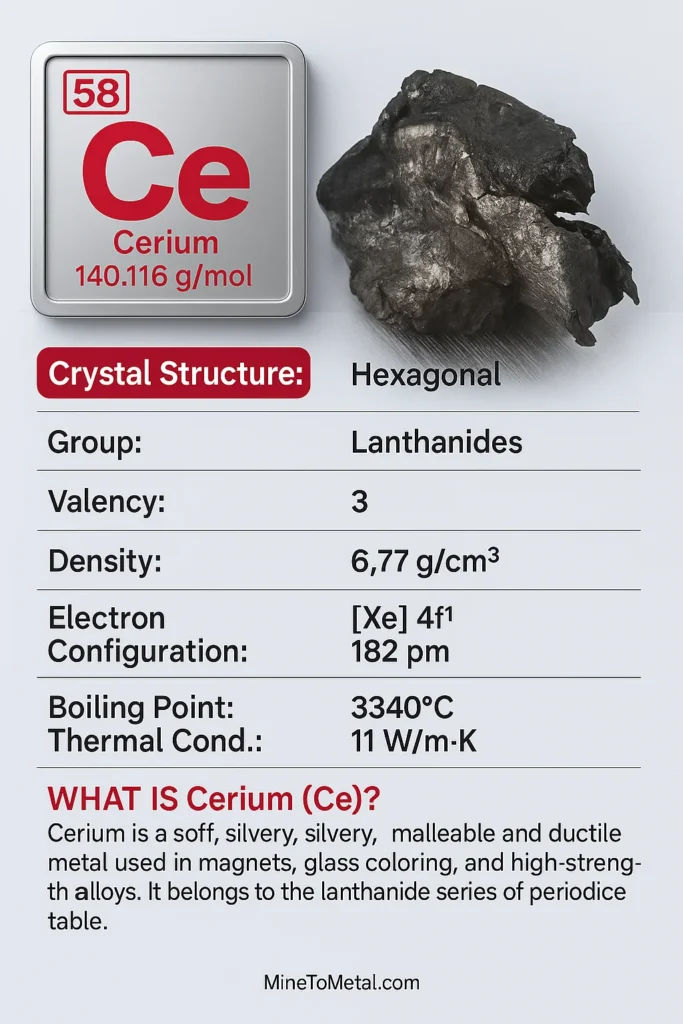
The element exists in four distinct allotropic forms at standard pressure, each exhibiting unique crystal structures and properties:
- δ-cerium: Body-centred cubic structure, stable above 726°C
- γ-cerium: Face-centred cubic structure, stable from 726°C to room temperature
- β-cerium: Double hexagonal close-packed structure, stable from room temperature to -150°C
- α-cerium: Face-centred cubic structure, stable below -150°C with a density of 8.16 g/cm³
This polymorphism contributes directly to cerium’s adaptability across metallurgical applications, allowing engineers to select forms optimised for specific temperature ranges and mechanical requirements.
The Ce⁴⁺/Ce³⁺ Redox Advantage
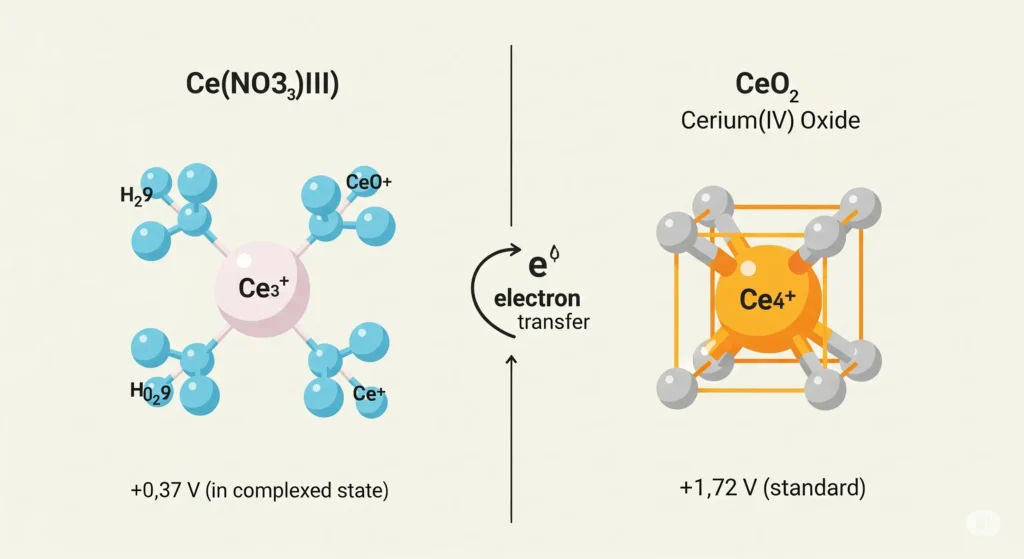
Cerium holds the distinction of being the only lanthanide with significant aqueous and coordination chemistry in both +3 and +4 oxidation states. This stems from cerium’s 4f⁰ electron configuration in the +4 state, creating a stable electronic arrangement that most lanthanides cannot achieve.
| Property | Ce³⁺ | Ce⁴⁺ |
|---|---|---|
| Appearance | White/colourless salts | Orange-red/yellow salts |
| Stability | Generally stable | Metastable in water, strong oxidiser |
| Coordination | Typically 8-9 coordinate | Up to 12-coordinate |
| Detection | Forms dark brown colour with NH₃ and H₂O₂ | – |
“The Ce⁴⁺/Ce³⁺ redox couple typically operates at +1.72V, but this value is highly tunable—dropping as low as +0.37V when coordinated to specialized ligands. This flexibility is what makes cerium so valuable in catalytic and energy systems.
Oxide Chemistry and Surface Properties
Cerium oxide adopts a fluorite-type structure, but often contains oxygen vacancies—like missing tiles in a mosaic. These ‘gaps’ allow cerium to store and release oxygen, giving it sponge-likeit a sponge-like ability to store and release oxygen—crucial for catalytic converter function.
These oxygen vacancies create surface defects that directly enable ceria’s exceptional catalytic properties—the same defects that make cerium oxide invaluable in automotive emission control and industrial catalysis.
When metallic cerium contacts water, it readily forms cerium(III) hydroxide and hydrogen gas:
2Ce + 6H₂O → 2Ce(OH)₃ + 3H₂
Among cerium salts, cerium(III) sulphate exhibits unusual temperature-dependent solubility—decreasing as temperature rises. This anomalous behaviour reflects the complex hydration chemistry that influences cerium processing and purification methods.
Advanced Coordination Compounds
Ceric ammonium nitrate (CAN), with the formula (NH₄)₂[Ce(NO₃)₆], represents the most widely used cerium compound in laboratory settings. This complex features six bidentate nitrate ligands creating a 12-coordinate environment that accommodates the large Ce⁴⁺ ion. As a one-electron oxidant, CAN functions both as a stoichiometric reagent and catalyst in organic synthesis.
Recent advances have produced stable Ce⁴⁺ complexes with significantly reduced reduction potentials through electron-rich, chelating O- and N-donor ligands. These include amides, nitroxides, and P=O ligands that stabilise the +4 oxidation state under milder conditions.
Several cerium coordination compounds show promising cytotoxicity against cancer cells. The Ce⁴⁺ complex of 8-hydroxyquinolone derivative demonstrates selective activity against human ovarian, liver, and lung cancer cells while showing reduced toxicity toward normal liver cells.
Key Takeaway: Cerium’s unique redox flexibility and coordination chemistry enable applications from automotive emission control to cancer treatment—properties that position it as far more than just another rare earth element.
Cerium in Automotive and Industrial Catalysis
Cerium’s dual oxidation states transform it into an environmental guardian, silently scrubbing millions of tonnes of harmful emissions from the air we breathe. That unique redox flexibility—the ability to switch between Ce³⁺ and Ce⁴⁺ states—enables applications that tackle some of our most pressing pollution challenges.
Catalytic Converters and Emission Control
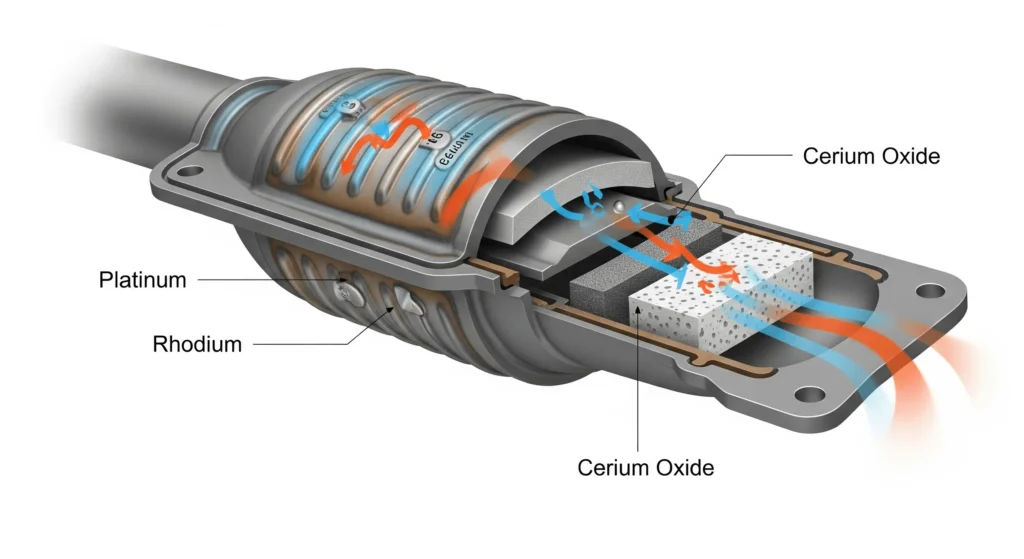
Every time you start your car, cerium oxide springs into action as an oxygen storage material inside your catalytic converter. When exhaust conditions run oxygen-rich, cerium oxide absorbs excess oxygen, boosting the efficiency of nitrogen oxide reduction to harmless nitrogen. When oxygen levels drop, it releases stored oxygen to enhance carbon monoxide oxidation to carbon dioxide. This oxygen-buffering capability stems directly from cerium’s unique electron configuration.
A typical catalytic converter contains 50 to 100 grammes of cerium oxide. Working alongside platinum group metals (PGMs), cerium oxide forms the backbone of three-way catalytic converters (TWCs) in petrol engines, simultaneously neutralising nitrogen oxides, carbon monoxide, and unburned hydrocarbons.
The environmental impact proves remarkable. Vehicles equipped with cerium oxide catalytic systems demonstrate:
- CO emissions reduced by 79-85% in older vehicles and 96-97% in newer vehicles after 3000 km of system use
- HC emissions reduced by 59-82% in older vehicles and 72-82% in newer vehicles after the same period
Processing just 2 mg of spent automobile catalysts to recover precious metals can prevent the mining of 150 kg of ore—a testament to the element’s concentrated value.
Petroleum Cracking and Self-Cleaning Surfaces
Cerium’s catalytic prowess extends beyond automotive applications. Petrochemical refineries employ cerium-based catalysts to enhance catalytic cracking processes, breaking down complex hydrocarbons into simpler molecules whilst improving both yield and fuel quality. Cerium’s redox properties maintain catalyst activity and extend operational life throughout these demanding processes.
Nanoceria has emerged as a powerful photocatalyst for self-cleaning construction materials. Its exceptional visible-light absorptivity, strong redox ability, and oxygen storage capacity make it particularly effective for photocatalytic degradation of organic pollutants. When incorporated into cement mortar samples, nanoceria particles demonstrate photocatalytic and self-cleaning activity under sunlight exposure, protecting building surfaces from environmental degradation without human intervention.
Nanoceria as a Diesel Additive
European markets have embraced nanoceria fuel additives for their impressive performance improvements. When added to diesel fuel at manufacturer-recommended concentrations, these additives deliver measurable benefits:
- 5.6% reduction in fuel consumption
- 5.6% reduction in CO₂ emissions
- 10.6% reduction in CO emissions
- 24.4% reduction in particulate matter mass
| Envirox Concentration | Fuel Savings | CO₂ Reduction | CO Reduction | PM Mass Reduction |
|---|---|---|---|---|
| 0.1× recommended | 0.6% | 0.6% | No change | 11.0% |
| 1× recommended | 5.6% | 5.6% | 10.6% | 24.4% |
| 10× recommended | 11.3% | 11.3% | 14.6% | 46.1% |
The science behind these improvements lies in cerium oxide’s role as an oxygen-donating catalyst. It provides oxygen for carbon monoxide oxidation during combustion and helps burn off carbon deposits within the engine cylinder. However, increasing cerium concentrations can also increase NOₓ emissions—a trade-off that engineers must carefully balance.
Key Takeaway: Cerium’s catalytic applications showcase how a single element’s redox chemistry can address multiple environmental challenges simultaneously—cleaning exhaust emissions, improving fuel efficiency, and creating self-maintaining surfaces.
Glass Polishing and Colour Correction
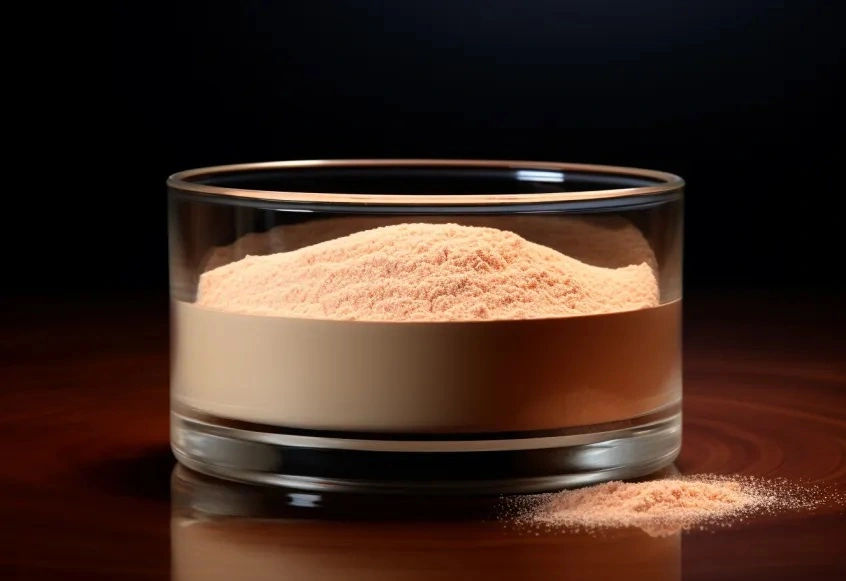
Image Source: Stanford Materials Corporation
When precision matters most, cerium oxide delivers results that conventional abrasives simply cannot match. This compound has established itself as the gold standard for high-quality glass polishing across industries where optical clarity and surface perfection are non-negotiable.
Cerium Oxide in Precision Glass Polishing
Cerium oxide operates through a sophisticated dual-action mechanism that combines mechanical abrasion with chemical interaction at silicate glass surfaces. This unique approach explains why cerium oxide consistently outperforms traditional polishing agents in both efficiency and final surface quality. Compared to bismuth-based compounds and iron oxide agents, cerium oxide polishing offers superior clarity for optical applications.
Professional applications rely on cerium oxide polishing slurries containing 2-10% concentration of the active compound. The preparation process requires warm water at approximately 30°C to achieve the optimal yoghurt-like consistency that ensures even distribution across glass surfaces. Operating speeds between 1500-2200 RPM provide the best results, while lower speeds prevent unwanted splashing that can compromise the polishing process.
> Glass Fact: One report noted that cerium oxide avoids the rust-coloured contamination left behind by traditional iron oxide polishing materials, making it essential for optical clarity in precision instruments.
The technical advantages of cerium oxide stem from its precisely balanced properties:
| Property | Benefit in Polishing |
|---|---|
| Chemical reactivity | Forms temporary bonds with silica during polishing |
| Appropriate hardness | Removes imperfections without excessive scratching |
| Fine particle size | Creates smooth, defect-free surfaces |
| Thermal stability | Maintains consistency throughout polishing process |
These characteristics enable applications ranging from smartphone screens to telescope mirrors, where even microscopic surface imperfections can degrade performance.
“Among industrial cerium uses, glass polishing remains one of the most technically demanding and high-value applications.”
Decolourisation of Architectural and Automotive Glass
Glass clarity depends on more than surface finish—it requires chemical intervention to eliminate unwanted colour. Cerium oxide functions as a powerful oxidising agent that neutralises the yellow-green tint caused by iron impurities in raw glass materials. The process works by oxidising iron from Fe²⁺ (blue-green) to Fe³⁺ (pale yellow), reducing tinting intensity by 90%.
This capability has enabled cerium oxide to replace arsenic-based decolorizers, eliminating toxic arsenic pollution from glass production whilst maintaining superior colour control. Modern glass manufacturers often combine cerium compounds with potassium nitrate to maintain the redox equilibrium necessary for consistent clarity across production runs.
The environmental and performance benefits of this substitution extend from architectural glazing to automotive windscreens, where optical clarity directly impacts safety and aesthetics.
Cerium Sulphide and Ceramic Pigments
Environmental regulations have driven demand for safer pigmentation alternatives, positioning cerium sulphide (γ-Ce₂S₃) as a breakthrough replacement for toxic cadmium-based red pigments. This compound delivers bright red coloration through its Th₃P₄-type crystal structure whilst maintaining thermal stability up to 350-400°C and exceptional lightfastness.
Traditional synthesis required temperatures exceeding 1200°C under strictly controlled atmospheric conditions. Recent advances have dramatically improved both efficiency and environmental impact. Ion doping with elements like Na⁺, K⁺, and Ca²⁺ reduces synthesis temperatures to approximately 900°C. More significantly, environmentally friendly preparation methods using NH₄SCN instead of toxic H₂S or CS₂ now operate at temperatures as low as 800°C.
These developments enable ceramic manufacturers to achieve vibrant red pigmentation without the health and environmental risks associated with traditional cadmium-based systems. In parallel, europium’s red phosphors remain indispensable for display technologies, complementing cerium’s role in safe pigments
Key Takeaway: Cerium compounds enable precision manufacturing across glass and ceramic industries through superior polishing performance, colour control, and safer pigmentation—proving that environmental responsibility and technical excellence can advance together.
Metallurgical and Aerospace Applications
Cerium’s metallurgical applications showcase how a single element bridges the gap between the most ordinary consumer products and cutting-edge aerospace engineering. Its unique properties enable both the familiar spark in your pocket lighter and the structural integrity of components that must withstand the extreme conditions of flight.
Mischmetal Alloys and Ferrocerium (Lighter Flints)
Every time you flick a disposable lighter, you’re witnessing cerium chemistry in action. Mischmetal, the alloy that creates those bright sparks, contains approximately 55% cerium alongside 25% lanthanum and 15-18% neodymium. This rare earth blend forms the foundation for ferrocerium—the “flint” found in millions of lighters and emergency fire starters worldwide. Other rare earths like praseodymium also feature in magnetic alloys, extending lanthanide utility well beyond pyrotechnics.
Ferrocerium combines these rare earth metals with iron oxide and magnesium oxide to create a pyrophoric material that ignites at the remarkably low temperature of just 150-180°C. When struck against a rough surface, microscopic particles shave off and ignite instantly from the friction-generated heat, producing that characteristic shower of sparks.
Pure mischmetal would be too soft for practical use in lighters. Manufacturers solve this by adding iron, which hardens the alloy while preserving its pyrophoric properties. The result is a material that can reliably produce fire-starting sparks after thousands of strikes.
Cerium Additions in Steel and Aluminium Alloys
Cerium’s metallurgical value extends far beyond pyrotechnics. Steel production relies on cerium’s ability to form stable oxysulfides, effectively capturing free oxygen and sulphur that would otherwise compromise steel quality. The element also binds undesirable trace elements like lead and antimony, functioning as a metallurgical purification agent.
Aluminium alloys benefit significantly from even small cerium additions:
| Cerium Addition | Effect on Aluminium Alloys |
|---|---|
| Up to 0.1-0.3 wt% | Appreciable increase in surface brightness |
| Small additions | Most pronounced increase in hardness |
| 0.1 wt% | ~10% increase in yield strength at room temperature |
| 0.1 wt% | ~14% increase in yield strength at 250°C |
These improvements come from cerium’s influence on the alloy’s microstructure and its ability to form beneficial intermetallic compounds that strengthen the material without significantly increasing weight.
High-Temperature Stability in Aerospace Components
Cerium’s most critical contribution to aerospace engineering lies in its exceptional high-temperature performance. Al-Ce alloys maintain approximately three times the strength of conventional alloys when tested at 300°C. These cerium-containing aluminium alloys retain their mechanical properties even after prolonged exposure to temperatures reaching 400°C.
This thermal resilience stems from a unique characteristic: cerium has zero solubility in the aluminium matrix, which effectively “traps” intermetallic phases and prevents them from coarsening through diffusion. This mechanism stops the dissolution and growth of strengthening phases that typically weaken conventional alloys at elevated temperatures.
For aerospace applications where weight savings and temperature resistance are paramount, this property proves invaluable. Where dysprosium stabilises magnets at extreme heat, cerium ensures alloys retain strength during aerospace thermal cycling. Components that must function reliably in the heat of jet engines or the thermal cycling of spacecraft can maintain their structural integrity thanks to cerium’s stabilising influence.
Key Takeaway: Cerium demonstrates remarkable versatility by enabling both the simplest fire-starting mechanisms and sophisticated aerospace materials, proving that strategic metallurgical additions can simultaneously serve everyday convenience and advanced engineering demands.
Biomedical, Environmental, and Antioxidant Use Cases
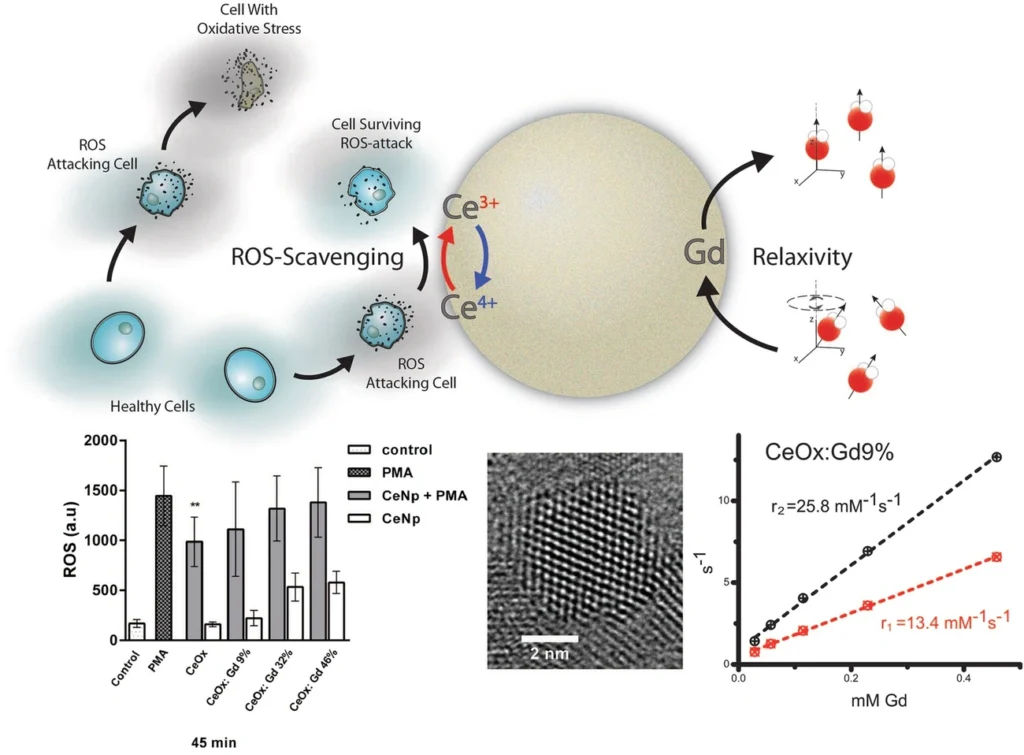
Image Source: Nature
Cerium’s most surprising applications may well be saving lives in hospital burn units and research laboratories worldwide. This same element that sparks your lighter and scrubs your car’s emissions has emerged as a powerful therapeutic agent, wielding its unique redox chemistry against some of medicine’s most challenging problems.
Burn Treatment and Antimicrobial Cerium Nitrate
For nearly three decades, cerium nitrate has quietly revolutionised burn treatment across Europe and the United States. The compound works by binding and denaturing the lipid protein complex released from burnt skin—effectively blocking the profound immunosuppression that typically accompanies major cutaneous burns.
The results speak for themselves: patients receiving cerium nitrate as a topical treatment for extensive burns show a nearly 50% reduction in death rates compared to those treated with conventional silver nitrate. This dramatic improvement goes beyond simple infection control. Studies demonstrate that cerium nitrate reduces alarm cytokine levels, decreases leukocyte activation, and minimises macromolecular leakage and burn oedema formation.
Clinical research has revealed that cerium nitrate prevents progressive tissue necrosis in the zone of stasis—the critical area surrounding severe burns where tissue damage can continue spreading. This breakthrough limits both the depth and width of burn wounds, potentially saving lives and reducing long-term scarring.
Most commonly, cerium nitrate is combined with silver sulfadiazine cream (CN-SSD) in commercial formulations like Flammacerium, which recently received orphan drug status from the US FDA.
Cerium Oxide Nanoparticles in Medicine
Cerium oxide nanoparticles (CeO₂-NPs) represent medicine’s cutting edge, mimicking natural enzymes with remarkable precision. These nanoparticles effectively replicate the actions of superoxide dismutase, catalase, peroxidase, and hydroxyl radical scavengers—granting cerium oxide a uniquely broad therapeutic profile across multiple oxidative stress pathways.
Researchers continue to explore how CeO₂ nanoparticles behave under physiological conditions, focusing on their bioavailability, cellular uptake, and long-term biosafety across clinical and experimental settings.
| Enzyme-Mimetic Activity | Medical Benefit |
|---|---|
| SOD-like | Neutralises superoxide radicals |
| Catalase-like | Converts H₂O₂ to water and oxygen |
| Peroxidase-like | Detoxifies peroxide compounds |
| Hydroxyl radical scavenging | Prevents irreversible oxidative damage |
The therapeutic potential spans multiple specialties:
- Neuroprotection: CeO₂-NPs protect hippocampal neurons from Aβ peptide toxicity, offering hope for neurodegenerative disease treatment.
- Ophthalmology: These nanoparticles preserve retinal function by decreasing reactive oxygen species and upregulating neuroprotection genes.
- Oncology: CeO₂-NPs demonstrate selective cytotoxicity, inducing apoptosis in cancer cells while protecting healthy tissue.
- Wound Healing: The nanoparticles accelerate tissue regeneration through combined antibacterial, antioxidant, and angiogenic properties.
Gadolinium plays a similarly transformative role in MRI diagnostics, showing how rare earths shape both imaging and therapy.
Environmental Impact and Toxicity Debates
The promise of cerium-based medicine comes with environmental complexity. Research on CeO₂-NPs yields contradictory findings that highlight the delicate balance between therapeutic benefit and ecological impact.
Some studies document beneficial effects, including enhanced growth and stress resistance in Chinese mitten crab. Others reveal concerning toxic outcomes, such as genotoxic effects in Daphnia magna and growth inhibition in algae. (Zhou et al., 2023), (Ahmed et al., 2024).
CeO₂-NPs can alter plant morphology, biochemistry, and nutritional values when released into soil environments, potentially disrupting microbial communities. Their behaviour and toxicity depend heavily on nanoparticle physicochemical properties and environmental conditions—water pH, natural organic matter content, and exposure duration all influence outcomes.
This environmental uncertainty demands careful evaluation before widespread medical adoption, particularly as cerium-based treatments scale beyond specialised burn units into broader therapeutic applications. This balance between medical potential and ecological impact reflects the complexity behind cerium uses in healthcare and environmental science
Key Takeaway: Cerium’s medical applications reveal both extraordinary therapeutic potential and the need for environmental vigilance demonstrating how an element’s life-saving properties must be balanced against ecological considerations in an interconnected world.
Cerium in Energy Storage and Electronics
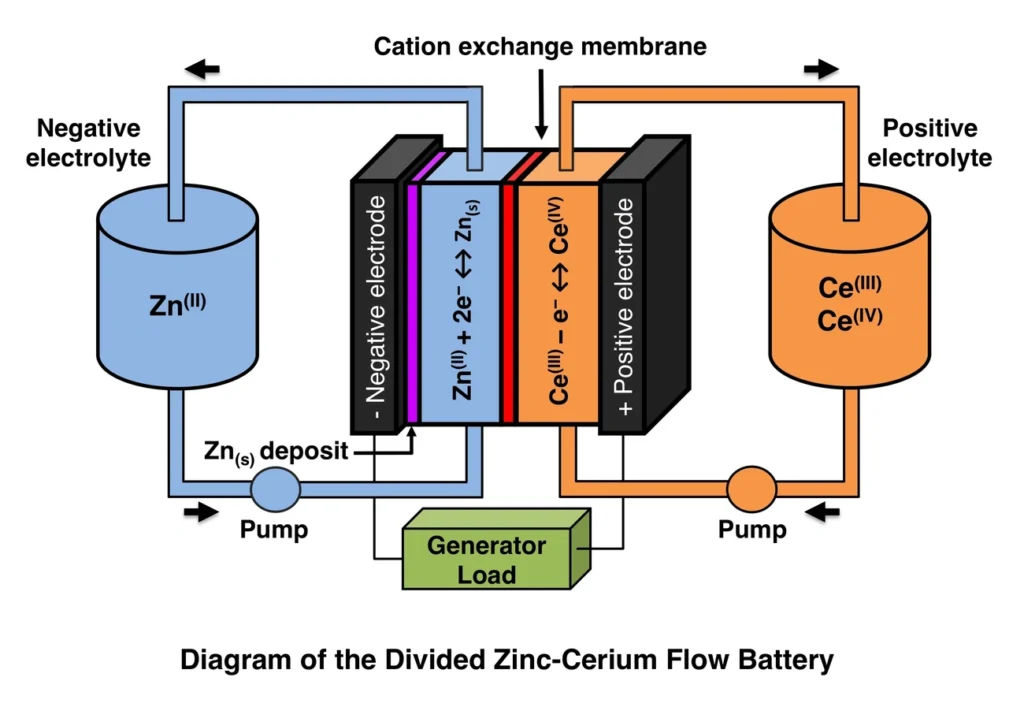
Image Source: en.wikipedia.org
Cerium’s redox chemistry positions it at the forefront of next-generation energy technologies, where its ability to switch oxidation states enables breakthrough performance in batteries, fuel cells, and advanced electronics.
Zinc–Cerium Redox Flow Batteries
Zinc-cerium redox flow batteries deliver impressive voltage plateaus of 2.3V at 20 mA cm⁻², with energy efficiency reaching 71.3% at 60 mA cm⁻². These systems exploit cerium’s distinctive Ce(III)/Ce(IV) redox couple, which exhibits equilibrium potentials between 1.28V and 1.72V versus Ag|AgCl.
The technology faces capacity fade challenges primarily due to proton concentration increases on the negative side, which accelerates hydrogen evolution reactions. However, dual-membrane configurations have achieved record average Coulombic efficiency of 94% during cycling, demonstrating the system’s potential for grid-scale energy storage applications.
Cerium Hydrides in Hydrogen Storage
Cerium particles act as crucial initiators for hydrogen absorption in storage alloys. Fine spherical cerium particles mixed with cerium oxide disperse throughout the alloy matrix, creating small cracks during hydrogenation that provide nucleation points for further hydrogen absorption. This mechanism makes cerium essential for efficient hydrogen storage systems, particularly in applications requiring rapid uptake and release cycles.
Fuel Cells and Electrochemical Systems
Cerium oxide powder excels in fuel cell technology through its oxygen storage capabilities. At high temperatures (80°C and 110°C) combined with low relative humidity (31%), CeO₂-enhanced fuel cells demonstrate superior performance over benchmark Pt/C catalysts. Adding CeO₂ to the cathode side improves both performance and durability, making it valuable for extending fuel cell lifespans in demanding operating conditions. Similar durability gains are seen with erbium in fibre amplifiers, where optical stability under load mirrors cerium’s electrochemical resilience.
Cerium-Doped LEDs and Radiation Scintillators
Cerium-doped strontium aluminate phosphors emit at wavelengths of approximately 420 nm, 490 nm, and 610 nm, making them ideal for white light applications in LED technology. These phosphors offer excellent colour rendering and energy efficiency across the visible spectrum.
Scintillation detectors based on cerium bromide—typically CeBr₃ or cerium-doped lanthanum bromide (LaBr₃:Ce)—exhibit exceptional properties including high light yield, fast response times (~20 ns), and ultra-low background noise below 0.002 c/s/cc. These characteristics make cerium bromide invaluable for radiation detection in medical imaging, nuclear security, and high-energy physics research.
Key Takeaway: Cerium’s versatility in energy and electronic applications stems from its unique redox behaviour, enabling technologies that store energy more efficiently, convert chemical energy to electricity, and detect light across various wavelengths with unprecedented precision.
Global Production, Market Trends, and Recycling
The global cerium supply chain reveals a pattern familiar across critical minerals: overwhelming concentration in the hands of a few nations, creating both opportunity and vulnerability for industries worldwide.
Major Producers: China, India, US, Australia
China’s dominance in rare earth production extends decisively to cerium, controlling approximately 60-70% of global supply. The United States follows at roughly 10%, with Australia (~8%), Myanmar (~7%), and India (~6%) filling out the top producers. This concentration isn’t accidental—China’s strategic advantage stems from abundant reserves paired with aggressive government backing under its 14th five-year plan.
The Asia Pacific region claimed 72.34% of market share in 2024, reflecting not just resource distribution but also processing capabilities. Primary production of rare-earth element oxides reached 300,000 tonnes worldwide in 2022, yet China handles 85% of global refinement operations—a chokepoint that extends far beyond raw material extraction.
Price Trends, CAGR, and Strategic Demand Drivers
Market projections paint a picture of steady expansion, with forecasts ranging from USD 153.8 million in 2025 to USD 244.9 million by 2032—a CAGR of 6.9%. Alternative estimates suggest even stronger growth, from USD 1.85 billion in 2025 to USD 2.90 billion by 2034, at 5.2% CAGR.
Several forces drive this growth trajectory:
- Environmental regulations tightening globally, pushing demand for catalytic converters
- Renewable energy expansion requiring cerium in solar cells and fuel cell applications
- Precision manufacturing growth in glass and ceramics sectors
These demand drivers reflect cerium’s position at the intersection of environmental compliance and technological advancement. Market shifts in europium echo this pattern, with demand volatility in displays contrasting cerium’s steady catalytic trajectory.
Cerium Recycling from Spent Catalysts and Glass Slurry
Recovery technologies present the most promising pathway toward supply chain resilience. Spent automotive catalysts represent a particularly valuable resource stream, with processing just 2mg of catalyst material preventing the mining of 150kg of ore.
Konica Minolta has developed sophisticated recycling processes for cerium oxide recovery from glass polishing slurry, employing selective coagulation and redispersion techniques. Their recycled material achieves performance parity with virgin cerium oxide, while research demonstrates 100% leaching recovery rates from glass polishing sludge through optimised acid treatment.
These recycling breakthroughs offer more than cost savings—they represent a fundamental shift toward circular resource utilization that could reduce dependence on geographically concentrated primary production.
Key Takeaway: Cerium’s supply landscape combines rapid demand growth with concentrated production, making recycling technologies essential for both supply security and environmental sustainability across automotive, energy, and electronics sectors.
Cerium and India’s Rare Earth Strategy

India’s cerium story reveals a familiar paradox: abundant natural resources coupled with missed industrial opportunities. Despite holding substantial reserves, the country remains a minor player in global cerium markets, importing what it could potentially produce domestically.
Cerium in Monazite and Beach Sand Resources
Indian beach sand deposits contain up to 0.4-0.5% monazite, which itself holds approximately 25-30% cerium oxide. The country possesses an estimated 6.9 million tonnes of monazite reserves concentrated primarily in coastal regions of Kerala, Tamil Nadu, Odisha, and Andhra Pradesh.(Department of Atomic Energy, India)
These deposits represent more than just geological wealth—they constitute a strategic asset that remains largely untapped. India ranks as the world’s fifth largest rare earth reserve holder, yet currently accounts for merely 2% of global production.
Indian Demand from Polishing, Catalysis, and MedTech
Across India, cerium applications span numerous sectors where domestic supply could reduce import dependencies:
| Industry | Primary Cerium Uses |
|---|---|
| Glass Manufacturing | Precision polishing and decolourisation |
| Automotive | Catalytic converters and emission control |
| Healthcare | Antimicrobial treatments and diagnostic tools |
The automotive sector alone presents substantial opportunity. With India’s vehicle production exceeding 25 million units annually, domestic cerium oxide production could serve both local catalytic converter manufacturing and export markets.
Cerium in India’s Critical Minerals Policy
Following the 2023 Critical Minerals Policy, India designated rare earth elements as strategic resources vital for economic development. The government has established a production-linked incentive scheme worth ₹6,000 crore specifically targeting rare earth processing.
This policy shift acknowledges what industry observers have long recognised: cerium’s strategic importance extends beyond its technical applications to encompass supply chain security and industrial self-reliance.
Indian Suppliers of Cerium Oxide and Compounds
Major Indian suppliers currently include IREL (India) Limited, formerly Indian Rare Earths Limited, which operates as a public sector undertaking. Private entities like Treibacher Industrie AG and Pure Kimia have also entered the market, offering specialised cerium compounds for industrial applications.
However, most of these companies still rely on imported raw materials or intermediate products, highlighting the gap between resource availability and processing capability. Customers looking to buy cerium oxide in India can source products from public-sector companies like IREL or from specialty providers catering to industrial and research demands
Key Takeaway: India possesses substantial cerium resources, but realising their full potential requires strategic integration of mining operations, processing capabilities, and domestic manufacturing to establish self-sufficiency in this critical mineral sector.
Conclusion
Cerium is one of the most strategically important yet underrecognised elements in the periodic table. Its ability to switch between Ce³⁺ and Ce⁴⁺ oxidation states enables breakthrough applications in pollution control, precision polishing, and medical nanotech.
From catalytic converters and smartphone displays to burn therapies and aerospace alloys, cerium uses quietly power core technologies we rely on daily. Yet despite India’s reserves, global production remains highly concentrated—raising supply chain and sovereignty concerns.
As clean energy, healthcare, and electronics demand grows, access to cerium is no longer optional—it’s strategic.
🔍 Summary: Top 5 Cerium Uses
- Energy & Fuel Cells: Redox agents in flow batteries and catalysts
- Catalytic Converters: Oxygen buffering for NOx and CO reduction
- Glass Polishing: Ultra-smooth surfaces for optics and electronics
- Medical Therapy: Antioxidant nanomaterials and burn treatments
- Metallurgy: Mischmetal for ignition, Al-Ce alloys for aerospace
FAQs
What is cerium used for?
Cerium is used in catalytic converters to reduce vehicle emissions, in polishing powders for precision glass surfaces, and in alloys for flints and aerospace parts. It also plays roles in renewable energy storage, medical treatments using cerium oxide nanoparticles, and as a key component in solid-state lighting and radiation detectors.
Where is cerium found and how is it extracted?
Cerium is typically extracted from monazite and bastnäsite ores found in countries like China, the United States, Brazil, and India. These ores undergo chemical separation to isolate cerium along with other rare earths.
How is cerium different from other rare earths?
Cerium stands out among rare earths for its unique redox behavior. Unlike most lanthanides, cerium easily transitions between Ce³⁺ and Ce⁴⁺ states, enabling applications in oxidation-reduction reactions, catalytic converters, and battery technologies. It’s also the most abundant rare earth element in the Earth’s crust.
What are cerium compounds used for?
Cerium forms a wide range of compounds, including cerium nitrate, cerium sulfate, and cerium(IV) oxide. These are used in polishing agents, fuel additives, self-cleaning ovens, water treatment, and even pharmaceuticals. Each compound leverages cerium’s ability to switch oxidation states or act as a stable catalyst.
Is cerium toxic to humans or the environment?
While bulk cerium compounds are generally considered low-risk, cerium oxide nanoparticles (CeO₂-NPs) can affect aquatic organisms by inducing oxidative stress. In humans, limited studies suggest low toxicity, but safety depends on particle size and exposure route.
What role does cerium play in glass manufacturing?
Cerium oxide is widely used in glass polishing and decolourisation. It achieves superior polishing results through both mechanical abrasion and chemical interaction with glass surfaces. Additionally, it neutralises the yellow-green tint caused by iron impurities in glass, improving clarity and
aestheticsating…
What are the industrial applications of cerium in metallurgy?
Cerium is a key component in mischmetal alloys used in lighter flints. It’s also added to steel and aluminium alloys to remove impurities and improve properties. In aerospace, cerium-containing aluminium alloys maintain strength at high temperatures, making them valuable for critical components.
Is cerium oxide used in medicine?
Yes, cerium oxide (CeO₂) nanoparticles are actively researched for biomedical uses. They mimic enzymes like superoxide dismutase and catalase, allowing them to neutralize harmful free radicals in the body. This makes them valuable in wound healing, burn treatment, and neuroprotective therapies.
How is cerium used to treat Burns?
Cerium nitrate is used in burn treatments, effectively reducing mortality rates and preventing progressive tissue necrosis. Cerium oxide nanoparticles show promise in various medical applications due to their antioxidant properties, including neuroprotection, ophthalmology, and wound healing.
How is cerium being recycled and what are the benefits?
Cerium is increasingly recycled from spent catalytic converters and glass polishing slurry. This recycling process not only reduces the need for primary resource extraction but also offers environmental benefits. For instance, processing just 2mg of spent automobile catalysts can prevent the mining of 150kg of ore.
What are some emerging cerium uses to watch for in future industries?
From biosensors to hydrogen storage materials, cerium uses continue to expand into new sectors that demand high performance and sustainability.