Last Updated on August 5, 2025 by Hemanth
Table of Contents
Introduction
You’ve likely held copper today — without even noticing it,
It’s hidden inside your phone’s charging cable, threaded through the walls of your home, and powering the electric grid outside. From Ayurvedic water pots to EV motors, copper has quietly shaped both ancient rituals and modern revolutions.
Despite ranking only 26th in Earth’s crustal abundance, copper is irreplaceable — thanks to its unmatched combination of electrical conductivity, corrosion resistance, antimicrobial action, and 100% recyclability. Over 80% of all copper ever mined is still in use today.
Whether enabling high-frequency circuits in satellites, forming windings in transformers, or killing bacteria on hospital door handles, copper is the unsung hero of our connected world.
This deep dive explores how one reddish-gold element — first mined over 4,000 years ago — continues to wire the future of smart cities, clean energy, medicine, and defence.
Elemental Profile: What Makes Copper Indispensable
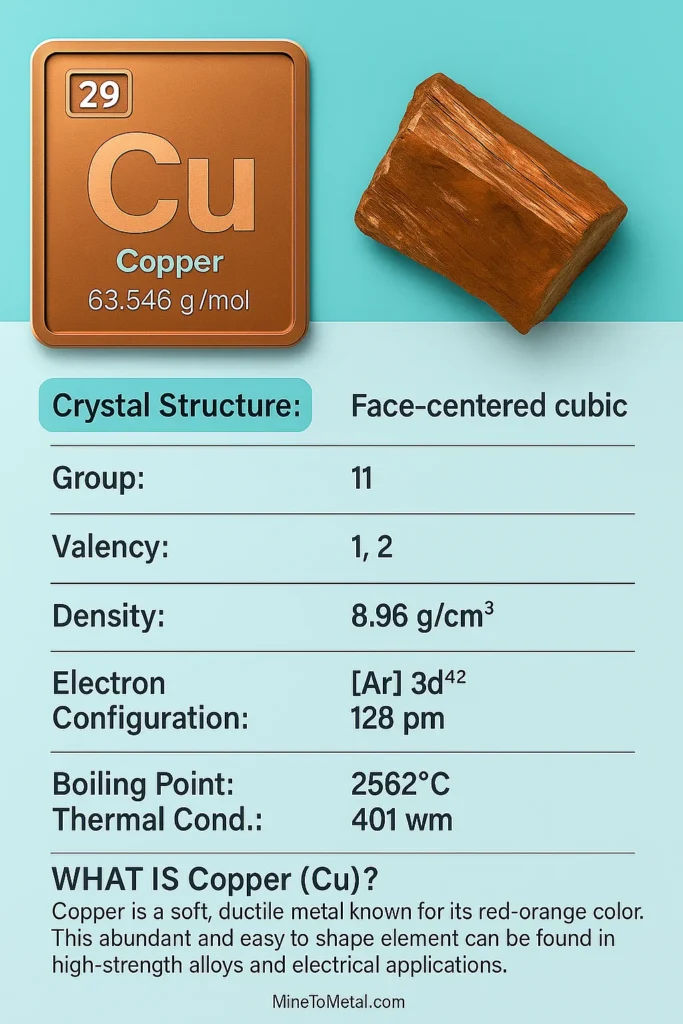
Copper’s extraordinary performance across diverse applications stems from its unique atomic architecture. At the heart of this versatility lies a face-centred cubic crystal structure that creates a “sea” of freely moving electrons—the foundation for properties that few materials can match.
Exceptional Electrical Conductivity: 5.9×10⁷ S/m
Copper ranks second only to silver in electrical conductivity, achieving approximately 5.9×10⁷ S/m at 25°C. This remarkable conductivity results from copper’s atomic structure, where delocalised electrons move freely through the metallic lattice without significant resistance. The International Annealed Copper Standard (IACS), established in 1913, defines pure copper’s conductivity as the 100% benchmark at 5.8001×10⁷ S/m.
Fascinating fact: Modern copper processing techniques have improved so much that today’s commercially pure copper often exceeds 100% IACS conductivity!
Temperature affects conductivity predictably—as atomic vibrations increase with heat, electron collisions multiply, reducing conductivity. Despite this thermal sensitivity, copper maintains its position as the preferred conductor due to its optimal balance of performance and cost-effectiveness.
Thermal Conductivity: 397 W/m·K at Room Temperature
Copper’s thermal conductivity of 397 W/m·K at 20°C places it third globally among all materials and second among metals. The same free electrons responsible for electrical conduction facilitate rapid thermal energy transfer throughout the material.
This exceptional heat transfer enables copper’s dominance in thermal management applications:
| Application | Why Copper Excels |
|---|---|
| Metal cookware | Minimises energy loss during heat transfer |
| Hot water pipes | Maintains temperature efficiently |
| Car radiators | Dissipates heat effectively |
| HVAC systems | Ensures optimal thermal efficiency |
Thermal conductivity decreases with temperature—at 927°C, copper’s thermal conductivity drops to 342 W/m·K, yet remains superior to most alternatives even at elevated temperatures.
Face-Centred Cubic Structure and Mechanical Properties
Copper atoms arrange in a face-centred cubic (FCC) crystal structure, with atoms positioned at cube corners and face centres. This arrangement creates closely packed atomic planes that slide easily under applied force, explaining copper’s exceptional ductility and malleability.
The FCC structure enables copper to be:
- Drawn into extremely fine wires without breaking
- Hammered or rolled into thin sheets without fracturing
- Formed into complex shapes without cracking
These mechanical properties prove crucial for manufacturing processes ranging from wire drawing to architectural applications.
Antimicrobial Mechanism: Ionic Disruption
Copper surfaces naturally eliminate harmful microorganisms through multiple mechanisms. The U.S. Environmental Protection Agency has registered approximately 300 copper-containing alloys as antimicrobial agents, recognising copper’s ability to eliminate more than 99.9% of E. coli within just 1-2 hours of contact.
This antimicrobial action occurs through copper ion release, which disrupts bacterial cell walls, damages DNA, and generates reactive oxygen species that destroy cellular components. Unlike stainless steel surfaces where bacteria survive for weeks, copper’s ionic activity provides continuous pathogen elimination.
Key Takeaway: Copper’s face-centred cubic crystal structure creates the free-electron environment responsible for its unmatched electrical and thermal conductivity, whilst its ionic activity provides natural antimicrobial protection—a combination of properties that positions copper as irreplaceable across electronic, thermal management, and health applications.
Copper Uses in Infrastructure and Construction
Copper has anchored human infrastructure for over four millennia, from Egyptian water systems to today’s smart cities. Its enduring dominance in construction stems from a unique combination of longevity, performance, and adaptability that continues to outpace modern alternatives.
Plumbing and Roofing: Anti-Corrosion and Longevity
Egyptian plumbers chose copper over 4,000 years ago for reasons that remain valid today: natural corrosion resistance maintains water purity without contamination. Unlike plastic alternatives, copper pipes resist penetration by external chemicals—petroleum products, fertilisers, and insecticides cannot permeate copper walls to contaminate water supplies.
Did you know? Copper plumbing typically lasts 50-60 years, often outliving the buildings they’re installed in.
Copper’s distinctive patina—the protective blue-green oxidation layer—actually strengthens over time, creating a self-healing barrier that preserves the underlying metal while delivering the iconic aesthetic seen on historic buildings.
Smart Buildings: HVAC, Fire Safety, and IoT Cabling
Smart building demand is driving copper consumption from 2.7 million tonnes in 2019 to a projected 4.8 million tonnes by 2025. Performance data explains why copper dominates HVAC systems:
| Property | Benefit in HVAC Systems |
|---|---|
| Thermal conductivity | Faster heat transfer, reducing energy consumption |
| Antimicrobial nature | Prevents biofilm formation on heat exchangers |
| Corrosion resistance | Minimises maintenance requirements |
| Durability | Withstands temperature fluctuations |
Testing reveals copper heat exchangers deliver superior durability—copper coils show just 5.8% capacity loss after 4,800 cycles compared to 27% degradation for aluminium alternatives.
Fire safety systems depend on copper’s high melting point (1,085°C) for life-critical reliability. While plastic materials melt and release toxic fumes, copper maintains structural integrity throughout building fires, ensuring sprinkler systems and emergency infrastructure remain functional when needed most.
Case Study: Adani-Mettube HVAC Tubing
Challenge: India’s dependence on imported copper tubes for air conditioning, renewable energy, and smart construction applications.
Solution: Adani Enterprises partnered with MetTube to manufacture high-performance copper tubes domestically, creating a 50-50 joint venture combining Adani’s infrastructure with MetTube’s global expertise.
Results: This alliance aims to reduce India’s dependence on imports while supporting the country’s sustainability and energy efficiency goals through locally manufactured inner grooved copper tubes.
Household and Industrial Wiring
From light switches to heavy-duty industrial cables, copper wiring stands out for its low voltage drop, high current-carrying capacity, and durability—even in the harshest rural or off-grid settings like those supported by India’s PM-KUSUM scheme. In contrast, cheaper aluminium wiring is prone to expansion and oxidation, raising fire risks and long-term costs—a key reason why copper remains the India’s Bureau of Indian Standards (BIS)-recommended standard for homes and businesses.
Case Study: Havells India – BIS-Compliant Copper Wiring Push
Challenge: High incidence of house fires linked to substandard wiring
Solution: Shifted to pure copper conductors with flame-retardant insulation
Result: 38% reduction in wiring-related failures in metro housing projects
Source: Company reports, 2023–24 urban safety audits
Public Infrastructure: Railways, Airports
Electric traction systems rely on copper-tin alloys for grooved contact wires that deliver higher tensile strength and resist thermal softening under high-speed rail conditions. These performance characteristics enable reliable power transmission across thousands of kilometres of track.
Indian Railways has implemented antimicrobial copper coatings on high-touch surfaces in train coaches—door handles, toilet contact points, and grab rails—following validation studies confirming copper’s effectiveness against viruses including SARS-COV-2.
Key Takeaway: Copper’s combination of longevity, thermal efficiency, antimicrobial action, and fire resistance creates an infrastructure material that performs better and lasts longer than alternatives, especially critical as buildings become smarter and sustainability requirements intensify.
Electronics, Semiconductors, and Digital Infrastructure
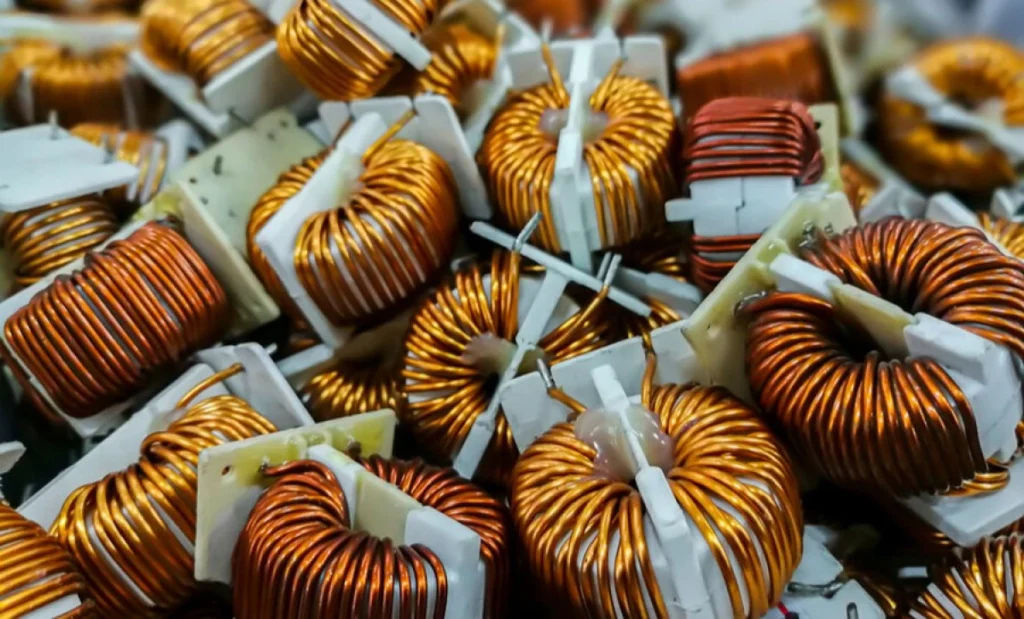
Image Source: Altium Resources
The global digital economy rests on a foundation most people never see: copper’s role as the conductive backbone of semiconductor manufacturing and communications infrastructure. While silicon gets the spotlight, copper quietly enables the electronic revolution that powers everything from smartphones to data centres.
Since the 1990s, copper has become the strategic material that determines how fast our processors run, how efficiently our networks operate, and how reliably our digital infrastructure performs under increasing demand.
Printed Circuit Boards and Flexible Electronics
Every smartphone, laptop, and IoT device relies on copper’s precision. Modern electronics pack incredible computing power into tiny spaces, and copper makes this miniaturization possible. In a typical smartphone, over 300 meters of copper traces—thinner than human hair—connect billions of components across multiple circuit layers.
The real breakthrough came with flexible copper circuits. These bendable pathways enable foldable displays, wearable health monitors, and curved automotive dashboards. Indian electronics manufacturers like Dixon Technologies and Amber Enterprises increasingly specify copper PCBs for reliability—especially critical as “Make in India” pushes for higher domestic content in consumer electronics.
Microprocessors and Copper Interconnects
Here’s where copper changed computing forever. Until 1997, processors used aluminum wiring between transistors. Then Intel made the switch to copper interconnects, reducing electrical resistance by 40% and enabling the processing speeds we take for granted today.
Modern processors contain copper wires just 7 nanometers wide—so thin that individual atoms matter. Without copper’s superior conductivity, the smartphones powering India’s digital revolution, the servers running UPI transactions, and the processors enabling everything from Aadhaar authentication to satellite launches simply wouldn’t exist at current performance levels.
This wasn’t merely a materials upgrade—it fundamentally changed what was possible in processor design:
| Property | Aluminium | Copper | Strategic Impact |
|---|---|---|---|
| Electrical resistance | Higher | 40% lower | 15% boost in processor speed |
| Electromigration resistance | Lower | Higher | Improved reliability, longer lifespan |
| Processing cost | Baseline | 15% reduction | More economical manufacturing |
The transition required solving a critical contamination problem—copper atoms can destroy silicon’s semiconductor properties. IBM’s solution involved developing stable metal diffusion barriers that prevent copper ions from leaking into silicon. This barrier technology became the industry standard, enabling the exponential growth in computing power that defines our digital age.
5G, LAN Cables, Undersea Transmission
Communications infrastructure demonstrates copper’s strategic importance in connecting the global economy. In 5G technology, electrodeposited copper foil serves as the “nervous system” for electronic signal transmission, enabling high-frequency, high-speed data transfer in millimetre-wave antennas and base stations.
Local area networks showcase copper’s practical advantages. While copper cabling standards have evolved from Cat5 (100Mbps) to Cat6a (10Gbps), the metal’s affordability and installation simplicity make it ideal for short-distance connections where fibre optics would be economically inefficient.
When Jio laid India’s largest fiber network, copper played a crucial but invisible role: powering repeaters, grounding systems, and providing backup connectivity. As India pursues its Digital India vision, copper ensures the infrastructure remains robust, scalable, and efficient.
Undersea cables reveal another strategic advantage: copper conductors provide superior stability against tidal currents due to their higher specific weight (8900 kg/m³ compared to aluminium’s 2760 kg/m³). This physical property ensures reliable connections across ocean floors, maintaining the data links that enable global commerce.
Key Takeaway: Copper enables the digital infrastructure that powers modern economies—from processor interconnects that determine computational speed to undersea cables that carry international data traffic. Its unique combination of electrical, thermal, and mechanical properties makes it irreplaceable in applications where performance and reliability cannot be compromised.
Clean Energy’s Hidden Dependency: Copper Powers the Green Transition
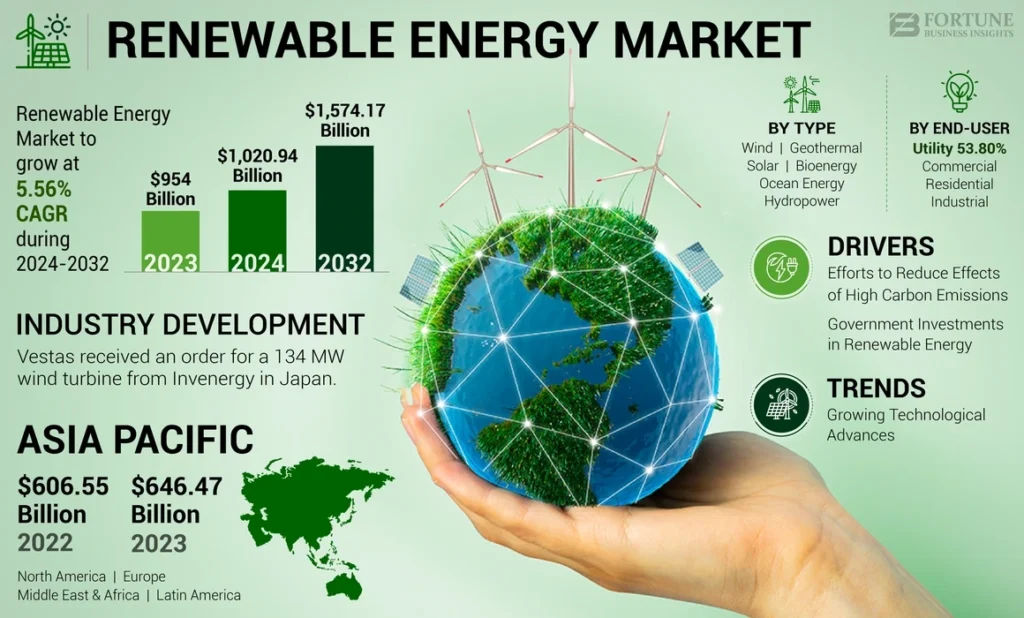
Image Source: Fortune Business Insights
The world’s rush toward clean energy has created an unexpected bottleneck: copper demand is exploding faster than supply can match. This transition requires unprecedented quantities of the red metal, with renewable energy technologies demanding compound annual growth of 14.3% through 2034. The scale becomes clear when you realise that building a sustainable energy system requires roughly five times more copper than fossil fuel infrastructure.
Electric Vehicles: 3x More Copper Than Combustion Engines
Electric vehicles exemplify copper’s central role in clean transportation. Each EV contains 39-83 kg of copper compared to just 23 kg in traditional combustion engines, with the difference concentrated in three critical systems:
Motor Windings: Copper’s superior conductivity ensures efficient power delivery with minimal energy loss. Unlike rare earth-dependent permanent magnet motors, copper rotor induction motors provide reliable performance whilst avoiding supply chain vulnerabilities.
Power Electronics: Inverters converting battery DC power to motor AC represent copper-intensive components, with demand projected to reach 45 kilotonnes annually by 2040. These systems manage the precise power delivery that enables EV performance.
Wiring Harnesses: A fully electric vehicle contains up to a mile of copper wiring, supporting everything from propulsion systems to advanced driver assistance features that define modern EVs.
Solar Infrastructure: 5.5 Tonnes Per Megawatt
Photovoltaic systems contain approximately 5.5 tonnes of copper per megawatt, distributed across interconnected functions that determine system efficiency:
- Busbars: Silver-plated copper ribbons collect and distribute current from photovoltaic cells, where even small resistance increases significantly impact power output
- Module Wiring: Connects panels and transports generated electricity through weather-resistant copper conductors
- Grid Inverters: Convert DC electricity from panels to AC for power distribution, requiring high-performance copper components for thermal management
Wind Power and Storage: The Copper-Intensive Backbone
Large-scale wind installations demonstrate copper’s material intensity in renewable generation. A three-megawatt turbine contains up to 4.7 tonnes of copper, with 53% concentrated in cables and internal wiring. Generator windings transform kinetic energy into electricity, whilst copper grounding systems provide essential lightning protection that keeps turbines operational through severe weather.
Grid-scale battery storage adds another copper demand layer. These systems require copper for battery anodes, interconnections, and cooling infrastructure. Battery storage deployment alone is expected to drive annual copper consumption by 2.3 million tonnes by 2029, reflecting the metal’s role in energy storage systems that stabilise renewable-powered grids.
The convergence becomes striking: wind generates power through copper windings, solar panels collect it via copper conductors, batteries store it using copper components, and EVs consume it through copper motors. Each technology depends on copper’s unique combination of conductivity, corrosion resistance, and mechanical properties that alternatives cannot match.
Key Takeaway: The clean energy transition has transformed copper from an industrial commodity into a strategic material for climate action, with demand patterns that will reshape global supply chains over the next decade.
Medical Applications: Where Ancient Wisdom Meets Modern Science

Image Source: ResearchGate
Copper’s biological activity extends far beyond industrial conductivity. This metal’s interaction with living systems reveals a fascinating duality: whilst it enables electronic communication in devices, it simultaneously disrupts biological communication in harmful microorganisms.
Antimicrobial Mechanisms: Cellular Destruction at the Ionic Level
The science behind copper’s antimicrobial action involves multiple attack pathways that make bacterial resistance virtually impossible. Copper ions rupture bacterial cell walls and infiltrate cells, attacking DNA and causing complete destruction. Simultaneously, copper generates reactive oxygen species through Fenton-like reactions, leading to oxidative damage involving lipid peroxidation, protein oxidation, and DNA damage. Laboratory testing confirms copper kills 99.9% of bacteria within two hours.
Copper Science: Unlike antibiotics, bacteria cannot develop resistance to copper as it destroys their genetic material completely!
What makes this particularly striking is copper’s selectivity—it targets pathogens whilst remaining biocompatible with human tissue when properly applied.
Tamra Jal: Ayurvedic Water Purification Validated by Modern Science
Centuries before scientists understood ionic mechanisms, Ayurvedic practitioners prescribed “Tamra Jal”—water stored in copper vessels for eight hours to release purifying ions. This traditional practice reportedly balances the three doshas (Vata, Pitta, Kapha), supports digestion, and enhances immunity.
Modern research has validated much of this ancient wisdom, demonstrating how copper ions indeed purify water through antimicrobial action. The convergence of traditional knowledge with contemporary science illustrates copper’s enduring relevance across millennia of human health applications.
Clinical Applications: From Implants to Infection Control
Medical device manufacturers increasingly incorporate copper for its proven antimicrobial properties:
| Application | Mechanism | Clinical Benefit |
|---|---|---|
| Dental implants | Surface ionic activity | Prevents biofilm formation |
| Orthopaedic surfaces | Contact killing | Reduces post-operative infections |
| Medical device coatings | Multi-target disruption | Eliminates multi-drug resistant strains |
Recent advances in copper-oxide nanoparticles enable precise coating of implanted devices, maintaining antimicrobial efficacy whilst remaining non-toxic to human cells. These developments address the growing challenge of healthcare-associated infections, particularly in an era of increasing antibiotic resistance.
Consumer Wellness: Copper’s Expanding Health Applications
The wellness industry has embraced copper’s health properties across diverse product categories. Copper-infused face masks can inactivate 99.9% of viruses in under 30 minutes, whilst compression socks containing copper fibres reduce inflammation, maintain dryness, and support circulation. Even copper yoga mats claim benefits for acupressure points and muscle pain relief.
However, these applications require careful consideration of dosage and exposure levels. Whilst copper’s antimicrobial properties are well-established, excessive copper intake can pose health risks, highlighting the importance of balanced application.
Copper radioisotopes, such as Cu-64 and Cu-67, are also gaining attention in cancer diagnostics and radiopharmaceuticals, particularly for PET imaging and targeted therapy research.
Key Takeaway: Copper’s antimicrobial mechanisms create a unique biological tool that bridges ancient healing traditions with modern medical technology, offering natural pathogen control without fostering resistance—though careful application remains essential for safety.
Cultural, Ritual, and Decorative Roles
Metallurgical wisdom often flows alongside spiritual traditions, and copper exemplifies this convergence across India’s cultural landscape. What appears as simple ritual vessels actually represents sophisticated understanding of metal chemistry, food safety, and thermal properties passed down through generations of craftsmen and practitioners.
Kalai Coating: Functional Metallurgy for Food Safety
The ancient technique of “kalai” reveals how traditional knowledge anticipates modern food science. This process, derived from Sanskrit “kalya lepa” (white wash), involves coating copper or brass vessels with tin to prevent copper’s reaction with acidic foods. The procedure creates a food-safe barrier that prevents poisoning whilst maintaining heat conductivity—a balance between safety and functionality that predates modern materials science by centuries.
Skilled artisans called Kalaigars typically reapply this coating every 6-9 months for daily-use vessels. The procedure involves heating vessels until they turn pinkish-hot, then applying virgin-grade tin strips and sprinkling ammonium chloride powder, resulting in a protective silvery layer.
Copper Tradition: Kalai isn’t merely functional—many believe copper vessels attract and transmit “Chaitanya” (divine consciousness), transferring Sattva-Raja component to stored water.
Temple Bells, Charanamrit, and Devotional Copperware
Copper’s acoustic properties find expression in temple bells, where specific alloy compositions create resonant frequencies believed to carry spiritual significance. These same vessels hold charanamrit—the sacred liquid that touches deity feet—transforming ordinary copper into containers for what devotees consider the “elixir of life”.
This “elixir” stored in copper vessels is believed to cure ailments and provide liberation when consumed with devotion. Copper panchpatras (ritual vessels) remain essential in Hindu rituals, considered auspicious gifts to deities. The metal’s antimicrobial properties, now scientifically validated, likely contributed to its sacred status in water storage and food preparation.
Dhokra and Bidriware: Copper’s Artistic Legacy
Bidriware represents one of India’s most sophisticated metallurgical art forms. Originating in 14th century Bidar under Bahmani Sultans, this craft combines zinc-copper alloy (16:1 ratio) with silver inlay work. The eight-stage process creates striking black surfaces with contrasting silver designs.
The technique’s complexity equals any modern manufacturing process—artisans must understand oxidation chemistry, thermal properties, and metal bonding to achieve the characteristic appearance. Bidriware artisan Shah Rasheed Ahmed Quadari received the prestigious Padma Shri Award in 2023 for preserving this heritage.
Dhokra is a tribal metalcraft that uses the lost-wax casting technique to form brass figurines, typically 70–80% copper and 20–30% zinc. Copper provides strength, malleability, and detail retention, making it ideal for intricate craftwork. Practiced across Chhattisgarh, Odisha, Telangana, and Bengal, each Dhokra artifact is one-of-a-kind in form and texture.
The Dancing Girl of Mohenjo-Daro, dating back over 4,000 years, is one of the earliest known examples of the lost-wax process—highlighting the technique’s deep historical roots in the subcontinent.
Key Takeaway: Copper’s integration into cultural practises reveals how metallurgical understanding shaped traditions that blend functional benefits with spiritual significance, creating a legacy where ancient wisdom anticipates modern materials science.
Strategic Alloying: Where Copper Meets Industrial Demands

Image Source: Domadia
Pure copper excels in conductivity and corrosion resistance, but industrial applications often demand properties that push beyond these natural limits. Strategic alloying creates materials that retain copper’s essential characteristics while adding capabilities that pure copper cannot achieve—greater strength, enhanced acoustic properties, non-magnetic behaviour, or resistance to extreme environments.
These engineered copper alloys solve specific industrial challenges, from the precision required in musical instruments to the safety demands of explosive environments. Each alloy represents a deliberate trade-off between copper’s inherent properties and the enhanced characteristics needed for specialised applications.
Brass: Acoustic Excellence and Mechanical Reliability
Brass, comprising typically 2/3 copper and 1/3 zinc, delivers acoustic properties that have made it the backbone of orchestral music for centuries. The alloy’s crystalline structure creates resonant frequencies that wooden instruments cannot match, whilst its malleability allows craftsmen to shape complex valve mechanisms and tubing systems.
Beyond musical applications, brass serves critical industrial functions. Its corrosion resistance and low friction coefficient make it invaluable for valves, plumbing fittings, and components operating in environments where spark prevention is crucial. Marine hardware, pneumatic systems, and chemical processing equipment rely on brass for its durability under mechanical stress.
Engineering insight: Brass instruments use sheet metal construction partly because metal better withstands temperature and humidity changes that would crack wooden alternatives.
Bronze: Strength Through Metallurgical Heritage
Bronze fundamentally transforms copper’s mechanical properties through strategic tin addition. This copper-tin alloy delivers significantly higher yield and tensile strength compared to pure copper, whilst maintaining the fatigue resistance essential for high-load applications.
Heavy machinery, agricultural equipment, and industrial bearings depend on bronze’s exceptional combination of strength and low friction coefficient. Traditional bronze bearings incorporate 6-8% lead to enhance self-lubrication, creating components that operate reliably under extreme loads and slow speeds.
Sculptors and foundry workers value bronze for different reasons—its slight expansion just before setting fills the finest mould details, enabling intricate artistic work that captures precise features.
Beryllium Copper: Safety in Hazardous Zones
Beryllium copper alloys containing 0.5-3% beryllium exhibit exceptional strength alongside critical safety properties: non-sparking and non-magnetic characteristics. These features prove essential in hazardous environments where a single spark could trigger catastrophic explosions.
Oil rigs, coal mines, and chemical processing facilities commonly employ beryllium copper tools marked with “BeCu”—wrenches, screwdrivers, and hammers designed for explosive atmospheres. The alloy’s strength approaches that of steel whilst maintaining copper’s conductivity and corrosion resistance.
Safety protocols remain essential, as beryllium exposure through dust inhalation poses health risks requiring proper ventilation and protective equipment.
Cupronickel: Marine Engineering Solutions
Cupronickel alloys excel where seawater creates impossible conditions for standard materials. These alloys, ranging from 90% Cu-10% Ni to 70% Cu-30% Ni compositions, resist both seawater corrosion and biological fouling that destroys conventional metals.
Shipbuilding, desalination plants, and offshore platforms depend on cupronickel for heat exchangers, condensers, and seawater cooling systems. The alloy’s exceptional durability in saline environments eliminates the maintenance cycles that plague alternative materials.
These marine applications demonstrate cupronickel’s strategic importance in industries where material failure means operational catastrophe and enormous replacement costs.
Key Takeaway: Strategic alloying transforms copper into specialised materials that address industrial challenges pure copper cannot solve—from acoustic precision to explosive-atmosphere safety, each alloy represents targeted engineering solutions for demanding applications.
Copper’s Circular Advantage: Perfect Recyclability at Scale
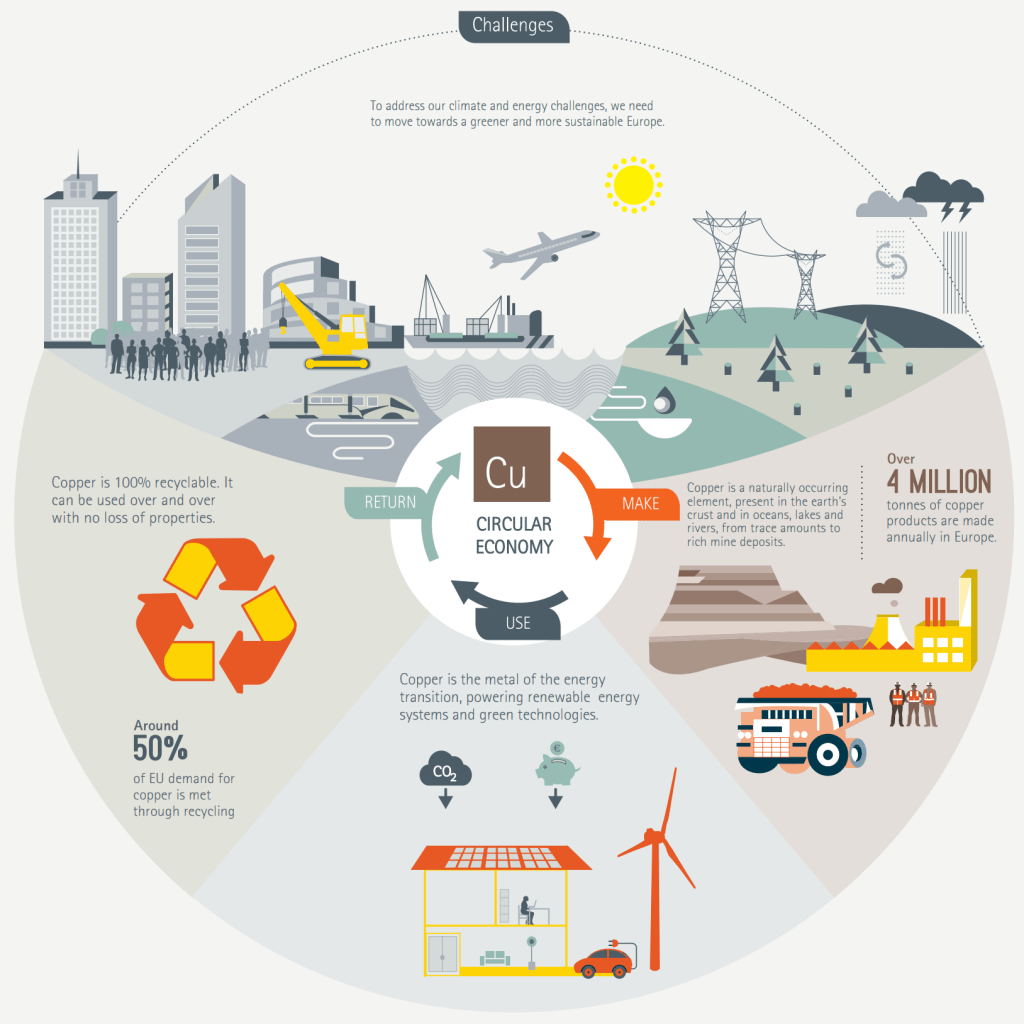
Image Source: Energy Industry Review
Most materials follow a linear path: extract, use, discard. Copper defies this pattern entirely, creating what may be the most successful circular economy of any industrial material. Unlike plastics that degrade or metals that lose performance through repeated processing, copper maintains identical properties whether it comes from a mine or a recycling facility.
100% Recyclability Without Degradation
Copper achieves something remarkable in materials science: infinite recyclability without quality loss. Recycled copper (secondary production) remains chemically and physically indistinguishable from freshly mined copper (primary production), making them completely interchangeable. This exceptional property delivers 90% energy savings compared to primary extraction while reducing CO2 emissions and enabling recovery of valuable co-metals including gold, silver, and zinc.
The numbers tell a compelling story. About 32% of global annual copper demand comes from recycled sources, with 80% of all copper ever mined still in active circulation today. That level of resource retention would be impossible with most other materials.
Copper Fact: Currently, about 32% of global annual copper use comes from recycled sources, with 80% of all copper ever mined still in active use today.
India’s Collection Challenge: From Informal Networks to Quality Refining
India demonstrates both the potential and limitations of copper’s circular economy. Collection rates reach an impressive 95-99% of end-of-life copper through informal sector networks. However, the quality challenge remains significant—only 1% undergoes proper refining compared to 32% in China. This gap between collection and quality processing represents both a challenge and an opportunity.
Urban Mining approaches treat existing infrastructure as resource deposits, offering economically competitive alternatives to traditional extraction. Buildings, electronics, and industrial equipment become copper mines, accessible without the environmental impact of conventional mining operations.
EV Battery Recovery and Cable Waste Loops
Electric vehicle proliferation creates new copper recovery opportunities. Innovative processing methods, including microwave treatment, achieve approximately 80% energy savings versus conventional thermal processing. These technologies enable clean separation of copper from complex waste streams, converting end-of-life batteries and cables into high-quality feedstock.
The closed-loop potential extends beyond individual products to entire industries. EV manufacturers increasingly design vehicles with recycling in mind, creating material passports that track copper content through multiple lifecycles.
Key Takeaway: Copper’s infinite recyclability creates the foundation for true circular material flows, though capturing this potential requires shifting from informal collection to high-quality refining infrastructure that matches the metal’s exceptional properties.
Copper’s Strategic Geography: Concentration Risks in a Critical Supply Chain

Image Source: Visual Capitalist
The global copper supply chain reveals a striking paradox: whilst copper offers unmatched recyclability and sustainability advantages, its production and processing remain dangerously concentrated in just a handful of countries. This concentration creates strategic vulnerabilities that could reshape the technological landscape.
China’s Processing Dominance: 45% of Global Refining
China now dominates copper processing, importing 60% of global copper ore and producing over 45% of the world’s refined copper. This isn’t merely market leadership—it’s strategic control over a material essential to every aspect of modern infrastructure. China’s position enables significant influence over global pricing, availability, and technology transfer requirements.
The implications extend beyond economics. Countries dependent on Chinese copper processing face potential supply disruptions during geopolitical tensions, trade disputes, or domestic policy changes within China.
Reserve Geography: Five Countries Control Half the World’s Copper
More than half of global copper reserves reside in just five countries: Chile, Australia, Peru, the Democratic Republic of Congo, and Russia. Chile maintains leadership with 27% of global production, whilst the Democratic Republic of Congo’s reserves sit amid ongoing political instability.
This geographic concentration creates multiple chokepoints:
- Political instability in key producing regions
- Infrastructure limitations in remote mining areas
- Environmental and social governance challenges
- Currency fluctuations affecting extraction costs
The Supply-Demand Tension: 40% Growth by 2040
Global copper demand projections indicate a 40% growth by 2040, driven primarily by electric vehicle adoption, renewable energy deployment, and digital infrastructure expansion including data centres. Meeting this demand will require approximately 80 new mines and INR 21095.11 billion in investment by 2030.
Yet developing new mines faces significant constraints:
- Mine development timelines spanning up to 25 years from discovery to operation
- Declining ore grades requiring more energy and water per tonne of copper
- Stricter environmental regulations limiting new project approvals
- Community opposition to large-scale mining operations
Resource Insight: Unlike most commodities, copper experiences virtually no quality degradation through repeated recycling cycles – it remains 100% recyclable indefinitely.
Copper’s Circular Shield: 33% Recycled Content
Copper’s exceptional recyclability provides partial insulation against supply chain vulnerabilities. Currently, about 32-33% of global copper demand is satisfied through recycled sources, with recycling requiring 85% less energy than primary production whilst maintaining identical physical and chemical properties.
This circular advantage becomes strategically significant during supply disruptions, enabling countries with established recycling infrastructure to maintain partial supply independence.
Key Takeaway: Copper’s circular nature provides extraordinary sustainability advantages, yet concentrated control of processing infrastructure presents strategic vulnerabilities requiring diversified supply chains and accelerated recycling initiatives.
India’s Copper Strategy: Bridging the Supply-Demand Chasm

Image Source: AInvest
India faces a copper paradox that mirrors its broader industrial ambitions: significant domestic reserves shadowed by a widening supply-demand gap that threatens strategic autonomy. Despite holding approximately 503 million tonnes of copper ore reserves as of 2010, the nation meets barely 4% of its consumption needs through domestic production.
Reserve Reality: Quality Challenges Behind the Numbers
India’s copper reserves concentrate primarily in Rajasthan, Madhya Pradesh, and Jharkhand, yet these deposits present formidable extraction challenges. The ore grades average just 0.91%—substantially below international standards—while global best practices target grades exceeding 2%. This quality differential creates a stark economic reality: India typically yields 800-900 kg of metal per 100 tonnes of ore, compared to Chile’s 2,000 kg from equivalent quantities.
Copper Insight: India’s copper ore typically yields 800-900 kg of metal per 100 tonnes of ore, versus Chile’s 2,000 kg from the same quantity.
These reserves constitute merely 2% of global deposits, positioning India as a minor player in primary production despite its massive consumption growth. The technical challenges extend beyond ore quality to include complex metallurgy, environmental compliance costs, and infrastructure limitations that compound extraction difficulties.
Demand Trajectory: 9.5% Annual Growth Outpaces Supply
India’s copper consumption expands at 9.5% annually—significantly outpacing global averages—driven by infrastructure modernisation, renewable energy deployment, and electronics manufacturing. Per capita consumption remains low at 0.6 kg compared to developed nations’ 10 kg, indicating substantial growth potential ahead.
Sectoral demand patterns reveal strategic vulnerabilities: building construction accounts for 26% of copper consumption, while the electronics sector claims 8%. Both sectors are critical to India’s economic transformation, yet rely heavily on imported copper that subjects them to global price volatility and supply disruptions.
Policy Response: Streamlined Regulations Meet Investment Reality
Recent policy initiatives signal recognition of copper’s strategic importance. The Minerals (Other than Atomic and Hydro Carbons Energy Minerals) Concession Rules 2023 have streamlined mining approval processes, potentially attracting INR 2 trillion in investments across critical mineral sectors.
These regulatory reforms address bureaucratic bottlenecks that previously deterred investment in domestic copper development. However, technical challenges—including low ore grades, environmental compliance, and infrastructure requirements—remain formidable barriers to rapid capacity expansion.
The government’s approach balances exploration investments with refining capability development, recognising that processing infrastructure often presents greater value-addition opportunities than primary extraction alone.
Key Takeaway: India’s copper challenge requires sophisticated solutions that balance sustainable domestic development with strategic import diversification, recognising that ore quality limitations may favour downstream processing over aggressive mining expansion.
India’s Supply Chain Challenge and Strategic Response
The 2018 Sterlite Copper closure transformed India from a modest exporter to importing 60% of refined copper needs, exposing critical strategic vulnerability. Current import dependence means Indian manufacturers face immediate cost pressures when global copper prices spike, with limited domestic alternatives.
India’s Multi-Pronged Response:
- Capacity Building: Adani’s Mundra expansion (500,000 tonnes), JSW’s Gujarat recycling facility, and Hindustan Copper modernization
- Strategic Stockpiling: Government reserves for defense applications and emergency allocation protocols
- Recycling Formalization: Modernizing the informal sector (200,000+ workers) through technology upgrades and environmental compliance
The China Challenge: With China processing 52% of global copper versus India’s 3%, plus strategic stockpiling through Belt and Road initiatives, India is diversifying supply sources and strengthening ties with producers like Chile and Peru.
Key Takeaway:
India must balance domestic capacity building with international partnerships to reduce strategic copper vulnerability while supporting industrial growth and energy transition goals.
Conclusion
From temple bells to quantum circuits, copper has always been more than just a metal — it’s been a conduit of civilization.
What makes copper extraordinary isn’t just its conductivity, but its unique ability to bridge past and future: ancient Ayurvedic health traditions on one end, clean energy and digital infrastructure on the other.
As global demand accelerates and supply chains tighten, copper stands at the crossroads of sustainability and strategy. Nations that invest in recycling, diversify sourcing, and recognize copper as critical infrastructure — not just a commodity — will lead the charge in tomorrow’s electrified economy.
Copper isn’t just enabling the future. It’s shaping it.
FAQs
What are the key applications of copper in 2025?
Copper is essential for electric vehicles, renewable energy systems, digital infrastructure, and smart grids. It’s also widely used in electronics, construction, and industrial machinery due to its excellent conductivity and durability.
How does copper contribute to sustainability?
Copper is 100% recyclable without loss of quality, with about 80% of all copper ever mined still in use today. It plays a crucial role in renewable energy technologies and electric vehicles, supporting the transition to a more sustainable future.
Why is copper important for the electronics industry?
Copper’s exceptional electrical conductivity makes it irreplaceable in electronics. It’s used in printed circuit boards, microprocessors, and communication infrastructure, enabling faster processing speeds and reliable data transmission.
What are some emerging uses of copper in healthcare?
Copper’s natural antimicrobial properties are being utilised in medical implants, device coatings, and hospital surfaces to reduce infections. It’s also incorporated into face masks and other wellness products for its health benefits.
How is copper recycling beneficial?
Recycling copper requires 85% less energy than primary production and helps conserve natural resources. It also reduces CO2 emissions and enables the recovery of other valuable metals, contributing to a circular economy.