Last Updated on January 15, 2026 by Hemanth
Table of Contents
Graphite is much more than pencil lead—it’s a critical enabler in batteries, electronics, and high-temperature industries. It stabilizes lithium-ion anodes, dissipates heat in high-power electronics, and withstands extreme industrial conditions.
In this article, you’ll explore graphite’s role in energy storage, thermal management, industrial manufacturing, and next-generation materials. Plus, discover why it’s considered a critical mineral and how its atomic cousin graphene is ushering in new frontiers in technology.
You probably associate graphite with pencils and little else. But this unassuming carbon material quietly powers some of the world’s most critical technologies — from electric vehicle batteries to nuclear reactor control rods.
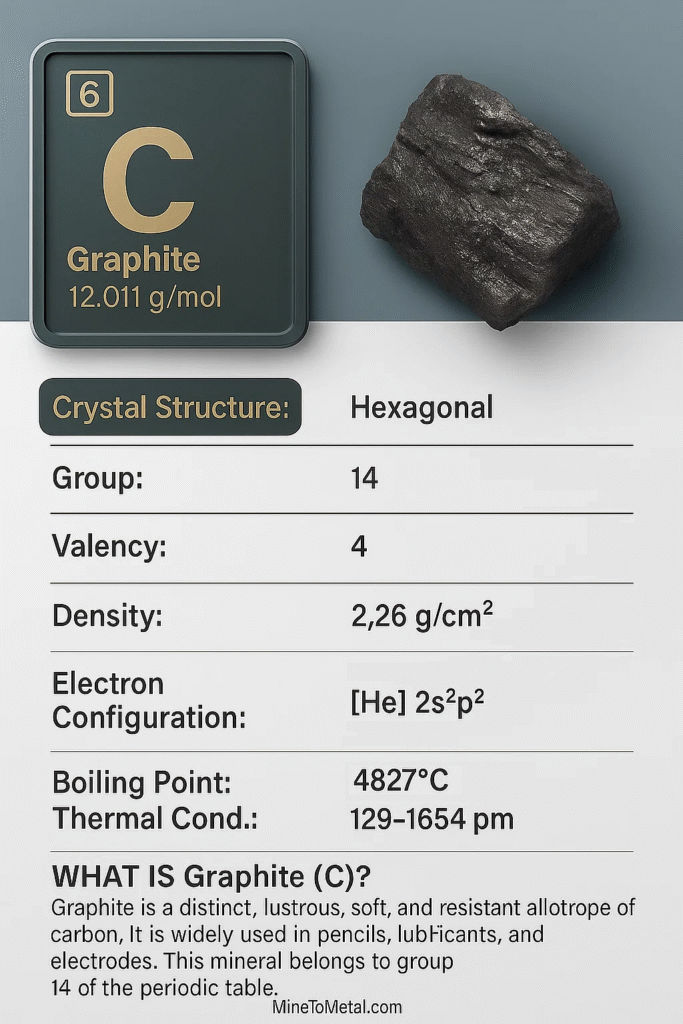
Hidden in smartphones, steel foundries, and spacecraft heat shields, graphite plays a role in industries most people never connect to. Its unique structure gives it an extraordinary combination of properties: it conducts electricity like metal, dissipates heat like copper, and lubricates like oil.
These traits make graphite indispensable in sectors where conventional materials fall short. From energy storage to aerospace, its uses are rapidly expanding — especially as the global economy pivots toward electrification and decarbonization.
China currently supplies over 75% of the world’s graphite, with Madagascar, Mozambique, and Brazil filling much of the rest. This concentration becomes critical when you realize EV batteries require 50–100 kg of graphite each — more than lithium, nickel, or cobalt by weight. For lithium’s own supply story, see the Lithium Triangle, where South America anchors the world’s EV boom.
Perhaps most remarkably, when processed into single-atom-thick sheets, graphite transforms into graphene, a material 100 times stronger and 10 times lighter than steel.
This guide explores how graphite evolved from a writing tool into a cornerstone of modern industry. We’ll examine its chemistry, applications, supply risks, and why understanding graphite uses is essential for the technologies shaping our future.
Key Takeaway: Graphite’s extraordinary properties — electrical conductivity, thermal management, and structural versatility — make it critical to industries ranging from energy storage to aerospace, with global demand increasingly driven by the battery market for electric vehicles and renewable energy systems.
Understanding Graphite – Structure, Types, and Properties
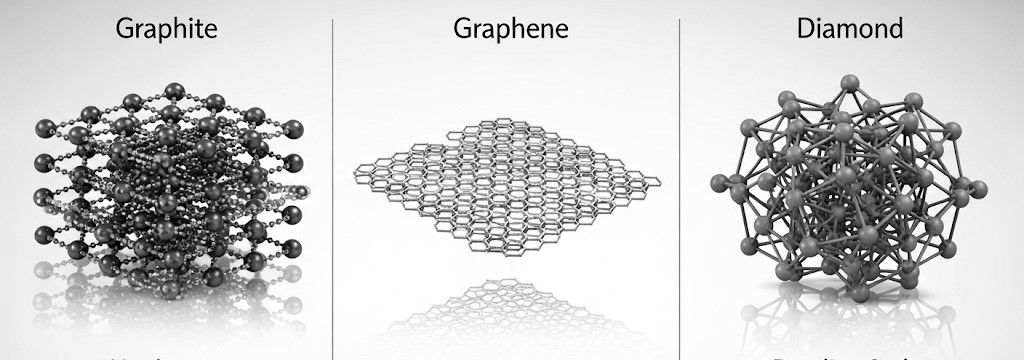
Graphite vs Diamond – Structure & Properties
| Property | Graphite | Diamond |
|---|---|---|
| Atomic Structure | Hexagonal layers (graphene sheets) | Tetrahedral 3D network |
| Bonding | Strong covalent (in-plane) + van der Waals (between planes) | Strong covalent in all directions |
| Hardness | Soft, used as lubricant | Hardest known natural material |
| Electrical Conductivity | High (anisotropic) | Almost none |
| Thermal Conductivity | High along planes | Very high in all directions |
| Common Uses | Batteries, lubricants, refractories | Cutting tools, abrasives, optics |
Graphite represents one of nature’s most elegant engineering solutions: a carbon structure that defies conventional material behaviour whilst enabling extraordinary industrial applications. Its unique atomic arrangement creates properties that seem contradictory yet prove essential across modern technology.
Is Graphite an Element or Compound?
Graphite is neither compound nor mixture but rather an allotrope — a distinct structural form of pure carbon. Unlike compounds containing multiple elements, graphite consists entirely of carbon atoms arranged in a specific crystalline lattice. This elemental nature places graphite alongside diamond as different expressions of the same element, yet with dramatically different properties.
Structure of Graphite vs Diamond
The structural differences between graphite and diamond explain their opposing characteristics. Graphite’s carbon atoms form hexagonal layers (graphene sheets) connected by strong covalent bonds within each layer but only weak van der Waals forces between layers. This arrangement allows layers to slide past each other, creating graphite’s characteristic slipperiness and electrical conductivity.
Diamond, conversely, locks carbon atoms in a rigid tetrahedral network with strong bonds extending in all directions. Where diamond achieves hardness through structural rigidity, graphite achieves versatility through structural flexibility. This fundamental difference explains why diamond cuts steel whilst graphite lubricates it.
Types of Graphite – Natural, Synthetic, Amorphous, Flake, Vein
- Natural graphite occurs in three distinct forms, each with specific industrial applications:
- Flake graphite: Flat, plate-like particles formed in metamorphic rocks, containing 85-98% carbon content. Its high purity and conductivity make it ideal for battery anodes and lubricants.
- Vein (lump) graphite: The purest natural form at 70-99%+ carbon, formed in fissures and believed to originate from crude oil deposits. Its exceptional purity commands premium prices in specialised applications.
- Amorphous graphite: Despite its name, this microcrystalline form appears in coal, slate, or shale with 70-90% carbon purity. Its abundance makes it valuable for foundry facings and basic industrial uses.
- Synthetic graphite emerges from high-temperature processing exceeding 2,100°C, typically using petroleum coke and pitch. Though generally purer than natural variants, synthetic graphite exhibits higher electrical resistance, greater porosity, and lower density.
| Type | Purity Range | Main Applications |
|---|---|---|
| Flake Graphite | 85–98% | Batteries, lubricants, thermal materials |
| Vein Graphite | 90–99.5% | High-end electronics, metallurgy |
| Amorphous Graphite | 70–90% | Foundry facings, refractories, brake linings |
| Synthetic Graphite | >99.9% | Electrodes, EV batteries, aerospa |
Physical and Chemical Properties
Graphite’s properties challenge conventional material categories. It conducts electricity like a metal yet lubricates like oil. It’s flexible without elasticity, thermally conductive yet chemically inert. With a melting point of approximately 3,600°C, graphite sublimes directly from solid to gas.
Its thermal conductivity spans 25-470 W/m·K depending on grade and orientation, whilst electrical resistivity ranges from 5×10⁻⁶ to 30×10⁻⁶ Ω·m. These properties stem directly from its layered structure, where electrons move freely within planes but require more energy to jump between layers.
The name “graphite” derives from the Greek word “graphein,” meaning “to write” — acknowledging its most familiar application in pencils.
Key Takeaway: Graphite’s layered atomic structure creates a unique combination of electrical conductivity, thermal management, and mechanical properties that cannot be replicated by conventional materials, making it irreplaceable across applications from traditional pencils to advanced battery technology.
Graphite Uses in Industrial and Manufacturing Applications
Graphite’s exceptional properties enable critical manufacturing processes across heavy industries, where its unique combination of thermal conductivity, high-temperature resistance, and lubricity proves irreplaceable.
Steelmaking and Recarburising
Examining various graphite uses reveals how this material is integral to multiple sectors, from industrial applications to consumer products.
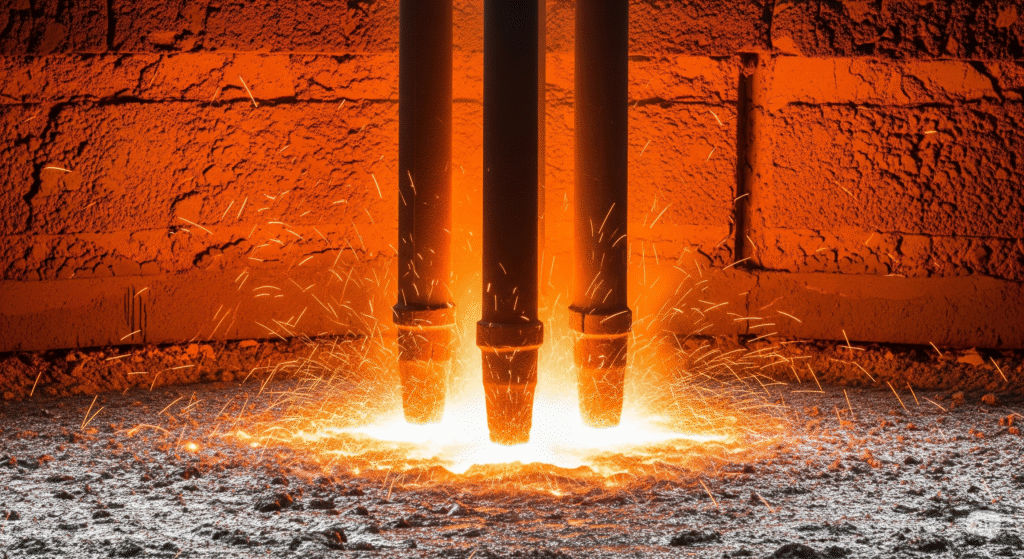
Steel production demands precise carbon control, and graphite delivers unmatched performance as a recarburiser. Manufacturers add high-carbon graphite to adjust carbon content in molten metal, compensating for losses during processing whilst achieving desired mechanical properties. Modern recarburisers contain 94-99.99% carbon, enabling absorption rates reaching 90% when properly mixed.
This process directly influences steel quality. The carbon structure in graphite dissolves uniformly into molten steel, creating consistent alloy composition that determines strength, hardness, and machinability in the final product.
Refractories and Furnace Linings
Blast furnace operations expose equipment to temperatures exceeding 5,000°F, yet graphite-based refractories provide exceptional protection. These carbon and graphite bricks offer superior thermal conductivity that efficiently transfers excess heat to cooling systems, preventing catastrophic equipment failure.
In high-temperature fire protection systems, expandable graphite is also used for its ability to expand when exposed to heat, forming an insulating char layer that blocks flame penetration.
The longevity advantage is remarkable: modern blast furnaces lined with graphite refractories operate continuously for 15-20 years. Critical areas like hearths and bottoms increasingly use super micro-pore graphite blocks rather than conventional carbon blocks, resisting infiltration from iron and slag whilst maintaining structural integrity.
Casting Moulds and Die Coatings
Die-casting applications benefit from graphite’s thermal stability and release properties. Coated graphite dies prove especially valuable for lead-free copper alloys, which aggressively attack conventional mould materials. Water-based graphite coatings applied at temperatures between 175-230°C create adhesive films that provide excellent lubrication and mould release.
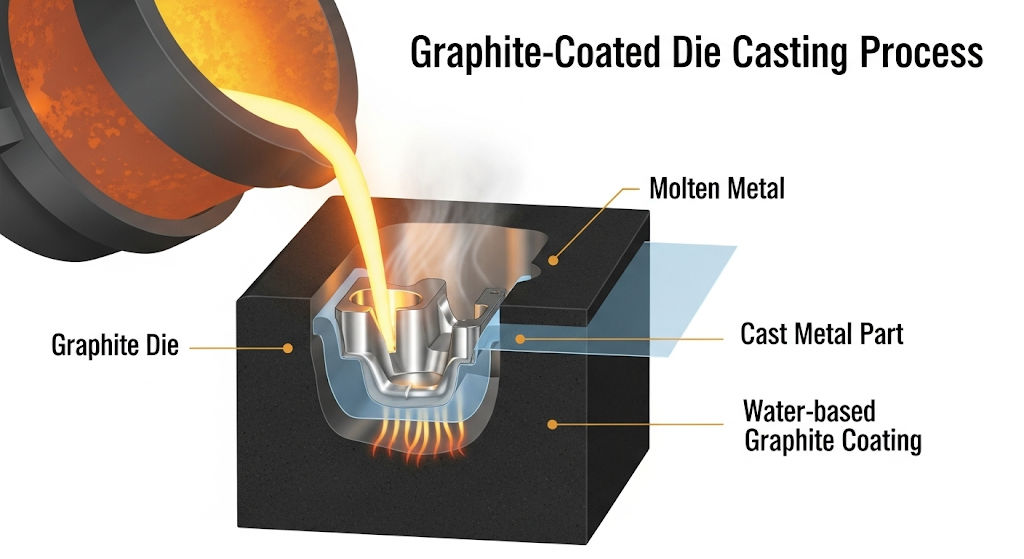
The thermal conductivity of graphite enables faster cooling cycles, improving casting quality whilst reducing production time. This efficiency translates directly into cost savings and higher throughput in manufacturing operations.
Foundry Facings
Foundry-facing applications rely on graphite’s thermal properties and chemical inertness. A water-based paint containing amorphous or fine flake graphite is applied to mould interiors, creating a thin graphite layer that facilitates easier separation of cast objects after cooling. This coating prevents metal adhesion whilst ensuring smooth surface finishes on cast components.
Brake Linings and Clutches
Friction applications exploit graphite’s lubricating properties to modulate braking effects in automotive and rail components. When incorporated into brake linings alongside metals, mineral fibres, and resins, graphite enhances braking comfort and reduces noise. Its thermal conductivity dissipates heat generated during braking, whilst its low friction coefficient (0.118 to 0.268 depending on type) ensures optimal performance.
The paradox of graphite in braking systems demonstrates its versatility: whilst naturally slippery, it actually improves brake pad performance by preventing overheating and maintaining consistent friction under extreme conditions.
Key Takeaway: Graphite’s thermal conductivity, high-temperature resistance, and lubricity make it irreplaceable in core industrial processes — extending equipment lifespans, improving product quality, and enabling manufacturing technologies that would otherwise be impossible.
Graphite in Energy Systems
The global energy transition runs on a material most people never think about. While lithium grabs headlines as the star of electric vehicle batteries, the most important graphite uses lie in energy storage, renewable power generation, and clean technology infrastructure.
Lithium-Ion and EV Batteries
Graphite dominates lithium-ion and EV battery anodes thanks to its unmatched balance of conductivity, stability, and affordability. For even higher-capacity options, researchers are exploring alternatives like Germanium anodes, though these face challenges in terms of cost and durability. The diverse range of graphite uses highlights its versatility and critical importance to the ongoing advancements in technology and energy systems.
Lithium-ion batteries depend on graphite for their fundamental operation, with natural and synthetic variants capturing 98% of the anode market. Natural flake graphite is often purified and shaped into spherical graphite, a key form used in lithium-ion battery anodes for its high packing density and performance.
The economics are compelling: graphite costs significantly less than lithium, nickel, or cobalt, yet delivers exceptional energy density and cycle life yet it remains one of the most important EV battery materials, both in terms of weight and performance.
Each electric vehicle requires 50-100kg of graphite, making it the heaviest single component in the battery pack, outweighing all other active materials combined. (IEA, 2023 – Global EV Outlook)
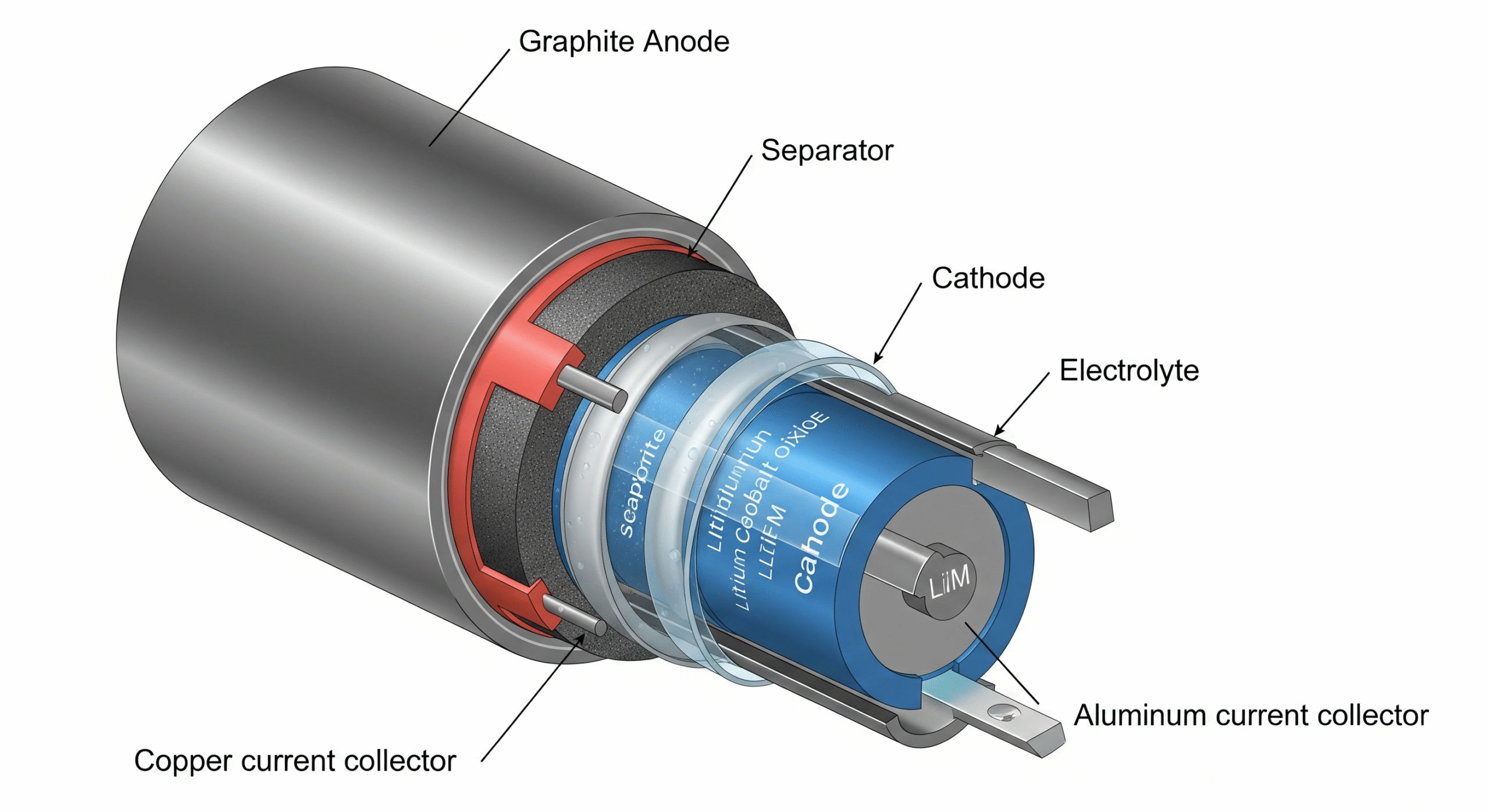
This dominance stems from graphite’s unique ability to host lithium ions within its layered structure. During charging, lithium ions intercalate between graphite’s carbon sheets through a process battery engineers call the “rocking chair” mechanism.
These ions shuttle back and forth between electrodes during charge-discharge cycles, with graphite delivering a theoretical capacity of 372 mAh/g whilst maintaining structural integrity through thousands of cycles.
Fuel Cells and Nuclear Reactors
Fuel cell systems rely on graphite bipolar plates to distribute hydrogen and oxygen gases, conduct electricity, and manage thermal loads. These components demand ultra-high purity to prevent contamination that could degrade electrical conductivity and corrosion resistance. The precision required explains why fuel cell manufacturers specify graphite grades with impurity levels measured in parts per million.
Nuclear reactors present an entirely different challenge. Graphite moderators slow fast neutrons to thermal speeds, enabling controlled fission reactions. The material must withstand intense radiation while maintaining dimensional stability — a demanding combination that few materials can match.
| Energy Tech | Graphite Component | Function |
|---|---|---|
| Lithium-Ion Battery | Anode Material | Stores lithium ions |
| Fuel Cells | Bipolar Plates | Conducts electricity + gas flow |
| Nuclear Reactor | Moderator Blocks | Slows neutrons for fission |
| Solar PV | Crucibles/Molds | Withstand Si purification heat |
| Grid Storage | Felt Electrodes | Heat dissipation & stability |
Solar Panels and Grid Energy Storage
Solar panel manufacturing depends on graphite crucibles and moulds that withstand temperatures exceeding 1500°C during silicon purification. The material’s thermal conductivity and chemical inertness make it ideal for these extreme conditions, where conventional materials would fail catastrophically.
Grid-scale energy storage systems increasingly use graphite felt electrodes to prevent thermal runaway. These electrodes distribute heat evenly across battery cells, eliminating dangerous hotspots that could trigger fires or explosions in large installations.
The Intercalation Advantage
Graphite’s energy storage mechanism represents one of nature’s most elegant solutions. The intercalation process allows lithium ions to slip between graphite’s carbon layers without disrupting the crystal structure. This reversible insertion creates a stable host-guest relationship that enables thousands of charge-discharge cycles without significant capacity loss. Lithium also extends far beyond EV batteries — from glass and ceramics to lubricants and aerospace — covered in Industrial Lithium Uses
Alternative anode materials like silicon offer higher theoretical capacities but suffer from volume expansion that destroys battery life. Graphite’s dimensional stability during intercalation explains why it remains the preferred choice for commercial applications.
Fun fact: Despite intensive research into alternative materials, graphite is expected to remain the dominant anode material for the foreseeable future, with demand projected to increase by 500% by 2050 (World Bank, 2020 – Minerals for Climate Action)
Key Takeaway: Graphite’s intercalation properties make it irreplaceable in energy systems, from batteries to fuel cells to solar production, positioning this often-overlooked material as perhaps the most critical component in our global transition to renewable energy. On the cathode side, Cobalt plays the stabilising role graphite cannot, making the two inseparable in today’s lithium-ion designs
Graphite Uses in High-Tech and Electronics
Electronics demand materials that can handle extreme miniaturisation whilst managing the heat and electrical challenges that come with packing more power into smaller spaces. Graphite’s unique properties—exceptional thermal conductivity, electrical performance, and structural stability—make it essential for next-generation electronic systems where conventional materials reach their limits.
Graphene and Advanced Nanomaterials
Graphene represents graphite’s most advanced form: a single layer of carbon atoms arranged in a hexagonal lattice. This two-dimensional material possesses extraordinary mechanical strength, electrical conductivity, and thermal conductivity. Modern chemical vapour deposition (CVD) processes can produce graphene with single-layer content exceeding 95%, enabling consistent quality for industrial applications.
The material’s planar structure, high aspect ratio, and mechanical durability make graphene-based nanomaterials valuable across sectors from nanobiotechnology to thermal management systems. These properties allow graphene to bridge the gap between laboratory research and practical applications in electronics manufacturing.
Semiconductors and Heat Sinks
In advanced electronics, graphite-based heat sinks manage device temperatures efficiently, while gallium-based materials are showing promise in semiconductor cooling and packaging—pushing thermal and performance thresholds further.
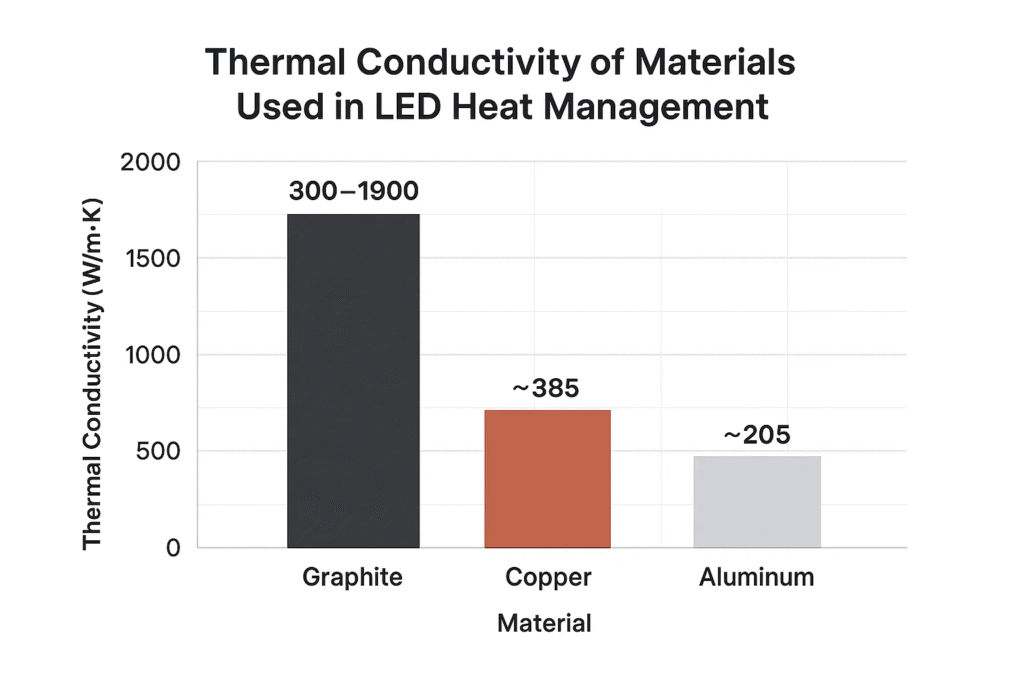
Semiconductor manufacturing faces an ongoing challenge: as chips become smaller and more powerful, heat density increases dramatically. Graphite addresses this through superior thermal management capabilities. Graphite heat sinks weigh 75% less than copper and 25% less than aluminium whilst offering superior thermal conductivity.
Graphite-enhanced heat spreaders eliminate dangerous hotspots in electronic components, directly extending their operational lifespan. This thermal management capability becomes crucial as processors and memory chips operate at higher frequencies and generate more heat per unit area.
LED Lighting and Thermal Management
LED technology depends on effective heat dissipation to maintain performance and longevity. Thermal graphite sheets address this challenge by efficiently transferring heat away from diodes, enabling:
- Consistent light output across operating temperatures
- Extended component lifespan through reduced thermal stress
- Slimmer device profiles for modern lighting applications
The thermal conductivity of graphite sheets ranges from 50-1900 W/mK—up to four times higher than copper—making them ideal for compact LED fixtures where space constraints prevent traditional cooling solutions. This thermal performance enables the ultra-thin LED panels now common in smartphones, televisions, and architectural lighting.
Sensors, Robotics, and Automation
Graphite-on-paper (GoP) sensors demonstrate how simple materials can achieve sophisticated performance. These sensors offer remarkable specifications for their simplicity:
| Feature | Performance |
|---|---|
| Response time | ≈0.4 milliseconds |
| Sensitivity | -5%/Pa |
| Durability | >1000 cycles |
| Manufacturing | Solvent-free, ultra-low cost |
Such sensors enable precise tactile feedback in robotic grippers and human-machine interfaces without requiring expensive materials or complex manufacturing processes. This accessibility makes advanced sensing technology viable for applications where cost constraints would otherwise prohibit sophisticated sensors.
Fun fact: A pressure sensor made from ordinary pencil graphite on paper shows performance comparable to sensors using advanced materials, yet costs less than 1 rupee per device.
Key Takeaway: Graphite’s versatility in electronics extends from nanoscale graphene to everyday sensors, providing sustainable, cost-effective solutions for thermal management and automation across countless applications.
Graphite Brushes and Electrical Contacts
When national security depends on material performance, graphite emerges as one of the few elements capable of meeting the most demanding requirements. Its unique combination of properties makes it indispensable across critical defence and aerospace systems where failure simply cannot be tolerated.
Graphite in Aerospace and Defence
The strategic importance of graphite becomes clear when examining its role in military applications. The US government designated graphite as one of four minerals essential to national security, foreign policy, and economy. More striking still: graphite ranks among only three minerals meeting all industrial/defence sector indicators while remaining 100% import-dependent. This dependency creates a significant vulnerability in systems where alternatives simply don’t exist.
Military aerospace applications exploit graphite’s thermal conductivity, lubricity, and exceptional resistance to heat and corrosion. Aircraft manufacturers embed graphite composites throughout airframe and structural components, achieving weight reductions that directly improve fuel efficiency and combat manoeuvrability. These aren’t marginal improvements—they represent fundamental advantages in systems where every kilogram matters.
Thermal Shielding and Lightweight Composites
Carbon-bonded carbon fibre (CBCF) composites demonstrate graphite’s remarkable thermal management capabilities through seemingly contradictory properties. These materials achieve densities as low as 0.22 g/cm³ while offering both thermal insulation and heat conduction. The performance metrics are extraordinary: thermal conductivity of 0.061 W/mK in the insulation direction yet 21.14 W/mK in the heat-leading direction—a 350-fold difference.
Aerospace applications require even more specialised solutions. Silver graphite molybdenum disulfide brushes are specifically engineered for slip ring mechanisms in solar power arrays, where conventional materials would fail under the extreme conditions of space.
Rocket Nozzles, Missiles, and Armour Materials
Rocket propulsion systems place the most extreme demands on materials. Graphite nozzles must withstand temperatures exceeding 3,000°C while maintaining structural integrity under rapid thermal cycling. The material’s ability to conduct heat away from critical areas whilst maintaining strength makes it irreplaceable in these applications.
Certain synthetic graphite grades are considered so strategically important that the US government restricts their export. Fine-grain, high-density graphite with densities exceeding 1.8 g/cm³ finds application in vehicle nose tips, thrust tabs, heat shields, and missile nozzle throats. These components accelerate hot exhaust to produce thrust whilst withstanding thermal shock during sudden temperature changes.
The engineering can be elegantly simple or remarkably complex. A rocket nozzle might be as straightforward as a precision-drilled hole in a synthetic graphite block, or as sophisticated as a machined component with integrated liquid cooling systems.
Key Takeaway: Graphite’s unique properties make it irreplaceable in aerospace and defence applications, simultaneously providing thermal protection, electrical conductivity, and structural integrity in environments where material failure is not an option.
Graphite in Medical Devices and Healthcare Technology
The intersection of graphite and medicine reveals one of this material’s most promising frontiers. Where traditional medical devices face limitations in sensitivity, biocompatibility, and functionality, graphite’s unique properties offer solutions that could reshape healthcare delivery.
Biosensors and Diagnostic Devices
Graphite nanoparticles have transformed biosensor development through their exceptional electrical conductivity and large surface area. Enzyme-based glucose detection systems represent a standout application, where graphite nanoparticles—consisting of several stacked graphene sheets—provide homogenous spherical shapes with high conductivity. These properties enable direct electron transfer-based glucose sensing with impressive sensitivity (7.29 × 10⁻² nA mM⁻¹ cm⁻²) and a detection limit of 50 μM.
The implications extend beyond diabetes monitoring. Graphene-based wearable biosensors enable non-invasive, real-time health monitoring through point-of-care diagnostics that detect biomarkers in various body fluids. This capability addresses a critical healthcare challenge: the need for continuous, accurate monitoring without invasive procedures.
Graphite-Based Implants and Biocompatibility
The inherent biocompatibility of graphite makes it particularly valuable for implantable medical devices. Graphite coatings applied to stainless steel implants via physical vapour deposition (PVD) significantly enhance hemocompatibility by reducing hemolysis potential from 1.8% to 1.09%. In energy and defense, Tungsten offers a parallel story — prized for its thermal resilience where extreme conditions mirror graphite’s versatility. Even more striking, these coatings decrease corrosion rates from 22 mpy to just 1.4 mpy.
This application addresses a critical concern with metal implants containing nickel, chromium and molybdenum, which can trigger inflammatory responses and coagulation cascades. The performance improvements are measurable:
| Application | Advantage | Performance Metric |
|---|---|---|
| Biosensors | High sensitivity | Detection limit: 50 μM |
| Implant Coatings | Reduced corrosion | 1.4 mpy vs 22 mpy |
| Drug Delivery | High loading capacity | Large surface area |
Graphene in Drug Delivery and Tissue Engineering
The two-dimensional structure and presence of delocalized surface π electrons in graphene create an ideal platform for drug delivery via hydrophobic interactions and π–π stacking. This molecular architecture allows for effective loading of both hydrophilic and hydrophobic therapeutic agents.
Graphene oxide (GO) serves as a promising nano-vector for controlled drug release, responding to environmental stimuli such as pH, temperature, and even light. This responsiveness enables targeted therapy with precise timing—drugs can be delivered exactly where and when needed.
Tissue engineering applications reveal graphene’s potential for regenerative medicine. Studies show that graphene films accelerate osteogenic differentiation of mesenchymal stem cells, suggesting applications in bone repair and reconstruction.
Fun fact: A graphene-based wireless nanosensor can detect bacteria down to a single bacterium on tooth enamel while wirelessly transmitting results.
Key Takeaway: Graphite and its derivatives are reshaping medical technology through enhanced biosensing, improved implant biocompatibility, and sophisticated drug delivery systems—demonstrating how this versatile material extends its influence from industrial applications into life-saving healthcare innovations.
Graphite in Transportation and Mechanical Systems
Transport systems worldwide depend on graphite’s dual nature as both lubricant and electrical conductor, though most engineers rarely consider how this carbon material quietly extends equipment lifespans and improves operational efficiency across railways, automobiles, and electric motors.
Railway Systems – Graphite in Motors, Brakes, and Lubrication
Railway operators have discovered that graphite offers a practical solution to one of their most persistent challenges: wheel-rail interface wear. Solid graphite lubricants applied to these contact points reduce material loss through decreased friction. Research demonstrates that increasing graphite volume corresponds directly to lower wear levels, extending component lifespans significantly.
The performance benefits are measurable: graphite-based solid lubricants can reduce the coefficient of traction by 30-55%, offering longer retentivity and improved surface morphology. This effectiveness stems from graphite’s ability to fill contact area fissures, enabling it to function as a dry lubricant where oil-based alternatives would attract dirt and debris.
Automotive Components and Engine Friction Parts
Engine compartments present extreme conditions that would destroy most materials. Graphite maintains structural integrity even when exposed to temperatures exceeding 1,000°C in engines, exhaust systems, and brakes. Its natural lubrication properties reduce friction between moving parts like pistons, bearings, and camshafts.
Modern vehicles integrate graphite into gaskets, seals, and heat shields precisely because it performs reliably under thermal stress. The material’s role in friction linings demonstrates this versatility—graphite modulates braking effects whilst contributing to braking comfort and noise reduction. Its thermal conductivity effectively dissipates heat after kinetic energy transforms into thermal energy, preventing dangerous ‘hot spots’ that could cause brake failure.
Graphite Brushes in Motors and Drives
Carbon brushes establish electrical contact with rotating components in motors, making them essential in vehicle electrical systems. These graphite-containing components withstand remarkable wear—car starter unit brushes must endure up to 40,000 starting cycles over a vehicle’s lifetime.
Different applications require specific graphite formulations: natural graphite brushes typically serve slip ring motors, whereas metal graphite brushes (containing copper powder) suit low-voltage DC motors. For applications involving severe loads or bi-directional cyclical motion, graphite brushes prove most effective due to their ability to withstand high current spikes without degrading.
| Application | Graphite Type | Primary Benefit |
|---|---|---|
| Railway Wheels | Solid Lubricant | 30-55% reduction in friction coefficient |
| Brake Linings | Mixed with Metals/Fibres | Heat dissipation, noise reduction |
| Motor Brushes | Natural or Metal Graphite | Durability through 40,000 cycles |
The technology behind carbon brushes in automotive systems represents a century-old innovation that remains state-of-the-art, despite advances in electronics and materials science.
Key Takeaway: Graphite’s exceptional combination of lubrication properties, thermal conductivity, and electrical performance makes it irreplaceable in transportation systems—simultaneously improving efficiency, reducing wear, and extending component lifespans across applications from railway wheels to automotive starters.
Everyday and Consumer Applications

Image Source: Amazon.com
You handle graphite more often than you might think. From the pencil in your desk drawer to the tennis racket in your sports bag, this versatile carbon material quietly enhances countless everyday items without fanfare or recognition.
Pencils and Art Supplies
The pencil remains graphite’s most recognisable application, combining graphite with clay in precise ratios to create hardness levels ranging from 10B (softest) to 2H (hardest). Professional artists often prefer mechanical clutch pencils with 0.3mm and 0.5mm leads for detailed work, while traditional wood-cased pencils offer softer, more expressive marks.
Graphite powder serves as a versatile artistic medium that many artists overlook. DIY artists create their own by grinding pencil lead or purchasing inexpensive powdered graphite lubricant from hardware shops instead of costly art-grade alternatives. This approach delivers identical performance at a fraction of the cost.
Household Lubricants (Locks, Hinges, Tools)
Most homes contain graphite in an unexpected form: dry lubricant for door hinges, locks, and mechanical tools. Unlike oil-based products, graphite leaves no sticky residue that attracts dust and dirt. Its layered structure allows sheets to slide effortlessly over one another, making it perfect for lubricating key slots and stubborn locks.
Graphite in Sports Equipment (Racquets, Rods, Clubs)
Carbon fibre composites (often called graphite in sports terminology) transformed equipment design beginning in the 1970s. Today’s graphite tennis rackets offer unmatched stability and power without sacrificing control, occasionally incorporating advanced materials like graphene for reinforcement. Golf clubs benefit from graphite shafts that reduce weight by 10-40% compared to steel alternatives.
| Sport | Graphite Component | Primary Benefit |
|---|---|---|
| Tennis | Racket frames | Lightweight, greater power |
| Golf | Club shafts/heads | Increased distance, precision |
| Badminton | Racket frames | Higher string tension capability |
| Water sports | Paddleboards/oars | Durability with light weight |
Graphite in Hobby and DIY Uses (Pinewood Derby, Model Kits)
Hobby enthusiasts regularly employ graphite as a friction-reducing agent in competitive events like Pinewood Derby races. At home, DIY practitioners often create graphite powder using common kitchen tools like pepper grinders to produce fine powder for various projects.
The beauty of graphite in consumer applications lies in its simplicity. Whether you’re sketching, fixing a squeaky hinge, or competing in a model car race, this ancient material continues to solve modern problems with elegant efficiency.
Fun fact: The DIY market’s graphite lubricant performs identically to expensive art-grade graphite powder, allowing budget-conscious artists to create professional-quality work without specialised supplies.
Key Takeaway: Graphite’s presence in everyday items demonstrates how a single material with simple atomic structure can enhance countless daily activities—from artistic expression to competitive sports to household maintenance.
Choosing the Right Graphite for the Job
Selecting graphite involves balancing performance requirements against cost constraints and environmental considerations. Engineers face a fundamental choice: natural graphite’s cost advantages versus synthetic graphite’s consistency and purity. Understanding these trade-offs determines whether a project succeeds or fails within budget.
Natural vs Synthetic Graphite – Key Differences
The composition differences are stark. Natural graphite contains 15-95% carbon alongside impurities like ash, iron, and silica, while synthetic graphite achieves 99% carbon purity. Visually, natural graphite displays an opaque dark grey to black hue with metallic sheen, whereas synthetic graphite appears darker and more uniform.
Manufacturing processes diverge completely. Natural graphite undergoes extraction and processing from metamorphic rocks, whilst synthetic graphite requires heating petroleum coke or coal tar pitch above 2,500°C. This energy-intensive production creates a significant environmental footprint — synthetic graphite generates 20-40 kg CO₂ per kilogramme compared to just 2-6 kg CO₂ for natural graphite (LUH, 2023).
Which Type Fits Which Industry?
Synthetic graphite excels where shaped parts demand high purity, particularly in steel industry electrodes. EV batteries increasingly favour synthetic variants for fast charge capabilities and longer service life.
Natural graphite dominates cost-sensitive applications: lubricants, foundry products, and refractory materials. Its high crystallinity provides excellent corrosion resistance. Battery manufacturers increasingly blend natural graphite for cost advantages and reduced environmental impact.
Comparative Table – Properties, Forms, and Applications
| Characteristic | Natural Graphite | Synthetic Graphite |
|---|---|---|
| Purity | 15-95% carbon | 99% carbon |
| Density | 1.5-1.8 g/cm³ | 1.6-1.9 g/cm³ |
| Price | $500-2000 per tonne | $3,000-20,000 per tonne |
| Key Uses | Lubricants, foundry facings, refractory materials | Electrodes, EV batteries, nuclear applications |
| Best For | Cost-effective applications, high resistance needs | High-purity requirements, consistent performance |
The price differential often determines selection. Natural graphite costs one-tenth of synthetic alternatives in many applications, making it attractive for price-sensitive sectors. However, synthetic graphite’s consistency and purity justify higher costs in precision applications.
Fun fact: Battery manufacturers often blend both types to achieve optimal performance-cost balance.
Key Takeaway: The choice between natural vs synthetic graphite depends on purity, performance, and environmental impact — synthetic suits high-tech, natural suits volume applications.s.
Global Graphite Supply and Market Trends

Image Source: Elements by Visual Capitalist
Amid shifting graphite market trends, the global industry stands at a crossroads of opportunity and vulnerability.. Valued at USD 12.55 billion in 2024, the market is projected to reach USD 23.87 billion by 2033, growing at a CAGR of 7.6%. This dramatic expansion reflects graphite’s escalating role across energy storage, electronics, and industrial applications — yet the supply landscape remains dangerously concentrated.
Production Concentration Creates Strategic Vulnerabilities
China’s grip on global graphite production has tightened to approximately 79% of worldwide supply in 2024 (USGS, 2024 – Mineral Commodity Summary). This concentration gives Beijing unprecedented control over a material that powers everything from electric vehicles to nuclear reactors. The vulnerability becomes stark when you consider that the US has no active graphite mines, while North America and Europe combined may need roughly 50 new world-class graphite mines within the next decade to support growing domestic demands.
Madagascar emerges as the second-largest producer, contributing 5.6%, while Mozambique, Brazil, and India round out the top five producing nations. The production landscape reveals telling patterns:
| Country | Production (2024) | Global Share | Notable Details |
|---|---|---|---|
| China | 1.27 million tonnes | ~79% | Dominates processing/refining |
| Madagascar | 89,000 tonnes | 5.6% | Production up from 2023 |
| Mozambique | 75,000 tonnes | ~4.7% | Down 24% from previous year |
| Brazil | 73,000 tonnes | ~4.5% | Slipping in ranking |
| India | 27,800 tonnes | ~1.7% | Slight increase from 2023 |
Supply Chain Disruptions and Policy Responses
China’s export controls on certain graphite products in December 2023 sent shockwaves through global supply chains, forcing nations to confront their dependency on a single source (India shipping news, 2023 – “China curbs graphite exports”). The European Commission responded by adding synthetic graphite to its critical raw materials list, while US policies now identify graphite as essential to national security.
Investment in integrated natural graphite anode projects outside China has increased dramatically, particularly in Africa, Australia, and North America. These initiatives represent more than diversification — they signal a fundamental shift toward supply chain sovereignty in critical materials.
Demand Drivers Reshape the Market
Electric vehicles drive the most significant demand growth, with each EV requiring between 50-100 kg of graphite. The EV sector now consumes around 27% of specialty graphite, while renewable energy applications account for over 34% of demand.
Steel manufacturing through electric arc furnaces continues expanding, with nearly 93% of new steelmaking capacity being EAF-based. Earlier chemistries like Cadmium batteries still persist in aerospace and grid storage, offering a contrast to graphite’s current dominance
These demand patterns create a perfect storm: surging requirements for a material dominated by a single producer, in applications critical to national security and economic competitiveness.
Graphite Use by Sector (2024 Estimates)
| Sector | Approximate Share of Demand |
|---|---|
| Electric Vehicles (EVs) | 27% |
| Renewable Energy Systems | 34% |
| Steelmaking (EAF) | 20% |
| Electronics | 10% |
| Others (Refractory, etc.) | 9% |
Fun fact: Despite discussions about alternative battery chemistries, many experts believe graphite will remain a key raw material in EV batteries for at least the next decade.
Key Takeaway: The concentrated nature of global graphite production, coupled with surging demand from green technologies, creates both strategic challenges and opportunities as countries race to secure supplies of this increasingly critical material.
Graphite and India: Resources, Imports, and Strategic Planning
India holds substantial graphite reserves yet remains paradoxically import-dependent — a strategic vulnerability that highlights the gap between geological potential and industrial reality. This disconnect reveals broader challenges in critical mineral policy and mining infrastructure that extend well beyond graphite alone.
India’s Domestic Reserves and Mining Landscape
As industries evolve, understanding the wide array of graphite uses will be essential for innovation and development in various fields.
Official data reveals India possesses approximately 211.62 million tonnes of graphite reserves/resources, with 8.56 million tonnes classified under the Reserves category and 203.6 million tonnes under Remaining Resources (IBM, 2023).
These high-quality deposits concentrate primarily in Arunachal Pradesh, Jharkhand, and Tamil Nadu. Despite this substantial resource base, India’s current production remains modest at around 27,800 metric tonnes annually, representing just 1.7% of global output.
The numbers tell a stark story: India operates 32 mining leases for graphite, yet merely 9 remain operational, leaving 23 non-working. This underutilisation of existing mining capacity exposes a significant gap between resource potential and actual production — a pattern that reflects broader challenges in India’s mining sector.
India’s Graphite Reserves & Production Snapshot
| Metric | Value |
|---|---|
| Total Resources (2024) | 211.62 million tonnes |
| Classified Reserves | 8.56 million tonnes |
| Remaining Resources | 203.6 million tonnes |
| Current Production (2024) | ~27,800 tonnes |
| Number of Mining Leases | 32 total (9 working, 23 non-working) |
| % of Global Production (India) | ~1.7% |
Import Dependency and Critical Mineral Classification
Despite substantial domestic reserves, India imports approximately ₹3459.60 million worth of natural graphite annually, (Volza, 2024).positioning it among the top three importers in the Asia-Pacific region alongside South Korea and Japan. This dependency becomes particularly concerning given China’s control over global supply chains for both synthetic and natural graphite.
The Ministry of Mines has officially classified graphite among 30 critical minerals essential for India’s economic development and national security. This designation acknowledges the material’s strategic importance across sectors, especially given India’s ambitious targets in electric vehicles and renewable energy infrastructure.
Government Policies and Strategic Initiatives
India has implemented several policy responses to address these vulnerabilities. The government introduced Exploration Licences specifically for deep-seated minerals like graphite and amended the Mines and Minerals Act to empower the Central Government to auction blocks for critical minerals.
To date, 14 critical mineral blocks have been successfully auctioned, including those containing graphite. However, experts caution that domestic mines may take over a decade to start producing, even as demand for critical minerals is expected to more than double by 2030.
This timeline mismatch creates strategic risks. While India pursues domestic production capabilities, its immediate needs for graphite-intensive industries — from battery manufacturing to steel production — continue growing rapidly.
Fun fact: India’s current natural graphite import dependency exceeds 60%, yet recent innovations in recovering high-purity graphite from aluminium industry waste could significantly reduce this reliance.
Key Takeaway: India’s graphite challenge reflects a broader critical mineral dilemma — substantial reserves remain underdeveloped while import dependencies persist, creating strategic vulnerabilities that require both immediate supply chain diversification and long-term domestic production scaling.
Future Outlook: Innovation, Supply Security, and India’s Strategic Interest
Graphite’s story reveals how a material’s atomic structure can determine its geopolitical significance. This layered carbon allotrope demonstrates that strategic materials aren’t always rare — sometimes they’re hidden in plain sight, quietly underpinning entire industries until supply disruptions expose their true importance.
The numbers paint a stark picture: global graphite demand projected to nearly double by 2033, while China maintains its stranglehold on 79% of production. Electric vehicles alone require 50-100 kg per vehicle, making graphite the heaviest component in EV batteries. Yet most policymakers still focus on lithium, cobalt, and nickel — missing the forest for the trees.
India’s situation exemplifies this strategic blindness. Despite holding 211.62 million tonnes in reserves, the country imports over 60% of its graphite needs. The gap between resource potential and production capacity reflects broader challenges in critical mineral security — having reserves means little without the infrastructure to extract and process them at scale.
Three factors will shape graphite’s future trajectory:
- Supply Chain Diversification: China’s December 2023 export controls on graphite products sent shockwaves through global supply chains. Countries are now scrambling to develop domestic sources, but new mines take over a decade to become operational. This timeline mismatch creates vulnerability windows that could affect everything from EV production to grid storage systems.
- Technology Evolution: While graphite maintains its dominance in battery anodes, ongoing research into silicon anodes, solid-state batteries, and alternative chemistries could alter demand patterns.
However, graphite’s unique combination of abundance, cost-effectiveness, and performance suggests it will remain relevant even as technologies evolve. Furthermore, the global demand for graphite uses is set to increase as applications in green technologies expand. - Processing Infrastructure: Raw graphite means little without sophisticated processing capabilities. Countries with reserves but no refining capacity — like India — remain strategically dependent despite resource abundance. Building this midstream infrastructure requires substantial capital investment and technical expertise.
India’s National Critical Minerals Mission represents a step toward strategic autonomy, but success depends on execution. The country has auctioned 14 critical mineral blocks, including graphite deposits, yet production timelines stretch into the next decade. Meanwhile, demand from India’s ambitious EV and renewable energy targets continues growing.
The broader lesson transcends graphite itself. Modern economies increasingly depend on materials whose strategic importance becomes apparent only when supply chains fracture. Graphite’s quiet ubiquity — from smartphone batteries to nuclear reactors — illustrates how seemingly mundane materials can become weapons of economic statecraft.
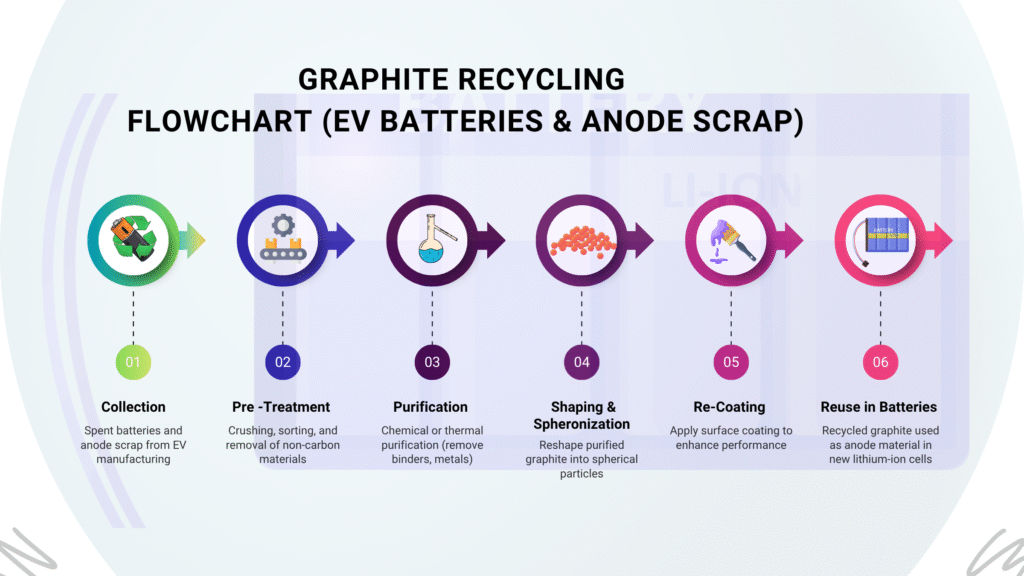
Emerging innovations in graphite recycling, especially from spent EV batteries and anode scrap, are expected to ease supply pressure and improve circularity. Countries that master the full graphite value chain — from mining to high-purity processing to advanced applications — will hold significant advantages in the clean energy transition.
Those that remain dependent on imports may find their technological ambitions constrained by supply chain vulnerabilities they never anticipated.
Key Takeaway: Graphite’s evolution from pencil filler to strategic material reflects how the clean energy transition reshapes global resource dynamics — countries that secure integrated supply chains will shape the future, while those dependent on imports may find their ambitions held hostage by materials they barely understand.
Why Graphite Matters More Than Ever
The Hidden Backbone of Modern Industry
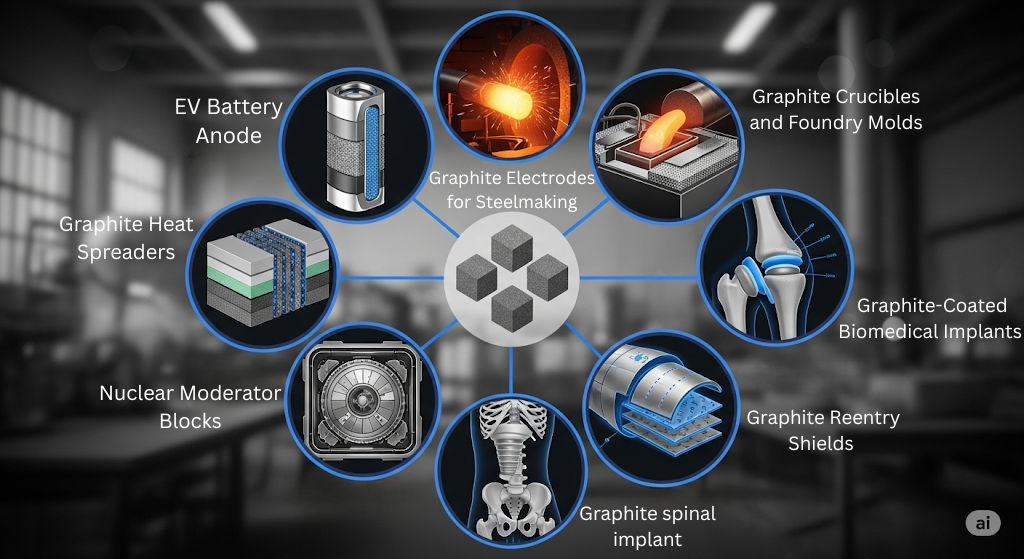
Graphite is a masterclass in how quietly essential materials can define entire industries. Formed over millions of years, this carbon allotrope evolved from pencil lead to a foundational enabler of electric vehicles, nuclear energy, semiconductors, and advanced manufacturing.
Its atomic structure delivers a rare combination of properties: soft yet strong, conductive yet lubricating — making it indispensable across technologies where conventional materials fall short. From synthetic graphite anodes in EV batteries to nuclear moderators and aerospace composites, graphite rarely takes center stage — but nothing works without it.
The material’s journey from ancient writing implements to modern battery anodes illustrates how technological evolution can elevate overlooked resources into critical strategic assets. Edward G. Acheson’s accidental discovery of synthetic graphite production in the late 1800s set the stage for today’s high-purity applications, where 99.5% pure synthetic graphite commands premium prices for specialized uses while natural variants dominate cost-sensitive markets.
A Material We Depend on — But Rarely See
Unlike headline technologies like solar panels or hydrogen cells, graphite operates behind the scenes. Yet this invisibility masks deep dependencies. A projected 500% demand surge by 2050, paired with China’s 79% market dominance, exposes critical vulnerabilities in the global supply chain. Nations like India face a pivotal choice: invest in domestic extraction and processing, or remain reliant on imports for materials that power their clean energy goals.
Why Securing Graphite Means Securing the Future
Graphite doesn’t store energy — it makes storage possible. It doesn’t generate electricity — it enables the systems that do. As the energy transition accelerates, securing access to materials like graphite becomes as vital as developing the technologies they support.
Summary: Where Graphite Powers the Modern World
| Sector | Role of Graphite |
|---|---|
| Electric Vehicles | Battery anodes, 50–100 kg per vehicle |
| Nuclear Energy | Neutron moderators in reactors |
| Aerospace | Thermal shielding, composites, nozzle linings |
| Steelmaking | Electrodes in EAFs for recycling |
| Electronics | Heat spreaders, flexible foils, graphene tech |
| Medical Applications | Implant coatings, biosensors, MRI shielding |
Key Takeaway: Graphite’s unique combination of properties — electrical conductivity, thermal management, and structural versatility — makes it one of the most strategically important materials of our time. Nations that control graphite supply chains will shape the future of energy, defense, and digital infrastructure.
In conclusion, graphite uses illustrate the importance of this material across various sectors, underscoring its strategic significance in the clean energy transition.
FAQs
1. What makes graphite so important in modern technology?
Graphite’s unique combination of electrical conductivity, thermal properties, and structural characteristics makes it irreplaceable in many applications. It’s crucial for electric vehicle batteries, electronics, and renewable energy systems, playing a vital role in our transition to greener technologies.
2. How does graphite contribute to electric vehicle production?
Graphite is a key component in lithium-ion batteries, with each electric vehicle requiring between 50-100 kg of graphite. It serves as the anode material, enabling efficient energy storage and contributing to the overall performance and range of electric vehicles.
3. Why is there concern over the global graphite supply?
China dominates global graphite production, accounting for about 79% of worldwide supply. This concentration creates potential supply vulnerabilities for other nations, leading to strategic concerns and efforts to diversify sources of this critical material.
4. What are some everyday uses of graphite that people might not be aware of?
Beyond pencils, graphite is used in household lubricants for locks and hinges, sports equipment like tennis rackets and golf clubs, and as a dry lubricant in various DIY projects. Its properties make it valuable in both industrial and consumer applications.
5. How is India positioned in the global graphite market?
India has substantial graphite reserves but faces challenges in production and remains largely import-dependent. The government has classified graphite as a critical mineral and is implementing strategies to boost domestic production and reduce reliance on imports.
6. What are the most important graphite uses in modern industry?
Graphite is used in a wide range of industries including electric vehicle batteries, steel production, electronics, nuclear reactors, aerospace systems, and even medical devices. These graphite uses take advantage of its unique thermal, electrical, and structural properties — making it indispensable in modern engineering.
7. What’s the difference between natural and synthetic graphite?
Natural graphite is mined and contains 15–99% carbon, while synthetic graphite is made from petroleum coke and has over 99.9% purity. Natural graphite is cheaper and used in foundries and lubricants, whereas synthetic graphite powers EV batteries and high-tech devices.
8. Why is graphite important for India’s mineral strategy?
India has large graphite reserves but remains import-dependent due to limited processing facilities. The government has listed graphite as a critical mineral to improve supply security and support the EV and renewable energy sectors.


![The Surprising Truth About Beryllium Applications in Modern Technology [2025 Guide]](https://ik.imagekit.io/lxsotwajc/wpmedia/wp-content/uploads/2025/06/featured-Image3-440x264.webp)