Last Updated on September 2, 2025 by Hemanth
Table of Contents
Cadmium is paradoxical—widely recognized for its toxicity but quietly essential in critical technologies like aviation batteries, thin-film solar panels, nuclear reactors, and military-grade sensors. Its unique chemical traits—corrosion resistance, neutron absorption, photoconductivity—make it irreplaceable in high-stakes engineering.
This article explores cadmium’s specialized industrial applications, its recovery via zinc refining, India’s byproduct production leadership, and the complex policy trade-offs that allow its use to continue despite rising health and environmental risks.
Cadmium uses may not cross your mind, but they’re woven deep into the systems that power, protect, and connect our world. You won’t spot it on a product label or hear it mentioned in everyday tech conversations. Yet this heavy metal hides behind some of our most critical systems—shielding aircraft from saltwater corrosion, powering emergency lights, and helping solar panels generate electricity even under cloud cover.
It’s a paradox in metal form: undeniably toxic, yet functionally indispensable. Found in trace amounts beneath the Earth’s surface, cadmium is drawn into service wherever performance matters more than perception. Its role in rechargeable nickel–cadmium batteries keeps satellites running and backup systems alive. Its resistance to corrosion makes it a favorite for electroplating in defense and aerospace hardware. And in the world of solar energy, cadmium telluride cells quietly outperform rivals in low-light conditions.
Even nuclear reactors rely on it. In India’s PHWR systems, cadmium rods help control chain reactions by absorbing stray neutrons—another reminder of how this unassuming metal quietly supports high-stakes technologies.
Regulations have tried to push cadmium out of consumer goods, citing its health risks. But in the hidden chambers of industrial innovation, it’s still holding the line—doing jobs few materials can replicate without compromise.
Key Takeaway: Cadmium is a hazardous metal with remarkable staying power—valued in aerospace, energy, and electronics for properties that remain difficult to replace.
Cadmium’s Physical and Chemical Profile in Industrial Contexts
To understand why cadmium persists across critical industries despite mounting health concerns, we must examine the distinctive properties that make this element nearly irreplaceable in specific applications. These characteristics create a technical foundation that explains cadmium’s enduring industrial relevance.
Melting Point, Conductivity, and Corrosion Resistance
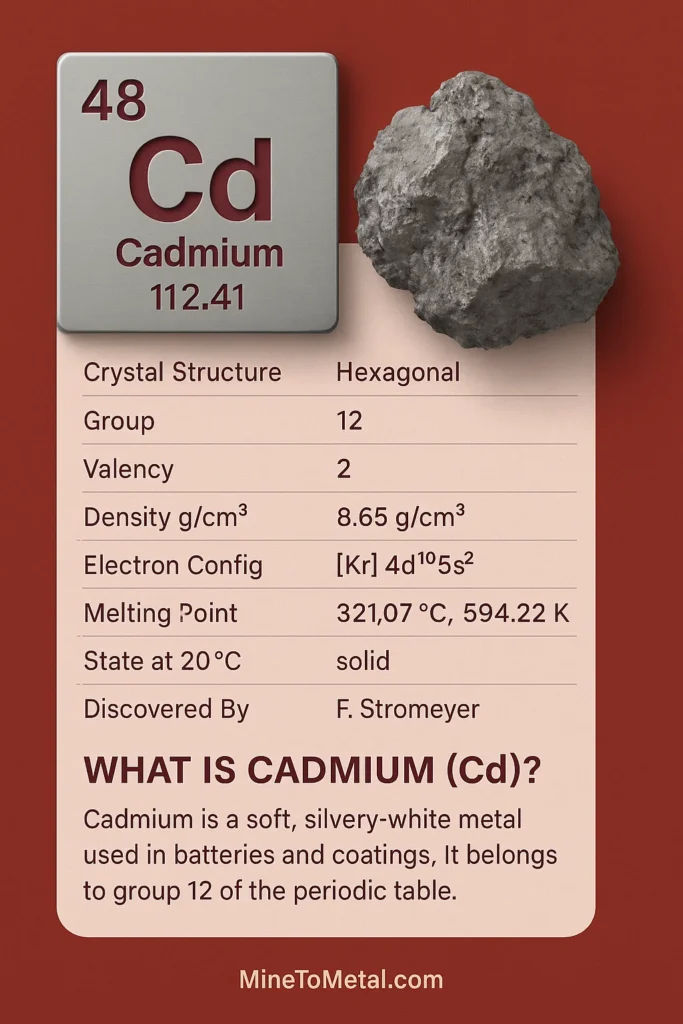
Cadmium’s relatively low melting point of 321°C enables easier processing compared to many industrial metals, reducing energy requirements and manufacturing complexity. This thermal accessibility, combined with exceptional corrosion resistance in saltwater environments , explains its dominance in marine and coastal applications where alternatives like zinc and aluminum coatings fail rapidly.
The element’s resistance to alkaline conditions, especially in nickel–cadmium battery chemistries, allows it to maintain structural integrity in caustic environments. Where other metals deteriorate under basic conditions, cadmium preserves its protective properties—an essential advantage in energy storage and industrial electrochemical processes.
Its bright silver-white lustre remains untarnished even after prolonged air exposure [(CRC Handbook, 2022)], unlike copper or iron that oxidise rapidly. This property provides both functional and aesthetic advantages in precision military and aerospace coatings.
Beyond chemical resilience, cadmium’s physical traits offer additional industrial advantages
Electrical Properties and Softness
Cadmium’s softness—registering just 2.0 on the Mohs hardness scale llows it to be easily formed, machined, and shaped into complex geometries. This malleability, paired with good electrical conductivity [(CRC Handbook, 2022)], makes cadmium ideal for electrical contacts and switchgear components that must maintain tight tolerances and surface contact under vibration or stress.
The element’s natural vibration dampening behavior, while not widely publicized, is valued in select aerospace and defense-grade systems where mechanical resonance must be controlled. Though rarely documented in consumer-grade literature, its use in specialty connectors and electro-mechanical systems reflects this niche advantage.
Why Cadmium Is Not a True Transition Metal
Cadmium occupies an unusual position in the periodic table. Though located in the d-block, its electron configuration [Kr]4d¹⁰5s² features completely filled d-orbitals, distinguishing its behavior from true transition metals with partially filled d-orbitals.
This electronic structure limits cadmium to fewer oxidation states than its transition metal neighbors, primarily existing in the +2 state. The filled d-orbital configuration contributes to cadmium’s chemical stability and predictable bonding behavior—traits that simplify compound synthesis and support reliable performance in battery electrolytes, pigments, and semiconductor precursors.
Comparison with Zinc and Mercury in Group 12
| Property | Cadmium | Zinc | Mercury |
|---|---|---|---|
| Melting Point | 321°C | 419.5°C | −38.8°C |
| Density | 8.65 g/cm³ | 7.14 g/cm³ | 13.6 g/cm³ |
| Toxicity Level | High | Moderate | High |
| Primary Uses | Batteries, coatings | Galvanizing, alloys | Thermometers, switches |
Within Group 12, cadmium occupies a middle ground between zinc’s high-temperature robustness and mercury’s volatility. Its solid-state stability, combined with ease of processing and superior corrosion resistance, provides unique advantages in electronics, coatings, and military-grade materials—without the handling hazards posed by mercury.
Key Takeaway: Cadmium’s distinctive combination of processability, corrosion resistance, electrical conductivity, and mechanical properties creates a performance profile that remains technically superior to alternatives in specialised applications—explaining its persistence despite toxicity concerns and regulatory restrictions.
Byproduct Recovery — How Cadmium Is Extracted
Cadmium’s extraction is economically unique—it emerges not from dedicated mining, but as a byproduct of zinc refining. As much as 90–98% of the cadmium in zinc ores is recoverable through integrated processing systems (USGS, 2003). Its viability depends on riding zinc’s coattails, avoiding the cost of standalone mining.
Cadmium in Zinc Ores and Refinery Slags
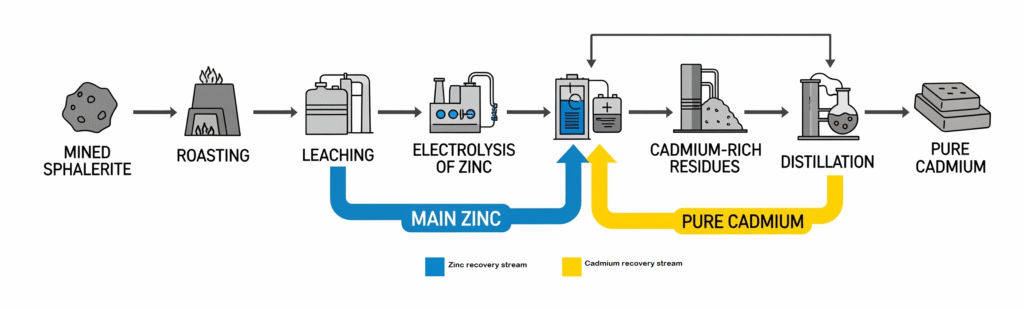
Sphalerite (ZnS) is cadmium’s main source, where Cd²⁺ substitutes for Zn²⁺ due to similar ionic size. Typical cadmium-to-zinc ratios range from 1:100 to 1:1000 (USGS, 2003). Greenockite (CdS), cadmium’s only pure mineral form, is extremely rare and never forms independent deposits.
Cadmium also concentrates in zinc smelting residues—like roasting dust and slag. During roasting, cadmium sulfide converts into cadmium oxide, which accumulates in particulates. Some slag samples contain up to 4.77% cadmium (MDPI, 2022), making recovery from waste streams viable.
Recovery Methods: Electrolytic vs Thermal
Once separated from zinc, cadmium is recovered using two primary industrial methods:
| Process | Method | Recovery Rate | Key Features |
|---|---|---|---|
| Hydrometallurgical | Acid leaching → precipitation → electrolysis | Variable (demand-dependent) | Energy-efficient, metal-selective |
| Pyrometallurgical | Volatilisation → condensation → refining | 90–99% | High-temp, slag-compatible |
In hydrometallurgy, cadmium is leached alongside zinc and copper, then precipitated with zinc dust and refined electrolytically (Gupta & Mukherjee, 2006).
In thermal recovery, cadmium’s low boiling point (767°C) allows it to volatilize before zinc. Enriched vapors—sometimes up to 45% cadmium (US EPA, 2000) are condensed and purified.
In India, Hindustan Zinc Ltd (HZL) recovers cadmium at smelting sites like Chanderiya and Debari, producing it as a byproduct during zinc electrolysis and thermal reduction (HZL Annual Report, 2023).
Key Takeaway:
Cadmium’s viability hinges on zinc. Though never mined directly, it’s systematically reclaimed through industrial zinc processes—balancing recovery yields with environmental and economic pressures.
Cadmium in Batteries and Energy Storage
More than 70 years after its debut, the nickel-cadmium (Ni-Cd) battery still defies predictions of obsolescence. These power systems maintain their grip in sectors where reliability under extreme conditions outweighs environmental concerns or energy density.
Nickel–Cadmium Batteries in Aerospace and Tools
Invented in 1899 by Waldemar Jungner, the nickel-cadmium battery achieved widespread commercial success by the 1950s (Electrochemical Society, 2022).
Among its most critical use cases is aviation, where Ni-Cd batteries remain essential for backup power in civilian aircraft such as the Airbus A320 and Boeing 737, as well as numerous military platforms (Saft, 2023). These batteries reliably energize avionics, navigation equipment, and emergency lighting during primary system failures.
Historically, Ni-Cd technology dominated the market for cordless tools, emergency lighting, and medical devices, offering fast discharge rates ideal for high-draw equipment like power tools (Battery University, 2023).
For decades, Ni-Cd powered portable electronics as well—until environmental regulations and higher energy demands gave rise to cleaner lithium-ion alternatives. lithium-ion batteris brought lighter weight, higher energy density, and faster charging, making it the new default in everything from phones to EVs. For context on lithium’s global supply chain, see our analysis of the Lithium Triangle.
Now in 2025, lithium-ion itself is evolving. Silicon–carbon anodes are pushing energy density even higher, enabling longer smartphone battery life and slimmer designs. While cadmium no longer leads the charge, it still holds ground in aerospace and defense—where performance matters more than weight or toxicity.
Ni–Cd vs Li-ion: Historical and Current Trends
| Characteristic | Nickel–Cadmium (Ni-Cd) | Lithium-ion (Li-ion) | Silicon–Carbon Li-ion (Si–Li) |
|---|---|---|---|
| Energy Density | 40–60 Wh/kg | 120–200 Wh/kg | 250–300 Wh/kg (lab-to-commercial) |
| Cycle Life | 500–1000 cycles | 300–500 cycles | 300–800 cycles (still improving) |
| Weight-to-Power Ratio | Moderate | High | Very High |
| Environmental Impact | High (Cd toxicity) | Lower, but resource-intensive | Lower, with potential for greener silicon sources |
| Memory Effect | Yes | No | No |
| Operating Temp. Range | −20°C to +60°C | −10°C to +45°C | Similar to Li-ion, improving |
| Status in 2025 | Niche (aerospace, defense) | Mainstream default | Emerging premium standard |
The EU’s RoHS directive has severely restricted Ni-Cd usage in consumer electronics, accelerating a shift toward nickel-metal hydride (NiMH) and Li-ion technologies (Regulation (EU) 2023/1542). Still, the aerospace, defense, and emergency response sectors retain Ni-Cd for its robust performance in high-stress conditions. Lithium also extends far beyond EVs — from glass and ceramics to lubricants and aerospace — detailed in our guide on Industrial Lithium Uses
Battery Waste, Recycling, and Circular Economy
Despite its toxicity, Ni-Cd is one of the most recyclable battery chemistries. Nearly 100% of cadmium can be recovered through vacuum metallurgy, a process leveraging cadmium’s lower vapor pressure to separate it from nickel and other metals (Umicore, 2022).
Globally, six major facilities process over 20,000 metric tonnes of Ni-Cd batteries per year, transforming toxic waste into reusable metal feedstock (US DOE, 2017). The EU Battery Regulation (2023/1542) mandates:
- 80% recycling efficiency for Ni-Cd batteries by December 2025
- 95% nickel recovery rate by December 2031
These aggressive recovery targets reflect how well-developed infrastructure can effectively manage toxic materials through a circular economy lens.
Real-World Case Study: Saft Aviation Ni-Cd Batteries
French manufacturer Saft remains a global leader in high-performance Ni-Cd systems, supplying ULM® Series batteries to both Airbus and Boeing aircraft. Designed to endure harsh altitude conditions, thermal swings, and vibration stress, these batteries exemplify cadmium’s resilience in mission-critical aerospace roles (Saft, 2023).
Key Takeaway: Ni-Cd batteries embody strategic persistence: a mature technology increasingly banned from consumer use but irreplaceable in aviation, military, and emergency systems, where performance and reliability still justify cadmium’s toxic legacy. Cobalt now dominates rechargeable battery cathodes, offering a modern counterpart to cadmium’s legacy — see Cobalt Uses
Cadmium in Solar Panels and Photovoltaic Devices
The renewable energy revolution faces an uncomfortable truth: one of its most promising technologies relies heavily on a toxic heavy metal. Cadmium compounds have become integral to thin-film solar panel production, creating a paradox in which sustainability efforts depend on a hazardous material.
Cadmium Telluride (CdTe) in Thin-Film Solar Cells
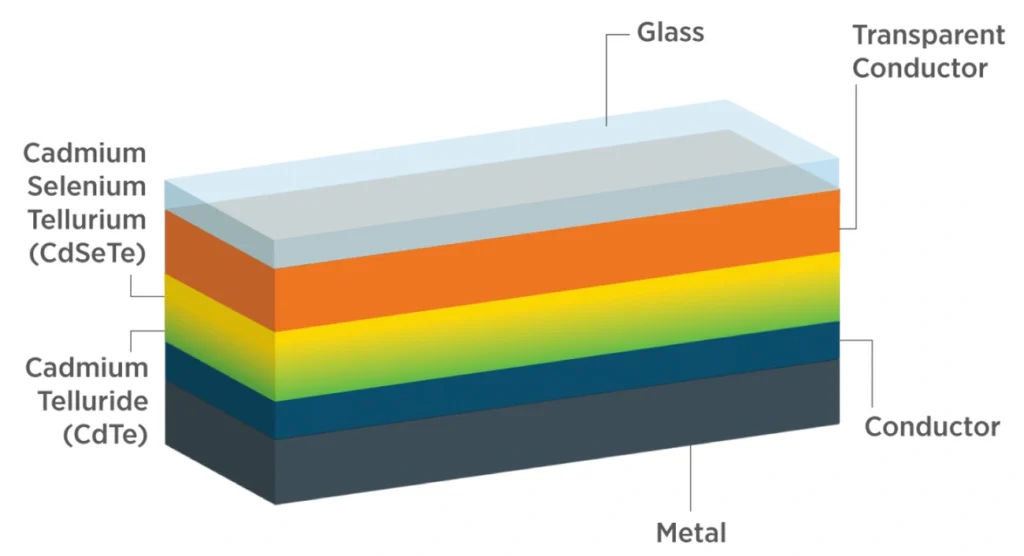
CdTe solar cells form when cadmium and tellurium combine into a crystalline lattice that serves as the light-absorbing layer. This technology ranks as the second most prevalent photovoltaic (PV) architecture after crystalline silicon, comprising about 21% of U.S. solar deployment and 4% of global installations as of 2022 (NREL, 2023).
CdTe panels absorb sunlight more efficiently than silicon, thanks to a high absorption coefficient—meaning they can function with layers only a few microns thick, roughly one-tenth the diameter of a human hair (ScienceDirect, 2020). This efficiency translates to reduced material usage and lower manufacturing costs. By contrast, energy storage still depends on Graphite anodes, which pair with lithium and cobalt in modern cells.
The typical CdTe solar cell architecture consists of:
- A transparent conducting oxide (TCO) for light transmission
- A CdS buffer layer to establish p-n junction properties
- A CdTe active layer for photon absorption and charge generation
- A metal back contact to complete the circuit
The CdTe Accelerator Consortium, backed by NREL and First Solar, has announced targets of 24% efficiency by 2025 and 26-27% by 2030, aiming to challenge silicon’s market dominance with better scalability and cost-performance metrics (NREL Consortium, 2023).
Cadmium Sulfide (CdS) Buffer Layers in PV Modules
Cadmium sulfide (CdS) plays a critical role as the n-type window layer, with a bandgap of 2.4 eV, allowing light to enter while forming a junction with CdTe that facilitates charge separation [(Solar Energy Materials & Solar Cells, 2019)].
However, CdS presents several challenges:
- Low bandgap energy restricts high-energy photon transmission.
- Toxicity risks persist due to its cadmium content.
- Manufacturing incompatibilities exist with modern vacuum deposition processes.
| CdS Layer Thickness | Effect on Efficiency |
|---|---|
| 20 nm | ~30% decrease |
| 80 nm (optimal) | Peak performance |
| 120 nm | ~50% decrease |
(Typical industrial range: 10–500 nm)
(IEEE PVSC, 2020)
The junction between CdS and CdTe forms a graded CdSₓTe₁₋ₓ alloy due to interdiffusion, which significantly affects band alignment, carrier recombination, and energy conversion. Optimizing this interface is key to efficiency improvements and material stability in commercial PV modules [(Journal of Applied Physics, 2021)].
Key Takeaway: Solar technology reveals a striking contradiction—cadmium-based materials remain critical for renewable energy systems, particularly in thin-film photovoltaics. Despite environmental concerns, their optical efficiency, cost-effectiveness, and scalability have no clear substitutes, making cadmium both a technical asset and a regulatory challenge.
Cadmium in Electronics, Semiconductors, and Sensors
The world’s most sensitive light detector relies on a compound few have heard of. Cadmium sulphide (CdS) photoconductors achieve photosensitivity levels as high as 10⁸–10⁹ lux⁻¹—the highest among known photoconducting materials (Optical Materials Express, 2020). This exceptional property has quietly enabled decades of innovation across imaging, lighting, and sensing technologies.
CdS and CdSe: The Eyes of Electronic Systems
CdS photoconductors offer a spectral response closely aligned with the 400–700 nm range of human vision, making them ideal for light-sensitive electronics such as camera exposure meters, automatic lighting controls, and motion-sensing systems (Sensors & Actuators B, 2019).
What sets CdS apart is its ability to maintain theoretical response speed even at very low illumination levels, despite having a low density of states—a trait that ensures fast reaction times in changing light environments. This makes CdS sensors reliable even in low-power, compact devices.
Cadmium selenide (CdSe) extends the sensing range further into the near-infrared spectrum, with peak sensitivity around 0.7 µm (Journal of Applied Physics, 2021). Together, CdS and CdSe remain foundational materials in photoresistors, optical switches, and solar trackers.
Quantum Dots: Revolutionizing Display Technology
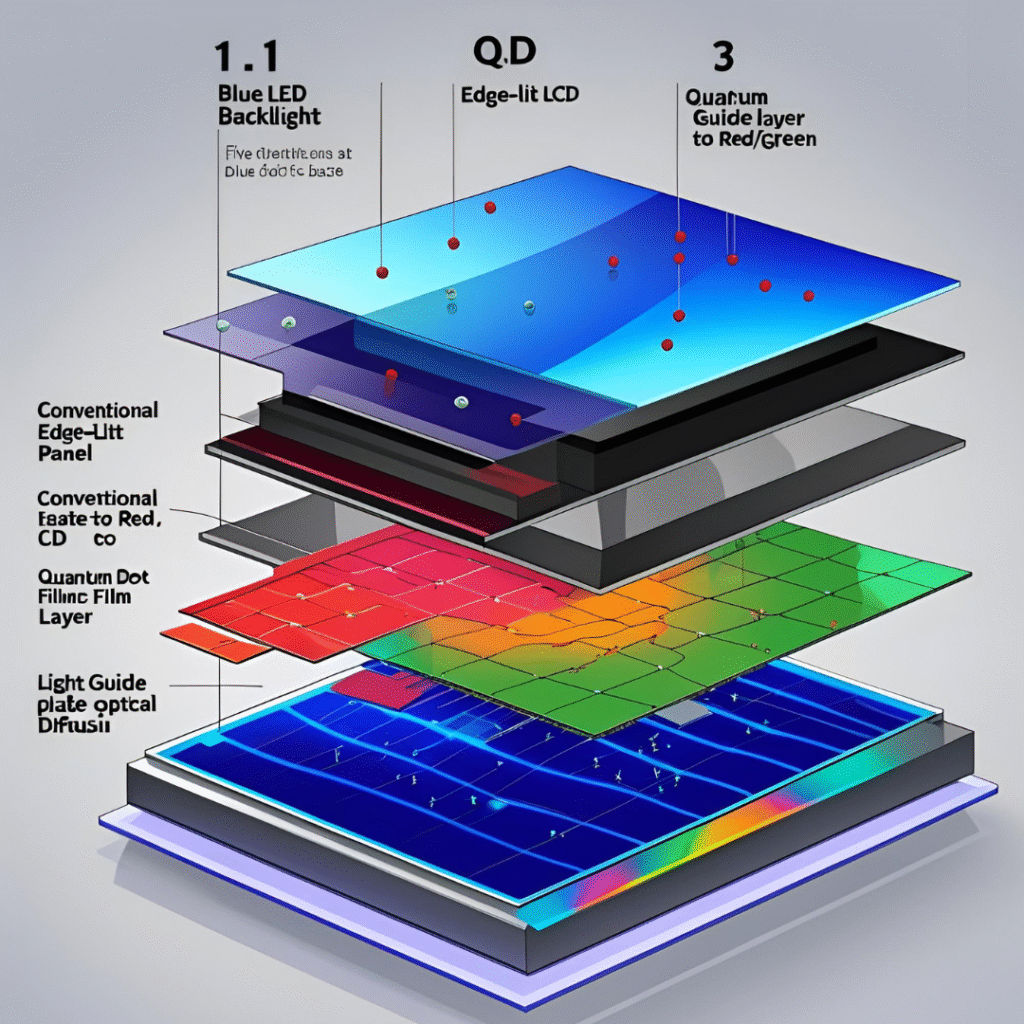
Among cadmium’s most sophisticated applications are CdSe-based quantum dots (QDs). These nanocrystals exhibit:
- High photoluminescence quantum yield (>90%)
- Tunable emission wavelengths (by particle size)
- Superior colour purity (~90% Rec. 2020 coverage) (Nature Photonics, 2017)
| QD Application | Technology | Performance Benefit |
|---|---|---|
| Edge-lit LCD | QD in glass tube | Enhanced colour gamut (Samsung QLED) |
| QD Films | Blue LED backlight | Brighter, more energy-efficient displays |
| QD-LED (emissive) | Direct quantum emission | Higher efficiency, better contrast |
Despite EU restrictions under RoHS, cadmium-based QDs remain in limited commercial use, especially in Samsung QLED TV models, where performance trade-offs remain unresolved [(Samsung Display Whitepaper, 2020)].
Precision Manufacturing: Dimethyl Cadmium in MOCVD
In semiconductor fabrication, dimethyl cadmium (Cd(CH₃)₂) is used as a precursor in metalorganic chemical vapor deposition (MOCVD) processes to build compound semiconductors with nanometre precision. This highly volatile, toxic liquid allows controlled deposition of Cd-containing layers.
For example, arsenic doping in CdTe can be precisely modulated by adjusting the flow rate of dimethyl cadmium during MOCVD, enabling fine-tuned electrical properties in photovoltaic and sensor-grade films (Thin Solid Films, 2019).
Transparent Conductors and Laser Applications
Cadmium oxide (CdO) offers the highest electron mobility among transparent conducting oxides—up to 200 cm²/V·s, even at high carrier concentrations (Semiconductor Science & Technology, 2020). CdO is used in photocopier drums, solar window coatings, and transparent conductive films in touchscreens.
Meanwhile, helium-cadmium (He-Cd) lasers emit in the ultraviolet (325 nm) and blue-violet (442 nm) spectrum, offering stable 1–50 mW outputs for spectroscopic and holographic applications. These compact air-cooled lasers replaced bulkier water-cooled ion lasers in many laboratory systems [(SPIE Proceedings, 2018)].
Military-Grade Infrared Detection
Mercury cadmium telluride (HgCdTe) remains the only widely-used material capable of detecting thermal IR radiation in both major atmospheric windows—3–5 µm and 8–12 µm. This spectral coverage is essential for night vision, guided missile seekers, and thermal imaging devices used in defense applications (Infrared Physics & Technology, 2021).
FLIR Systems, Raytheon, and BAE Systems continue to deploy HgCdTe-based sensors in military-grade optics, underscoring cadmium’s irreplaceability in critical national security domains.
Key Takeaway: Cadmium compounds enable unmatched performance in electronics—from precision photodetectors and laser systems to quantum dot displays and military-grade IR sensors. Despite their toxicity, these compounds remain embedded in core technologies where no viable alternatives can yet deliver the same combination of sensitivity, control, and spectral range.
Cadmium Uses in Metallurgy, Aerospace, and Specialty Alloys
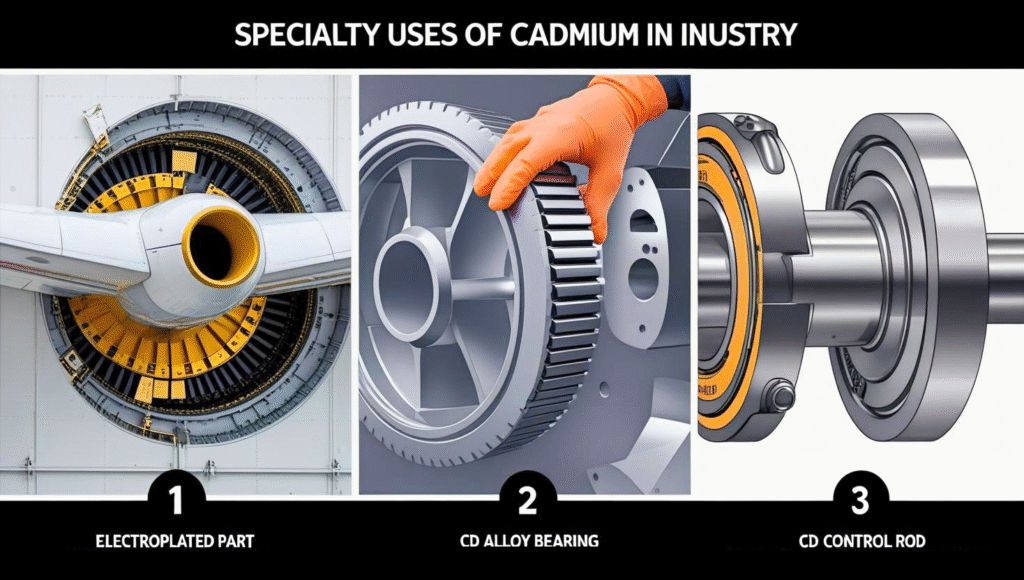
Tucked inside jet engines and buried in nuclear reactor cores, cadmium performs silent but essential roles, where failure is not an option. A similar story holds true for Tungsten, whose heat-resistance and thermal management properties make it indispensable in high-performance energy and defense systems. These high-stakes applications explain why certain sectors continue accepting cadmium’s toxicity risks when performance demands cannot be met by alternatives.
Cd Alloys in Bearings and Low-Friction Parts
Cadmium-based alloys are prized for their exceptionally low coefficient of friction (μ ≈ 0.15–0.20), combined with high fatigue strength and dirt-embedding capacity (ASM Handbook, 2015). These properties make them ideal for bearings in aerospace and automotive systems, where component failure can have catastrophic consequences.
Unlike conventional materials, cadmium alloys
- Resist seizure even under low-lubrication conditions
- Withstand shock loads with minimal deformation
- Allow for self-lubricating behavior through surface film formation under operational stress
Cadmium’s hexagonal close-packed (HCP) structure contributes to these benefits by accommodating deformation while maintaining surface integrity—a crucial feature in aircraft landing gear, missile actuators, and turbocharger assemblies.
Cadmium Electroplating in Aerospace and Naval Hardware
First developed during World War I, cadmium electroplating remains essential in military aviation and marine systems due to its:
- Strong adhesion to steel, titanium, and aluminum
- High lubricity, minimizing galling in fasteners
- Superior corrosion resistance in humid and saline environments
However, the discovery of hydrogen embrittlement risks led engineers to transition away from aqueous cadmium baths—especially after critical failures in high-speed platforms like the SR-71 Blackbird (NASA Materials Report, 2002).
Today, cadmium coatings are still mandated in critical bolt assemblies, landing gear, and electrical connectors, especially in aircraft designed to operate in high-altitude, salt-laden environments.
Anti-Corrosion Coatings in Marine and Aircraft Systems
Cadmium coatings function as sacrificial anodes—corroding in place of the protected substrate. In marine-grade systems, a 25 µm cadmium layer can outperform zinc and chromium-based coatings by offering protection for over 10 years under continuous salt exposure [(MIL-STD-870, U.S. Dept. of Defense)].
Field data show cadmium coatings significantly outperform other materials in harsh conditions:
| Environment | Cadmium Coating Lifespan |
|---|---|
| Marine (25 μm layer) | >10 years |
| Industrial (25 μm) | ~1–2 years |
These coatings are particularly used in naval avionics, submarine piping, shipboard electronics, and helicopter rotors—components constantly exposed to corrosion and vibration.
Cadmium Rods in Nuclear Fission Control
Few materials can match cadmium’s neutron absorption cross-section (~2450 barns for thermal neutrons), making it a vital component in nuclear reactor control rods [(IAEA Nuclear Materials Manual, 2017)].
Typical control rods use silver–indium–cadmium (Ag-In-Cd) alloys (80% Ag, 15% In, 5% Cd), which offer:
- High neutron attenuation without fission
- Stable mechanical properties at high temperatures
- Ease of fabrication and machining
Pressurized Water Reactors (PWRs) worldwide continue to use Cd-alloy rods due to their predictable performance during prolonged exposure to thermal radiation, particularly in shutdown and startup cycles.
Key Takeaway: When performance margins tighten and safety cannot be compromised, cadmium quietly holds the line—proving that technical superiority often outweighs environmental ideals.
Cadmium Uses in Everyday Products and Legacy Applications
Before it became a toxic pariah, cadmium quietly shaped the colors, circuits, and solders of daily life from toys to tiles to torchlights due to its low melting point (321°C) and excellent material properties. But as scientific evidence of its toxicity grew, so did regulatory pressure. The result: a dramatic shift from widespread use to near-total phase-out in consumer markets.
Cadmium in Jewellery and Low-Melting Solders
Cadmium was long valued in jewellery solders for its ability to reduce melting ranges and improve fluidity, allowing detailed work on delicate pieces. But these same properties posed serious health hazards: when heated, cadmium vaporizes into cadmium oxide fumes, which are highly toxic to the lungs, kidneys, and blood (ATSDR, 2012).
Shockingly, a U.S. lab study found some imported jewelry—especially children’s charms—contained up to 45% cadmium by weight, turning accessories into unlabelled health risks.(HealthyStuff.org, 2010). Manufacturers often used cadmium as a cheap substitute for zinc or copper, taking advantage of its malleability and cost—but without proper labeling or safety warnings.
Global response has included:
- EU bans on cadmium in jewellery and brazing alloys
- India’s BIS warning notices on hazardous imports
- US Consumer Product Safety Commission recalls on cadmium-laden jewellery in major retail chains
Cadmium Pigments in Plastics, Ceramics, and Artist Paints
Bright yellow, orange, and red pigments like cadmium sulphide (CdS) and cadmium selenide (CdSe) once represented ~13% of U.S. cadmium use. Their advantages include:
- Thermal stability above 400°C
- Fade resistance under UV exposure
- Insolubility in water, solvents, and alkaline cleaners
- Non-bleeding properties ideal for permanent coloration
These pigments were used extensively in:
- Plastic containers and pipework
- Enamel glazes and ceramic tiles
- Oil paints for artists
In fact, 80–90% of all cadmium pigments went into plastics—especially PVC, where colourfastness and UV durability were critical (International Cadmium Association).
Although some artistic communities still defend cadmium colours for their vibrancy, most industrial users have transitioned to organic pigment substitutes or safer inorganic blends like bismuth vanadate.
Cadmium in Mobile Phones, Power Tools, and Cameras
Before lithium-ion took over, nickel-cadmium (Ni-Cd) batteries powered everything from:
- Early mobile phones
- Cordless drills and power tools
- Digital cameras
- Emergency lighting systems
In the 1990s and early 2000s, ~75% of cadmium consumption went into battery production (USGS, 2006). Despite their low energy density, Ni-Cd cells were prized for:
- Wide temperature range operation
- Robust charge-discharge cycles
- Low cost
Today, Ni-Cd use is limited to aerospace and emergency systems, and cadmium batteries are banned in most consumer electronics under EU RoHS and Indian E-waste regulations.
Cadmium in Brake Pads and Friction Materials (Now Phased Out)
Cadmium was once added to friction materials for its heat dissipation and anti-seizure qualities. But its use in automotive brake pads ended following health-based legislative action.
In the U.S., California’s Brake Pad Law (SB 346) phased out cadmium above 0.01% from 2014, followed by a complete ban in 2025 (California EPA). Shops in California and Washington State must now install certified pads with “N” codes, ensuring no toxic metals like cadmium, lead, or mercury are present.
Similar standards are emerging across Europe and Japan, removing cadmium from passenger vehicle supply chains altogether.
Key Takeaway: Cadmium’s retreat from consumer products reflects a broader shift in industrial ethics and public health policy. Once present in paints, jewellery, batteries, and even brake pads, cadmium now survives only in specialized, tightly regulated uses—a testament to how scientific understanding can transform global manufacturing standards.
Health, Environmental, and Regulatory Risks
Cadmium’s industrial utility comes at a heavy biological price. Its ability to persist in ecosystems and bioaccumulate in human tissue has earned it a place among the most toxic and tightly regulated elements in modern industry. Yet despite decades of warnings, cadmium remains in use—underscoring the enduring tension between performance and public health.
Cadmium Causes Which Disease? Itai-Itai and Beyond
Cadmium is nephrotoxic even at low exposure. It targets the renal proximal tubules, impairing filtration and reabsorption functions long before clinical symptoms emerge.
- Early signs begin at urinary cadmium levels of just 2 μg/g creatinine, with irreversible glomerular damage observed above 4 μg/gCr (Järup & Åkesson, 2009).
- Itai-itai disease, the most severe cadmium-related illness, was first documented in Toyama Prefecture, Japan, in post-menopausal women exposed to cadmium-contaminated rice. Symptoms included severe osteomalacia, osteoporosis, and renal failure, with urinary cadmium levels reaching 20–30 μg/gCr.
- Emerging research also links cadmium exposure to:
- Cardiovascular disease
- Type 2 diabetes
- Lung, prostate, and pancreatic cancers
- Accelerated age-related kidney decline, even at “background” levels
Cadmium in Food: Rice, Cocoa, Seafood, and Tobacco
Cadmium is ubiquitous in the human diet, especially for non-smokers. The FAO/WHO estimates that 90% of total intake comes from food sources. Key contributors include:
| Food Item | Avg. Cadmium Concentration |
|---|---|
| Sunflower seeds | 375 µg/kg |
| Boiled spinach | 117 µg/kg |
| Potato chips | 93 µg/kg |
| Cocoa powder | 75–200 µg/kg |
| Shellfish (e.g., oysters) | 100–200 µg/kg |
- Plant-based diets may result in 2–3× higher cadmium intake compared to omnivorous diets (Satarug et al., 2010).
- Iron, calcium, and zinc deficiency can increase cadmium absorption, creating compounding health risks for undernourished populations.
- Biological half-life: Estimated at 10–33 years, meaning cadmium consumed today will still circulate in body tissue decades later.
Case Study: McDonald’s Shrek Glass Recall (2010)
| Detail | Information |
|---|---|
| Company | McDonald’s (USA) |
| Issue | Decorative paint on Shrek Forever After glassware contained cadmium |
| Regulator | U.S. Consumer Product Safety Commission (CPSC) |
| Action | Voluntary recall of 12 million glasses |
| Reason | Cadmium could leach onto children’s hands and be ingested over time |
| Outcome | Raised awareness on cadmium in decorative coatings; retailers adopted stricter sourcing controls |
This incident revealed how cadmium exposure pathways extend beyond manufacturing into household items—particularly those marketed to children.
Bioaccumulation in Plants and Ecosystems
Cadmium behaves like essential nutrients in plant root systems—mimicking zinc and calcium, allowing it to infiltrate plant tissues even in low-contamination soils.
- Crops like rice, leafy greens, wheat, and cocoa accumulate cadmium from irrigation and fertilizers (particularly phosphate-based).
- Wheat yield and nutrient quality decline even with sub-toxic root concentrations.
- Soil-to-plant transfer is unpredictable—contaminated food may look and taste normal, complicating detection.
In ecosystems, cadmium enters the food chain through bioaccumulation in fungi, insects, and aquatic life, creating long-term environmental reservoirs.
OSHA, RoHS, REACH, and Prop 65: Global Regulations
Cadmium’s health profile has prompted a complex regulatory landscape:
| Regulation | Region | Cadmium Limit or Focus |
|---|---|---|
| OSHA | U.S. | PEL: 5 μg/m³ (airborne cadmium) |
| RoHS Directive | EU | ≤ 0.01% (100 ppm) in electronics |
| REACH Regulation | EU | Classified as SVHC; requires authorization |
| Proposition 65 | California, US | Max daily intake: 4.1 μg (oral), 0.05 μg (inhaled) |
| India E-Waste Rules | India | Cadmium banned in most electronic components |
Many of these frameworks include exemptions for aerospace, defence, and medical sectors where substitutes remain technically unviable.
Cadmium regulation isn’t just about ppm limits—it’s about safeguarding generational health against an element that never forgets. Even today, the cadmium you inhale or ingest may linger in your body for decades, quietly shaping your health future.
Key Takeaway: Cadmium presents a slow-motion hazard—its toxicity accumulates silently in the body and environment, often for decades. While global regulations attempt to curb exposure, cadmium’s persistence, industrial utility, and lack of alternatives mean its complete removal from modern life remains elusive.
Cadmium in India: Supply Chains, Agriculture, and Regulation
India sits at a unique crossroads in the global cadmium economy—possessing domestic production capacity, exportable surplus, and growing environmental risks tied to agriculture and waste management. The country’s experience reflects the broader dilemma faced by industrialising nations: how to harness a toxic byproduct without jeopardising public and environmental health.
Hindustan Zinc and India’s Cadmium Supply Chain
India’s cadmium supply is almost entirely recovered as a byproduct of zinc smelting, with Hindustan Zinc Limited (HZL) operating the largest recovery facilities at Chanderiya and Dariba in Rajasthan.
- Annual Cadmium Output: ~600–800 tonnes
- Source: Hydrometallurgical processing of sphalerite (ZnS) ores
- End-use distribution:
- ~65% to Ni-Cd battery manufacturing
- Remaining output to pigments, coatings, and electroplating sectors
HZL’s cadmium recovery demonstrates India’s self-sufficiency in meeting internal demand while maintaining minor export capacity—an unusual strength among developing nations where byproduct extraction infrastructure is often lacking.
HS Code 8107: India’s Cadmium Trade Balance
India’s cadmium trade is classified under HS Code 8107 (Cadmium and articles thereof). Over the past five years, trade data show that India consistently exports more cadmium than it imports:
| Year | Export Volume | Import Volume | Major Trading Partners |
|---|---|---|---|
| 2019 | 107 tonnes | 23 tonnes | China, USA, Singapore |
| 2020 | 85 tonnes | 18 tonnes | China, UAE, South Korea |
This positive trade balance highlights two critical points:
- Strategic surplus of a metal not actively mined but recovered
- Growing environmental management burden associated with storing, stabilizing, or re-exporting toxic cadmium compounds
Cadmium in Fertilizers and Agricultural Soils
Rock phosphate used in Indian fertiliser production contains cadmium concentrations ranging from 3-150 mg/kg, introducing this heavy metal directly into agricultural systems. Analysis of wheat-growing regions in Uttar Pradesh reveals cadmium accumulation between 0.2-2.8 mg/kg in soils—exceeding safe limits in certain areas.
Rice cultivated in these contaminated soils shows cadmium levels of 0.07-0.43 mg/kg, approaching regulatory thresholds and raising concerns about long-term food safety. The phosphate fertiliser pathway represents a significant, yet often overlooked, route for cadmium contamination in India’s agricultural heartlands.
CPCB, BIS, and MoEFCC — India’s Regulatory Network
IIndia’s cadmium oversight falls across three pillars—but their siloed structure complicates coherent risk management:
| Agency | Role | Key Cadmium Regulation |
|---|---|---|
| CPCB | Industrial pollution | Effluent standard: ≤0.003 mg/L Cd |
| BIS | Product quality standards | Drinking water: ≤0.01 mg/L Cd (IS 10500) |
| MoEFCC | Waste and environmental safety | Classifies cadmium-containing waste as hazardous (Schedule I) under Hazardous Waste Rules (2016) |
While each agency addresses a critical aspect, this fragmented structure makes coordinated cadmium risk management difficult—especially in cross-sector issues like food safety from fertiliser contamination.
Key Takeaway: India’s cadmium dilemma underscores a deeper policy challenge—how to manage an industrially strategic yet biologically toxic element in a system where regulatory agencies must balance economic utility against environmental and agricultural integrity.
Global Trade, Supply Chain, and Strategic Role
Cadmium occupies a rare position in global commodities—its supply does not follow market demand, but instead emerges unavoidably from zinc production. This decoupling creates a complex supply chain landscape, where oversupply masks strategic vulnerabilities, and toxic byproducts fuel clean energy technologies.
Zinc-Dependent Supply Creates Strategic Vulnerability
Nearly all cadmium used globally arises as a byproduct of zinc refining, not as a targeted commodity. This structural coupling means cadmium production continues even when demand weakens, flooding markets with metal that might not be immediately needed. Only 20–50% of cadmium contained in zinc concentrates is typically extracted during processing—yet this alone results in substantial inventories.
Cadmium’s total global resources are estimated at just 3.3 million tonnes, far lower than past speculative estimates of 100 million tonnes (USGS, 2022). Because production remains tied to zinc outputs rather than cadmium needs, pricing often trends downward even as the metal’s strategic applications expand.
Cadmium’s economic paradox lies in its inevitability—produced whether needed or not—creating long-term supply risks hidden beneath short-term oversupply.
Trade Concentration and Global Dependencies
Cadmium’s export landscape is highly concentrated, with a few nations dominating outbound flows. In 2023:
| Country | Export Value (USD) | Year-over-Year Change |
|---|---|---|
| South Korea | $14.08 million | +2.39% |
| China | $7.13 million | +5.62% |
| Japan | $4.66 million | +2.60% |
| Canada | $4.50 million | -0.74% |
| Germany | $1.29 million | +2.51% |
Meanwhile, India, Russia, and Ukraine consumed nearly 79% of all global cadmium exports in a recent trade cycle, creating import dependencies for industrial segments such as coatings, semiconductors, and energy storage.
In 2021, cadmium shipments were led by:
- Canada: 81,097 kg
- United States: 242,308 kg
- Poland: 294,044 kg
These flows reveal how a seemingly abundant metal is, in fact, tightly bound to a small set of refining geographies.
Solar Technology and the New Strategic Demand
The renewable energy revolution faces an uncomfortable truth: one of its most promising technologies relies on a toxic heavy metal. Cadmium telluride (CdTe) solar cells are redefining cadmium’s strategic value—just as global regulations tighten on its use in consumer products.
Unlike crystalline silicon PVs, CdTe supply chains depend on high-purity cadmium and tellurium, often sourced from U.S.-allied producers. Demand for cadmium in solar modules is expected to quadruple by 2050 under current climate targets—and potentially increase sevenfold by 2040 in accelerated scenarios (Fraunhofer ISE, 2022).
Recycling Gaps and Strategic Inertia
Roughly 25% of global cadmium production now comes from recycling, primarily via Ni-Cd battery recovery in Europe. Yet recovery efforts lag behind strategic needs:
- Household hoarding of portable batteries clouds true recycling potential
- Industrial battery EOL tracking remains inconsistent
- Ni-Cd collection systems face declining economies of scale
In the EU, 89% of cadmium usage is attributed to industrial battery sectors (EUC Circular Economy Report, 2023). However, without improved circular systems, nations must rely on zinc-processing nations or risk strategic shortages.
Key Takeaway: Cadmium’s strategic risk is not scarcity—but its dependence on zinc production, limited refining geography, and poor recycling infrastructure. As solar and defense demand grows, securing cadmium requires managing supply chains not for what they produce, but for what they inadvertently release.
Conclusion
Cadmium is a metal that resists easy categorization. It fuels the photovoltaic ambitions of a cleaner future, yet lingers in the soils and tissues of the past. It strengthens alloys that protect astronauts and aircraft, but weakens kidneys and bones when misused. It is at once a toxic leftover of zinc extraction—and a material that the solar, defense, and electronics industries still cannot do without.
What cadmium reveals is not just the hidden chemistry of modern engineering, but the deeper contradictions of progress itself: where the drive for performance collides with the need for precaution, and where regulatory caution must dance with technological necessity.
In the end, cadmium may never be a “green” material. But it is undeniably a revealing one—forcing industries, policymakers, and scientists to confront the costs of performance at every level, from atomic structure to global strategy.
Key Takeaway: In the cadmium dilemma, the real question isn’t whether we should use it — but how carefully we must.
Your Turn:
Would you accept a toxic material if it made your EV safer, your satellite last longer, or your grid more stable?
Tell us where you draw the line.👇
FAQ
1. What are the main industrial applications of cadmium?
Cadmium is primarily used in rechargeable nickel-cadmium batteries, solar panel technology, protective coatings for metals, and as a component in certain electronic devices and aerospace materials.
2. Why is cadmium considered both toxic and essential?
While cadmium is highly toxic and poses significant health risks, its unique properties make it irreplaceable in certain critical applications, particularly in aerospace, military hardware, and advanced electronics where reliability and performance are paramount.
3. How is cadmium typically extracted?
Cadmium is primarily obtained as a byproduct of zinc refining. It’s present in zinc ores and is recovered during the zinc extraction process, often through electrolytic or thermal recovery methods.
4. What are the health risks associated with cadmium exposure?
Long-term cadmium exposure can lead to kidney damage, bone fragility, and lung problems. It’s also associated with increased risks of cardiovascular diseases and certain cancers. The most severe manifestation is “itai-itai” disease, combining severe osteoporosis with renal dysfunction.
5. How is the cadmium industry addressing environmental concerns?
The industry is focusing on improved recycling methods, particularly for nickel-cadmium batteries. There’s also a shift towards more concentrated use in specialised applications while phasing out cadmium in consumer goods. Additionally, stricter regulations are being implemented globally to limit cadmium content in various products and manage its disposal.
6. Is cadmium used in solar panels today?
Yes. Cadmium telluride (CdTe) is widely used in thin-film solar cells, especially in utility-scale installations. Despite its toxicity, CdTe offers efficiency and cost advantages, making it a key material in renewable energy.
7. What is cadmium plating and where is it used?
Cadmium plating is a corrosion-resistant metal coating applied to steel and aerospace components. It protects critical parts in aircraft, submarines, and military hardware from saltwater and chemical exposure.
8. Can cadmium be fully replaced in batteries?
Not yet. While lithium-ion and nickel-metal hydride (NiMH) batteries have replaced Ni-Cd in consumer electronics, cadmium batteries are still preferred in aerospace and emergency systems for their reliability under extreme conditions.
9. How does cadmium enter the food chain?
Cadmium enters the food chain through phosphate fertilisers and contaminated soils. It accumulates in rice, spinach, sunflower seeds, and cocoa—posing dietary risks even in low concentrations.
10. Which countries produce the most cadmium?
As of recent data, South Korea, China, Canada, and India are among the top cadmium producers. Production is usually a byproduct of zinc refining operations in these countries.